English
 中文简体
 русский
 عربى
Content
- 1 The Short Answer: Why PE Pipe Fits Underground Water Supply
- 2 Core Reasons PE Pipe Is Chosen for Buried Water Lines
- 3 How the PE Pipe Material Behaves Underground
- 4 Fused Joints and Why They Reduce Leakage Risk
- 5 PE Pipe Specifications for Water Supply
- 6 PE Pipe Pressure Rating Explained
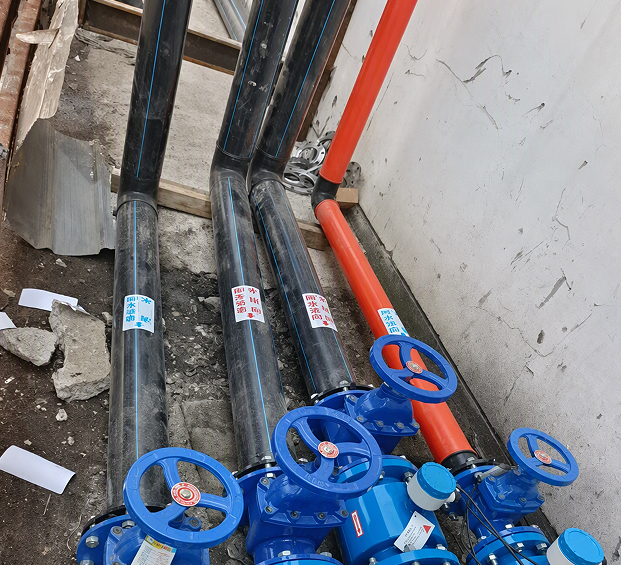
- 7 PE Pipe Applications in Underground Water Supply
- 8 Installation Methods and Trench Practice
- 9 PE Pipe Service Life Underground
- 10 Selecting the Right PE Pipe Grade and SDR
- 11 Practical Checklist for Underground PE Pipe Projects
- 12 About Jiangyin Huada and Its PE Pipe Supply
- 13 PE Pipe FAQ
- 13.1 What is PE pipe?
- 13.2 What does PE stand for in pipes?
- 13.3 What are PE pipes used for?
- 13.4 What is the standard size of PE pipe?
- 13.5 How do you calculate PE pipe wall thickness?
- 13.6 What is the pressure rating of PE pipe?
- 13.7 How long does PE pipe last underground?
- 13.8 How are PE pipes joined underground?
- 13.9 Can PE pipe be installed without open trenches?
The Short Answer: Why PE Pipe Fits Underground Water Supply
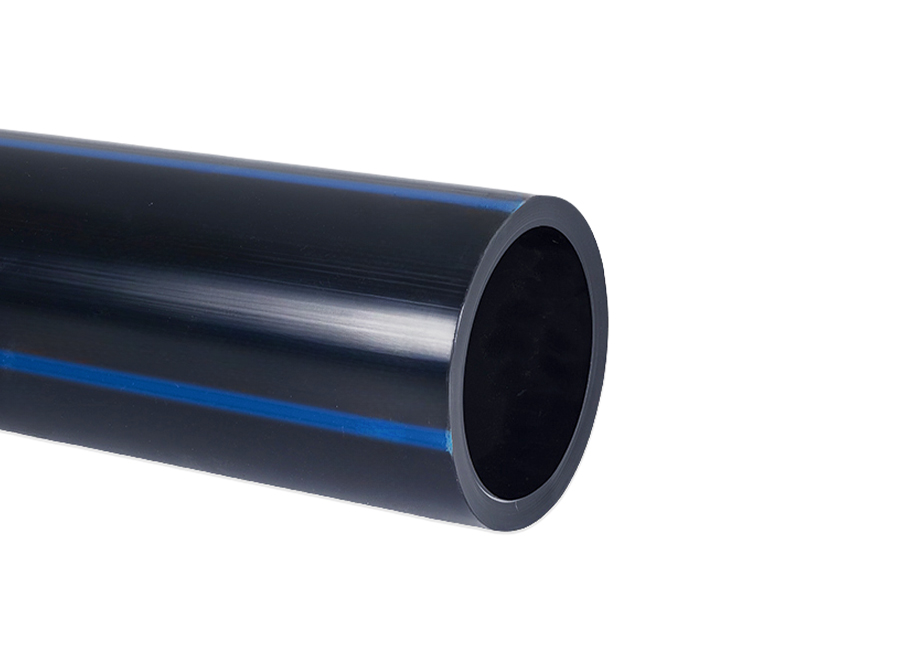
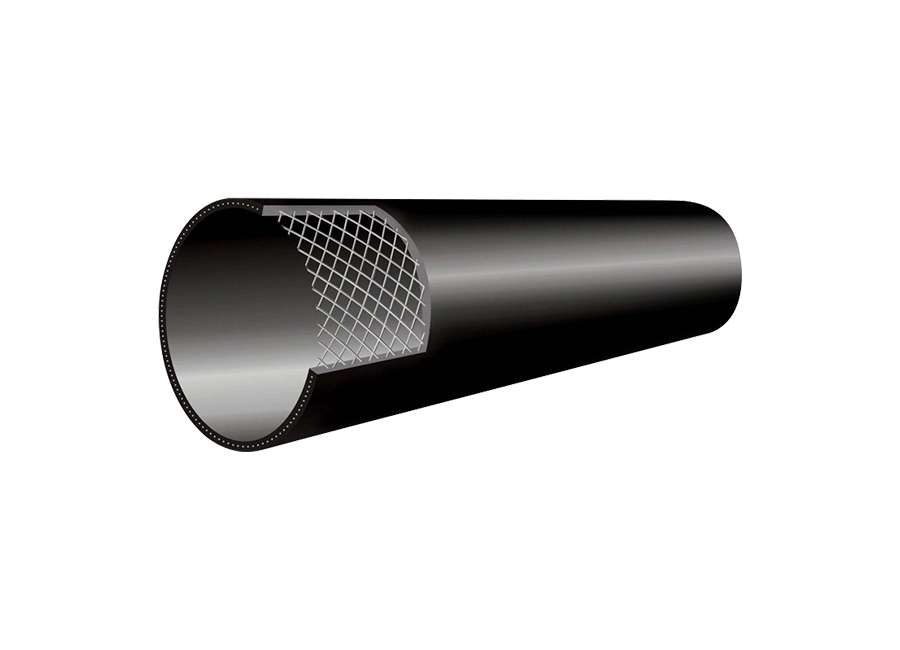
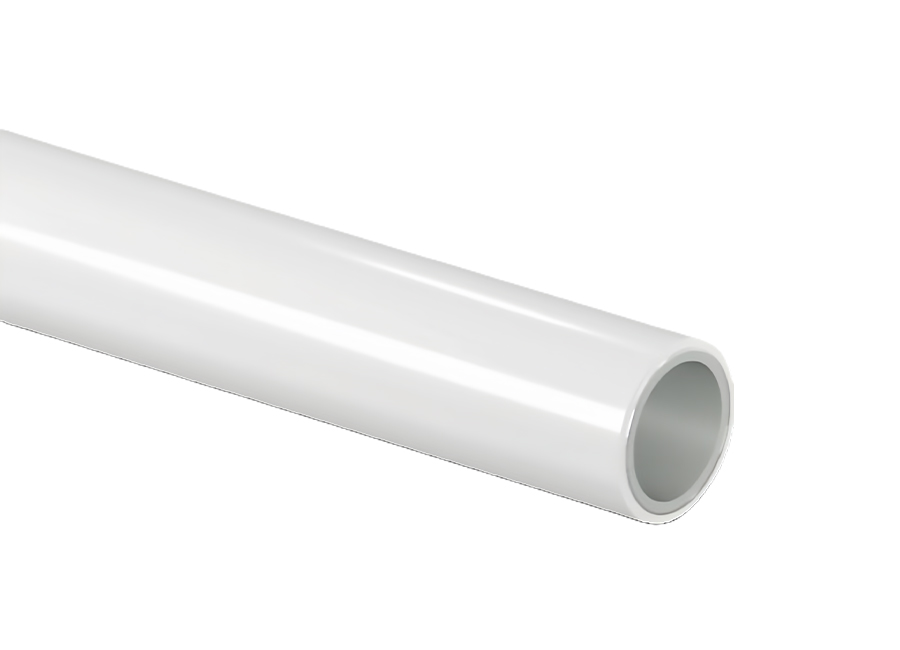
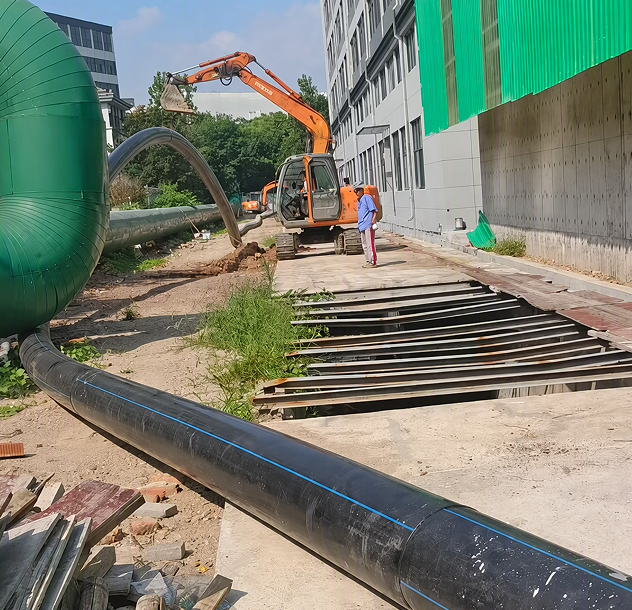
PE Pipe is widely used in underground water supply projects because it combines leak-resistant fused joints, flexibility under ground movement, resistance to corrosion, a smooth bore and a design life of 50 years or more in a lightweight material that installs quickly. Each of these traits addresses a problem that buried water lines face every day: soil chemistry, settlement, traffic loads, pressure surges and the cost of digging up a failed line.
The material behind this performance is high-density polyethylene, most often supplied as PE100 or PE80 compounds under the ISO 4427 series for water supply. A PE100 compound carries a Minimum Required Strength of 10 MPa, which lets designers choose thinner walls for a given pressure than lower-grade compounds allow. Pipe lengths can be joined by butt fusion or electrofusion into a continuous run in which the joint is designed to be as strong as the pipe wall.
This article explains the reasons in detail. It covers material behavior, joint integrity, PE Pipe Specifications, PE Pipe Pressure Rating, PE Pipe Applications, installation methods and PE Pipe Service Life, with charts and tables that make the numbers easier to compare.
 |
 |
 |
Core Reasons PE Pipe Is Chosen for Buried Water Lines
Project owners, utilities and design engineers tend to name the same handful of reasons when asked why they specify PE Pipe for underground work. The list below groups them by the problem each one solves.
- Corrosion behavior: polyethylene does not rust and does not rely on a coating or lining for protection, so aggressive or variable soils have little effect on the wall.
- Fused joints: heat fusion creates a homogeneous joint, which reduces the number of potential leak paths along a line.
- Flexibility: the pipe can bend along a gentle curve and tolerate soil movement without cracking.
- Light weight: a density near 0.95 g/cm3 means crews can handle many sizes with light equipment, and long lengths can be transported efficiently.
- Smooth bore: PPI design references commonly use a Hazen-Williams C factor of 150, and the inner wall does not roughen through corrosion over time.
- Trenchless compatibility: horizontal directional drilling, pipe bursting and slip lining all suit PE Pipe, which reduces surface disruption.
- Long design life: ISO 4427 pressure ratings are based on a 50-year design basis at 20 degrees Celsius.
- Surge tolerance: the relatively low elastic modulus of polyethylene lowers the speed of pressure waves, which reduces the size of surge events compared with stiffer materials.
How the PE Pipe Material Behaves Underground
Underground, a water pipe lives in a harsh environment. It carries internal pressure, supports soil and traffic loads from above, and sits in contact with groundwater, minerals and microbes. The behavior of polyethylene under these conditions explains most of its success in the field.
Resistance to soil and groundwater
Polyethylene is a non-polar hydrocarbon polymer. It does not react with the salts, acids and alkalis commonly found in natural soils, and it does not support electrochemical corrosion. For buried lines this removes the need for cathodic protection systems, external wraps and internal linings, which reduces both design complexity and long-term inspection duties.
Flexibility and ground movement
Soil is rarely stable. Seasonal moisture changes, nearby excavation and minor settlement all produce small movements along a pipeline. PE Pipe has a low modulus and high strain capacity, so it follows these movements elastically. The PPI Handbook of Polyethylene Pipe and AWWA M55 both describe flexible pipe design, where the soil around the pipe carries part of the load and the pipe deflects slightly under it. Proper bedding and compaction are what make this system work.
Hydraulic performance
The inner wall of PE Pipe is smooth and stays smooth because there is no corrosion product to build up. Flow capacity at a given diameter is therefore easier to predict over decades of service. Lower friction losses can also allow smaller pumps or lower pumping energy, which matters on longer transmission lines.
Slow crack growth and toughness
Modern PE100 compounds are bimodal resins, which means they combine a strong crystalline fraction with a tougher fraction that resists crack growth. This design is the reason PE100 can be rated for higher stress while keeping good resistance to point loads from stones in the trench. Specifying sand bedding, as shown later in this article, further reduces the risk of point contact.
| Property | Typical Value | Why It Matters Underground |
|---|---|---|
| Density | About 0.95 g/cm3 | Easier handling and lower transport load |
| MRS, PE100 | 10 MPa | Higher pressure capacity at a given wall |
| MRS, PE80 | 8 MPa | Suited to moderate pressure duties |
| Design stress, PE100 / PE80 | 8 MPa / 6.3 MPa | Based on a design coefficient of 1.25 |
| Hazen-Williams C | About 150 | Smooth bore keeps friction loss low |
| Linear thermal expansion | About 0.2 mm per meter per degree Celsius | Considered in long exposed runs and at entry points |
Fused Joints and Why They Reduce Leakage Risk
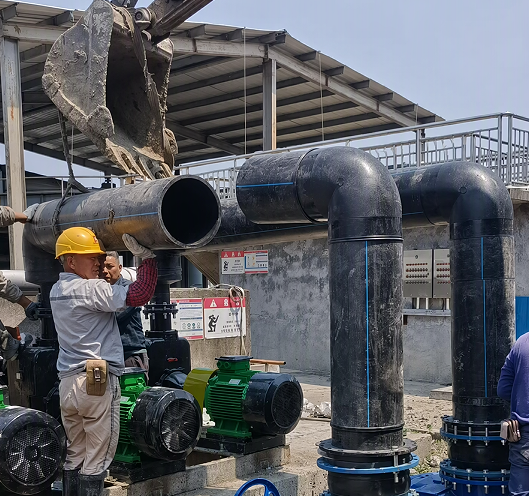
In many buried networks, joints are the most common place for leaks to start. PE Pipe addresses this directly through heat fusion. During butt fusion, the pipe ends are heated against a plate, pressed together under controlled pressure and cooled in place. The two pipes become one continuous piece of material. In electrofusion, a coupling or saddle with an embedded heating wire melts the surfaces at the joint.
The result is a pipeline that can be designed without thrust blocks at many fittings, because fused joints resist pull-out. It also means a long run can be welded above ground beside the trench and then lowered into place, which shortens the time the trench stays open.
Common joining methods
- Butt fusion: typically used for straight runs of larger diameters where pipes and fittings have matching wall thickness.
- Electrofusion: suited to repairs, tie-ins, tapping saddles and tight working space.
- Mechanical couplings: used for connections to other systems and for quick repairs, with restraint supplied by the coupling design.
Quality of fusion depends on the operator, the equipment and the process. Following the fusion parameters in the pipe maker's procedure and recording each joint are common practices on well-run projects.
PE Pipe Specifications for Water Supply
Understanding PE Pipe Specifications starts with two numbers: the nominal outside diameter, written as dn, and the Standard Dimension Ratio, written as SDR. SDR is the outside diameter divided by the wall thickness. A lower SDR means a thicker wall and a higher pressure class. Because the ratio is fixed within one SDR, the same pressure rating applies across sizes, which simplifies design.
Size range and supply format
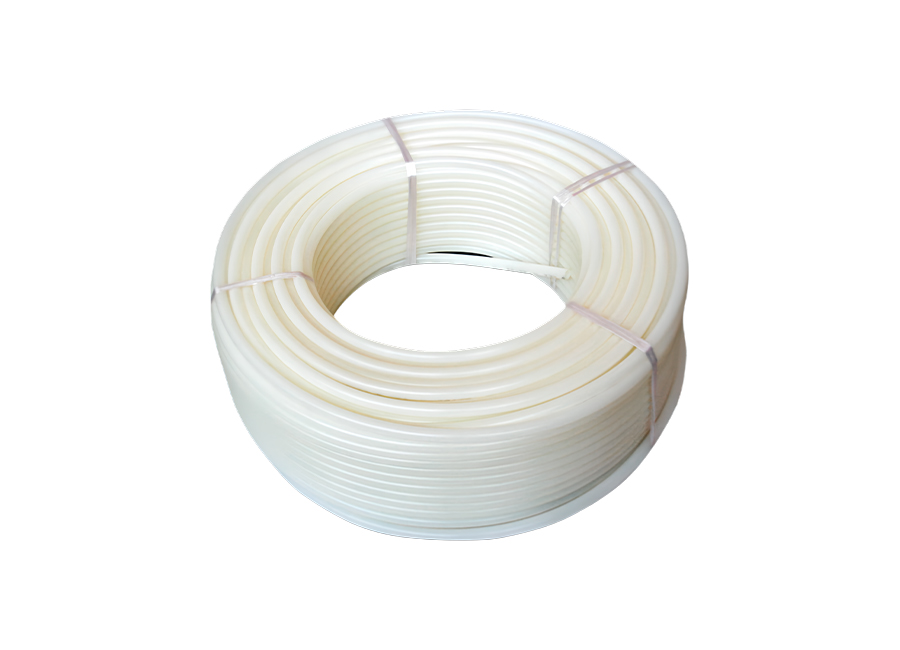
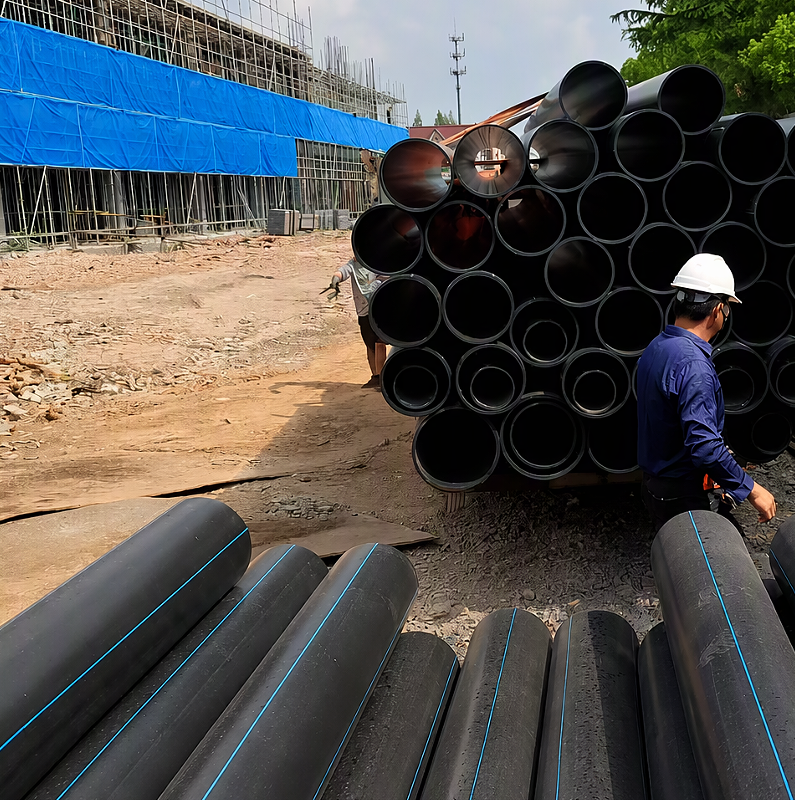
PE water pipe is commonly manufactured from about 20 mm up to 1000 mm and above in outside diameter. Smaller sizes are usually supplied in coils, and larger sizes in straight lengths such as 6 meters or 12 meters. Coils reduce the number of joints on service lines, and straight lengths suit mains installed by butt fusion.
Wall thickness at a glance
The wall thickness for a given diameter follows the formula e = dn divided by SDR, rounded to the standard value. The chart below shows wall thickness for a 110 mm PE Pipe across the common SDR series.
How wall thickness grows with diameter
At a fixed SDR, the wall grows in proportion to the diameter. The line chart shows SDR 17 PE Pipe, a common choice for water mains rated at PN10 in PE100.
Key points to confirm on a specification sheet
- Material grade, such as PE100 or PE80.
- Nominal diameter and SDR, with the resulting PN class.
- Length and supply format, coil or straight.
- Color or stripe identification for potable water use.
- The product standard the pipe is made to, for example the ISO 4427 series.
- Matching fittings in the same SDR for fusion joining.
PE Pipe Pressure Rating Explained
PE Pipe Pressure Rating is expressed as PN, the nominal pressure in bar at 20 degrees Celsius for water. A PN10 pipe is rated for a working pressure of 10 bar, which is about 1 MPa. The relationship used in the ISO 4427 series is:
PN = 20 x MRS / (C x (SDR - 1)), where C is the design coefficient, normally at least 1.25 for water.
For PE100 at SDR 17 this gives 20 x 10 / (1.25 x 16), which equals 10 bar. For PE100 at SDR 11 it gives 16 bar. The calculation shows why a higher grade resin helps: the same wall carries more pressure, or a thinner wall can carry the same pressure.
| SDR | PE100 PN (bar) | PE80 PN (bar) | Wall at dn 110 (mm) |
|---|---|---|---|
| 41 | 4 | 3.2 | 2.7 |
| 33 | 5 | 4 | 3.4 |
| 26 | 6 | 5 | 4.2 |
| 21 | 8 | 6 | 5.3 |
| 17 | 10 | 8 | 6.6 |
| 13.6 | 12.5 | 10 | 8.1 |
| 11 | 16 | 12.5 | 10.0 |
Temperature and surge considerations
The PN values above refer to water at 20 degrees Celsius. At higher water temperatures the allowable pressure is reduced using a re-rating factor, which the pipe maker or the PPI Handbook provides. Designers also check surge pressure. Because PE has a low modulus, pressure waves travel more slowly and are often smaller than in stiffer systems, but the check is still part of normal design practice for pumped mains.
PE Pipe Applications in Underground Water Supply
PE Pipe Applications cover almost every stage of a water network, from the treatment plant outlet to the customer connection. The most common uses are described below.
Municipal distribution mains
Urban mains in sizes from 110 mm to 630 mm are often laid in PE100 at SDR 17 or SDR 11. Continuous fused lines reduce the number of joints under roads, where repair work is disruptive.
Service connections
Small-diameter PE Pipe in coils runs from the main to the property boundary. Long coil lengths mean one pipe can often reach from the tapping saddle to the meter box without any intermediate joint.
Rural and village supply
Long transmission lines across open terrain benefit from light weight and long lengths. Crews can weld sections beside the route and pull them into the trench, which suits projects with limited equipment access.
Industrial and process water
Plants, mines and campuses use buried PE lines for cooling water, process water and fire water, where chemical exposure in soil and water would shorten the life of other materials.
Crossings and trenchless installation
River, road and rail crossings are often completed by horizontal directional drilling. PE Pipe suits this method because it is flexible enough to follow the bore path and its fused joints carry the pulling force.
Rehabilitation of existing lines
Slip lining places a smaller PE Pipe inside an old host pipe, and pipe bursting replaces the old line with a new PE Pipe of equal or larger size along the same alignment. Both methods reduce surface digging in built-up areas.
Areas with ground movement
In regions with settling soils, mining subsidence or seismic activity, flexible fused lines are often preferred because they can accommodate movement without joint separation.
Installation Methods and Trench Practice
PE Pipe performance underground depends on installation as much as on the pipe itself. A well-prepared trench supports the pipe evenly and keeps point loads away from the wall. The isometric diagram below shows a typical buried cross-section.
Typical open-trench sequence
- Excavate the trench to the design depth and width, with a stable base free of rock points.
- Place a bedding layer of sand or fine granular material and level it so the pipe rests along its full length.
- Fuse the pipe sections beside the trench, inspect the joint beads and record the fusion data.
- Lower the pipe into the trench without sharp bends, using slings suited to polyethylene.
- Place side fill in layers and compact it evenly on both sides, because the soil around the pipe carries part of the load.
- Add initial cover above the crown, then complete the backfill in layers up to ground level.
- Carry out pressure testing following the method in the project specification, allowing for the viscoelastic behavior of PE during the test.
- Flush and disinfect the line before commissioning.
Trenchless options
Horizontal directional drilling suits crossings and long runs where surface disruption must be limited. Pipe bursting and slip lining suit replacement or renewal in existing alignments. In all three, the pipe is installed under tension, so the pull-force limit for the chosen SDR needs to be checked with the maker before the pull begins. Bending radius also matters: commonly quoted guidance ranges from about 20 to 35 times the outside diameter depending on wall thickness and temperature.
PE Pipe Service Life Underground
50 years or more
PE Pipe Service Life is tied to the design basis in ISO 4427, which rates pressure for a service period of 50 years at 20 degrees Celsius. Industry sources such as the Plastics Pipe Institute discuss lives beyond 50 years where operating conditions stay within design limits. Actual life depends on operating pressure, temperature, installation quality and water chemistry.
Factors that influence service life
- Operating stress: running well below the rated pressure leaves a margin against long-term stress.
- Temperature: sustained high water temperatures reduce the long-term strength of any polyethylene pipe.
- Point loading: stones, uneven bedding and poor compaction create local stress on the wall.
- Surge events: repeated large pressure waves add fatigue stress, so pump control and valve closing times matter.
- Disinfectant exposure: chlorine and chloramine levels in potable water are considered during compound selection, and modern PE100 water compounds are formulated with stabilizers for this duty.
- UV exposure before burial: pipe stored outdoors for long periods is usually covered, even though black or striped water pipe contains stabilizers.
Because the pipe does not corrode, the wall thickness available at the end of its life is much closer to the wall installed on day one. This is a key difference in how the service life of buried PE Pipe is planned.
Selecting the Right PE Pipe Grade and SDR
Choosing between PE100 and PE80 comes down to pressure, diameter and handling needs. PE100 allows a thinner wall at the same pressure, which increases the inside diameter and flow capacity. PE80 is slightly more flexible at the same SDR and is used for moderate pressure duties. The radar chart shows a qualitative comparison on a five-point scale.
A simple selection path
- Define the maximum working pressure, including allowance for surge.
- Choose a grade and SDR that meet that pressure at the highest expected water temperature.
- Check the inside diameter against the required flow and acceptable velocity.
- Match the installation method, since pulled installations need more attention to wall thickness and tensile limits.
- Confirm fitting availability in the same SDR for fusion joining.
Practical Checklist for Underground PE Pipe Projects
The checklist below collects practices that experienced contractors and utility engineers commonly apply on buried PE water projects.
- Confirm pipe markings at delivery: grade, SDR, diameter, standard and production batch.
- Store pipe on flat ground, supported along its length, and keep coils from sharp edges.
- Use trained fusion operators and calibrated machines, and keep joint records.
- Remove stones from bedding and initial backfill material.
- Compact side fill in layers, keeping equal pressure on both sides of the pipe.
- Mark the route with a warning tape above the pipe, and add a tracer wire where locating is required.
- Allow the pipe to reach ground temperature before final connections, as it expands and contracts with temperature.
- Pressure test in line with the specified method, then flush and disinfect.
- Record as-built positions so future work can locate the line.
About Jiangyin Huada and Its PE Pipe Supply
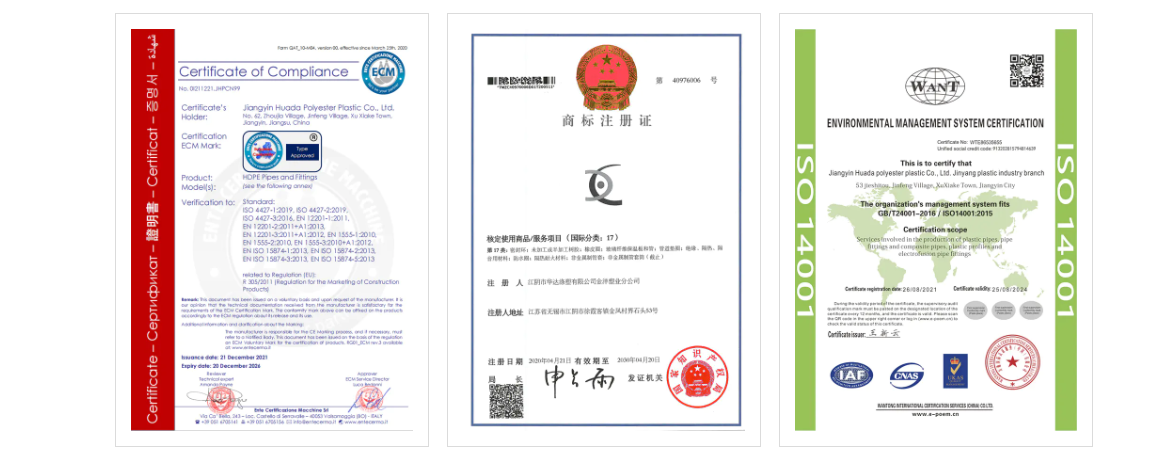
Jiangyin Huada was established in 2003 and is a pioneering force in the plastic pipe industry, integrating professional research and development, production, testing and sales of products and accessories. From customized design and production to procurement, installation and after-sales maintenance, the company provides customers with a comprehensive one-stop experience.
The product system is complete and diverse, and products are exported to more than 30 countries and regions, including Western Europe, East Africa, Southeast Asia, North America and the Middle East. The pipes are supported by independent test reports from third-party institutions. The company has completed many high-level projects at home and abroad, including the Bangladesh Nuclear Power Plant, the Belgian Telecommunications Pipeline Network and Beijing Daxing Airport.
For underground water supply, this experience supports project teams in matching PE Pipe grade, SDR and fittings to the duty, from small service lines to large-diameter mains.
PE Pipe FAQ
What is PE pipe?
PE pipe is a pipe made from polyethylene, a thermoplastic polymer. For water supply it is usually made from PE100 or PE80 compounds and joined by heat fusion into a continuous line.
What does PE stand for in pipes?
PE stands for polyethylene. The numbers in PE100 and PE80 refer to the material grade, based on a Minimum Required Strength of 10 MPa and 8 MPa respectively.
What are PE pipes used for?
PE Pipe Applications include municipal water mains, service connections, rural supply lines, industrial process water, trenchless crossings and the renewal of existing lines by slip lining or pipe bursting.
What is the standard size of PE pipe?
PE water pipe is commonly made from about 20 mm up to 1000 mm and larger in outside diameter. Common pressure classes come from SDR values such as 17 and 11, which relate wall thickness to diameter.
How do you calculate PE pipe wall thickness?
Divide the nominal outside diameter by the SDR and round to the standard value. For example, a 110 mm pipe at SDR 17 has a wall of about 6.6 mm.
What is the pressure rating of PE pipe?
PE Pipe Pressure Rating depends on the grade and SDR. For PE100, SDR 17 corresponds to PN10 and SDR 11 to PN16 at 20 degrees Celsius, based on a design coefficient of 1.25.
How long does PE pipe last underground?
ISO 4427 pressure ratings use a 50-year design basis at 20 degrees Celsius, and industry sources discuss longer lives under suitable conditions. Operating pressure, temperature and installation quality all affect the result.
How are PE pipes joined underground?
The usual methods are butt fusion for pipe-to-pipe joints and electrofusion for couplings and saddles. Mechanical couplings are used where connection to another system is needed.
Can PE pipe be installed without open trenches?
Yes. Horizontal directional drilling, pipe bursting and slip lining are common trenchless methods for PE Pipe, because the material is flexible and the fused joints can carry pulling loads.