English
 中文简体
中文简体 русский
 عربى
عربى
Content
- 1 PVC Pipe Pressure Rating: Schedule 40 vs Schedule 80 at a Glance
- 2 What Is PVC Pipe
- 3 Schedule 40 and Schedule 80: Understanding the Dimensional Difference
- 4 How PVC Pipe Pressure Ratings Are Determined
- 5 Schedule 40 vs Schedule 80 Pressure Rating by Pipe Size
- 6 Effect of Temperature on PVC Pipe Pressure Rating
- 7 Schedule 40 vs Schedule 80: Overall Performance Comparison
- 8 Typical Applications for PVC Pipe
- 9 Advantages of PVC Pipe
- 10 Choosing Between Schedule 40 and Schedule 80 for Your Project
- 11 About Our PVC Pipe Manufacturing
- 12 Frequently Asked Questions
PVC Pipe Pressure Rating: Schedule 40 vs Schedule 80 at a Glance
Schedule 80 PVC Pipe carries a noticeably higher pressure rating than Schedule 40 pipe of the same nominal size because it is manufactured with a thicker wall while keeping the same outside diameter. According to commonly published PVC pipe reference tables based on ASTM D1785, a 2 inch Schedule 40 pipe is generally listed with a maximum operating pressure of about 166 psi for non shock water service at 73 degrees Fahrenheit, while a 2 inch Schedule 80 pipe in the same reference tables is listed at about 243 psi under the same conditions. The same pattern repeats across the full size range: Schedule 80 consistently outperforms Schedule 40 on pressure capacity at every comparable nominal size, at the cost of a smaller inside diameter and a heavier pipe wall.
This does not automatically make Schedule 80 the better choice for every job. Schedule 40 remains the far more common option for ordinary water supply, drainage, and irrigation piping where the operating pressure stays comfortably within its rating, since its larger bore allows more flow for a given outside diameter. Schedule 80 is generally reserved for higher pressure service, industrial water lines, and applications where extra wall thickness adds a margin of mechanical protection. The sections below walk through the dimensional differences, how pressure ratings are actually calculated, how temperature affects the rating, and how to decide which schedule fits a specific project.
What Is PVC Pipe
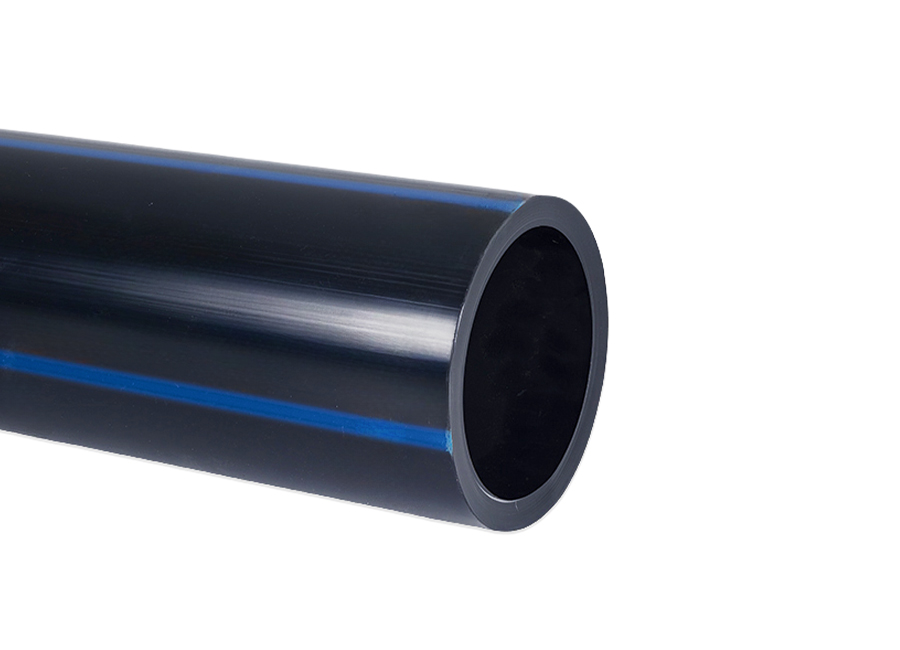
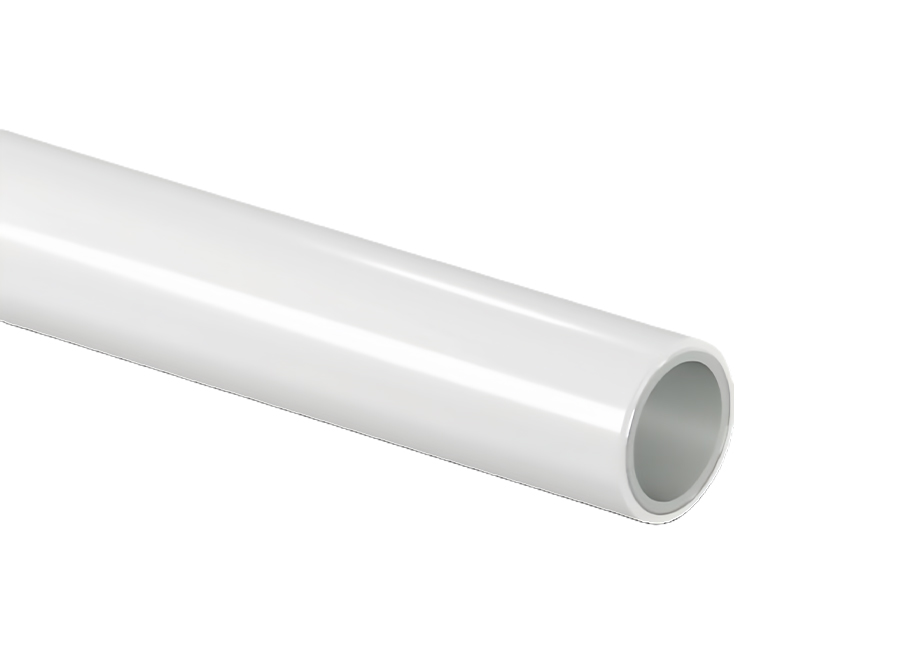
PVC Pipe is rigid plastic pipe extruded from polyvinyl chloride resin, most commonly compounded to a PVC Type I, Grade 1 formulation that is widely referenced in pressure pipe manufacturing standards such as ASTM D1785. It is produced in a range of nominal sizes and wall thickness classes, most notably Schedule 40 and Schedule 80, and is used across water supply, drainage, sewage, and irrigation systems in both residential and commercial settings, as well as in a range of light industrial applications.
What PVC Pipe Is Made Of
PVC pipe is made from polyvinyl chloride resin combined with a small amount of stabilizers and processing aids, then extruded into a continuous rigid tube and cut to length. The resulting material is corrosion resistant, does not rust or scale the way metal piping can, and has a smooth interior bore that keeps friction loss relatively low compared with many metal pipe materials of similar diameter. These properties are a major reason PVC pipe has become one of the most widely installed piping materials for cold water distribution, drainage, and irrigation networks.
Schedule 40 and Schedule 80: Understanding the Dimensional Difference
The word schedule refers to the wall thickness classification of the pipe rather than its diameter. For any given nominal pipe size, Schedule 40 and Schedule 80 pipe share the exact same outside diameter, since both are produced to iron pipe size conventions. What changes between the two schedules is the wall thickness and, as a direct result, the inside diameter: Schedule 80 pipe has a thicker wall and therefore a smaller bore than Schedule 40 pipe of the same nominal size, which is why a schedule 80 pvc pipe dimensions chart will always show a larger minimum wall thickness figure than the equivalent schedule 40 pvc pipe dimensions chart at the same nominal size.
Because the outside diameter is fixed for a given nominal size, the practical effect of moving from Schedule 40 to Schedule 80 is a modest reduction in flow area combined with a meaningful gain in pressure capacity and physical robustness. The table below sets out representative dimensions for common sizes referenced in ASTM D1785 based charts.
| Nominal Size | Outside Diameter (in) | Sch 40 Wall (in) | Sch 40 Inside Diameter (in) | Sch 80 Wall (in) | Sch 80 Inside Diameter (in) |
|---|---|---|---|---|---|
| 1/2 in | 0.840 | 0.109 | 0.602 | 0.147 | approx 0.546 |
| 3/4 in | 1.050 | 0.113 | 0.804 | 0.154 | approx 0.742 |
| 1 in | 1.315 | 0.133 | 1.029 | 0.179 | approx 0.957 |
| 2 in | 2.375 | 0.154 | 2.047 | 0.218 | approx 1.939 |
| 4 in | 4.500 | 0.237 | 3.998 | 0.337 | approx 3.826 |
| 6 in | 6.625 | 0.280 | 6.031 | 0.432 | approx 5.761 |
Outside diameter follows a fixed value for each nominal size regardless of schedule, consistent with common PVC pipe outside diameter chart references based on ASTM D1785.
Schedule 40 vs Schedule 80 Pressure Rating by Pipe Size
One of the more practical points to understand about pvc pipe pressure rating tables is that the rated pressure drops steadily as the nominal pipe size increases, for both schedules. This happens because larger diameter pipe develops higher hoop stress in the wall for the same internal pressure, so the rated pressure has to come down to keep the design stress within the same safe limit. The comparison below uses commonly published ASTM D1785 based reference values for non shock water service at 73 degrees Fahrenheit.
| Nominal Size | Schedule 40 (psi) | Schedule 80 (psi) |
|---|---|---|
| 1/2 in | 358 | 509 |
| 3/4 in | 289 | 413 |
| 1 in | 270 | 378 |
| 1-1/2 in | 198 | 282 |
| 2 in | 166 | 243 |
| 3 in | 158 | 225 |
| 4 in | 133 | 194 |
| 6 in | 106 | 167 |
Illustrative side by side comparison built from the maximum operating pressure values in the table above. Actual certified ratings should be confirmed against the specific pipe manufacturer data sheet.
Effect of Temperature on PVC Pipe Pressure Rating
PVC pipe pressure ratings are published for a reference temperature of 73 degrees Fahrenheit, and the allowable pressure drops as the operating temperature rises, since PVC gradually loses mechanical strength at higher temperatures. By the time the water temperature reaches 140 degrees Fahrenheit, which is generally regarded as the practical upper service limit for PVC pipe, the allowable pressure has fallen to roughly one fifth of the rating at 73 degrees Fahrenheit. This is an important factor for any application where hot water, direct sunlight heating of exposed above ground pipe, or a warm process fluid could push the pipe wall temperature well above normal ambient conditions.
De-rating factors shown are commonly published values based on ASTM D1785 reference tables and apply to both Schedule 40 and Schedule 80 PVC pipe in the same proportion.
| Operating Temperature | De-Rating Factor |
|---|---|
| 73F | 1.00 |
| 90F | 0.75 |
| 110F | 0.51 |
| 130F | 0.31 |
| 140F | 0.22 |
Schedule 40 vs Schedule 80: Overall Performance Comparison
Beyond raw pressure numbers, Schedule 40 and Schedule 80 pipe trade off several practical characteristics that matter on a real project. Schedule 80 offers a clear advantage in pressure capacity and general mechanical robustness thanks to its thicker wall, while Schedule 40 offers a larger bore for a given outside diameter, which supports higher flow for the same nominal size, along with a lighter pipe that is generally easier to cut, carry, and join.
General comparative positioning based on typical engineering characteristics of each schedule. Actual performance depends on the specific pipe diameter, compound, and installation conditions.
Typical Applications for PVC Pipe
Because PVC pipe resists corrosion and most common waterborne chemicals while remaining lightweight and easy to join, it is used across a broad set of water handling applications. Some of the most common contexts include the following.
- Residential and commercial cold water supply lines
- Gravity drainage, waste, and sewage piping
- pvc pipe for irrigation system installations on turf, landscaping, and sports field projects
- pvc pipe for agricultural irrigation networks feeding sprinklers and drip lines across farmland
- pvc pipe for industrial water transfer lines where the fluid is compatible with PVC and the operating pressure fits within the pipe rating
- Electrical and communication conduit runs, typically in a non pressure rated grade
Schedule 40 is generally the default choice for irrigation and general water supply because it keeps material weight down while still meeting the pressure needs of most residential and light commercial systems. Schedule 80 tends to appear more often in industrial water lines, pump discharge piping, and other higher pressure or higher abuse locations where the extra wall thickness earns its keep.
Advantages of PVC Pipe
Why PVC Is a Common Choice for Water Systems
PVC pipe combines several practical advantages that explain its widespread use in water supply, drainage, and irrigation networks.
- Strong resistance to corrosion, rust, and scale build up compared with many metal pipe materials
- Smooth interior bore that keeps friction loss relatively low and supports consistent flow over the service life of the pipe
- Light weight compared with metal pipe of a similar diameter, which generally simplifies handling and installation
- Good chemical compatibility with water and many common non solvent based fluids
- Consistent dimensional standards across Schedule 40 and Schedule 80 that make design, sourcing, and future maintenance more predictable
Choosing Between Schedule 40 and Schedule 80 for Your Project
The starting point for choosing a schedule is the maximum expected operating pressure of the system, including any pressure surges that might occur when pumps start, valves close quickly, or the system experiences water hammer. Once the required pressure margin is understood, the nominal size and the corresponding pressure rating table can be used to check whether Schedule 40 provides enough headroom or whether Schedule 80 is the more appropriate choice.
Other Factors Worth Considering
- Operating temperature range, including any exposure to hot fluid or prolonged direct sunlight on above ground runs
- Mechanical exposure such as vehicle traffic, foot traffic, or the risk of impact during installation and later maintenance
- Required flow rate, since the larger bore of Schedule 40 at a given nominal size can matter for high flow applications
- Threaded connections, since cutting threads removes wall material and reduces the effective pressure rating, which is one of the more common reasons Schedule 80 is specified for threaded joints even in otherwise moderate pressure systems
For most general water supply, drainage, and irrigation projects, Schedule 40 remains a practical and widely available option. Where the system pressure sits close to the Schedule 40 rating, where threaded connections are involved, or where the pipe run faces a higher risk of mechanical damage, moving up to Schedule 80 provides a useful additional margin.
About Our PVC Pipe Manufacturing
Our PVC Pipe series is manufactured under the Jiangyin Huada brand to offer a versatile and reliable solution across water supply, drainage, sewage, and irrigation applications. The pipe is produced with advanced extrusion techniques and consistent raw material control to meet common industry dimensional references for both Schedule 40 and Schedule 80 pipe, with resistance to corrosion, common waterborne chemicals, and sustained internal pressure across the intended service range.
With chemical resistance and a low friction interior, this PVC pipe range is well suited to both residential and commercial plumbing systems, as well as agricultural and industrial water transfer projects. The rigid structure supports long service life with limited ongoing maintenance, and the lightweight design generally makes handling and installation more straightforward compared with heavier pipe materials of a similar diameter.
PVC pipe from this range is available across a range of sizes and pressure classes and can be produced to match the specific requirements of a given project, whether the application is general water transportation, drainage, or agricultural irrigation. As an OEM PVC pipe manufacturer, Jiangyin Huada places emphasis on product consistency, dimensional accuracy, and ongoing quality control across its pipe and fitting production lines.
Frequently Asked Questions
- Q1. What is PVC pipe
PVC pipe is rigid plastic pipe extruded from polyvinyl chloride resin, produced in standard sizes and wall thickness classes such as Schedule 40 and Schedule 80 for water supply, drainage, and irrigation use. - Q2. What is PVC pipe used for
It is commonly used for cold water supply lines, drainage and sewage piping, agricultural and landscape irrigation, and a range of industrial water transfer applications where the media is compatible with PVC. - Q3. What are PVC pipes made of
They are made from polyvinyl chloride resin combined with stabilizers and processing aids, then extruded into a rigid tube that is cut and finished to standard nominal sizes. - Q4. What are the advantages of PVC pipe
PVC pipe offers strong corrosion resistance, a smooth low friction bore, light weight compared with metal pipe, good chemical compatibility with water, and consistent dimensional standards across common schedules. - Q5. How much pressure can PVC pipe handle
It depends on the nominal size, schedule, and operating temperature, but commonly published ASTM D1785 based reference tables list ratings from roughly 100 to over 500 psi for non shock water service at 73 degrees Fahrenheit across common sizes. - Q6. What is the pressure rating of Schedule 40 PVC
It varies by size, with commonly published reference tables listing figures such as roughly 358 psi at 1/2 inch and roughly 166 psi at 2 inch for non shock water service at 73 degrees Fahrenheit, decreasing further at larger sizes. - Q7. What are standard PVC pipe sizes
Standard nominal sizes commonly range from 1/2 inch through 24 inch under ASTM D1785, following iron pipe size outside diameter conventions shared with steel pipe of the same nominal size. - Q8. What is the outside diameter of PVC pipe
Outside diameter is fixed for each nominal size regardless of schedule, for example 0.840 inch at 1/2 inch nominal size and 2.375 inch at 2 inch nominal size, matching common iron pipe size references. - Q9. What is the inside diameter of PVC pipe
Inside diameter depends on both the nominal size and the schedule, since a thicker Schedule 80 wall reduces the bore compared with Schedule 40 pipe of the same outside diameter.