English
 中文简体
中文简体 русский
 عربى
عربى
Two quotes landed on the same desk for a 500-meter municipal water line. One was labeled "PE pipe"; the other, "HDPE pipe," was 18% higher. The buyer's question was simple: are these the same material under different names? The short answer is no, and the difference shows up in density, molecular structure, and pressure rating long before the pipe is installed.
Polyethylene (PE) is the family name for a broad range of thermoplastics. High-density polyethylene (HDPE) is a specific member of that family, and it differs from the rest of the polyethylene group in ways that matter to every engineer who specifies piping. This article compares polyethylene vs HDPE on the properties that drive procurement decisions: density, mechanical strength, temperature limits, pipe applications, cost, and recyclability.
Content
- 1 What Is Polyethylene?
- 2 What Is HDPE?
- 3 Polyethylene vs HDPE: Key Differences at a Glance
- 4 Why Molecular Structure Changes Everything
- 5 Density and Strength: The Numbers Behind the Choice
- 6 Polyethylene vs HDPE in Pipe Applications
- 7 Cost, Service Life, and Recyclability
- 8 How to Choose Between Polyethylene and HDPE
- 9 Frequently Asked Questions
What Is Polyethylene?
Polyethylene is produced by polymerizing ethylene gas, and it is the most common thermoplastic in the world, with annual output on the order of 100 million metric tons. Manufacturers control the density and crystal structure of PE by adjusting polymerization pressure, temperature, and catalyst type, producing four main commercial grades: LDPE (low-density), LLDPE (linear low-density), MDPE (medium-density), and HDPE (high-density).
For piping, international standard ISO 4427 classifies PE materials by minimum required strength (MRS), which is the basis of pressure ratings such as PE80 and PE100. When a supplier writes "PE pipe" without a grade, the material class is incomplete; a practical explanation of what polyethylene pipe is can help you pin down the grade before requesting a quotation.
What Is HDPE?
High-density polyethylene is the grade of polyethylene with the least side branching. Its molecular chains are almost perfectly linear, which allows them to pack tightly into a highly crystalline structure. The result is a density between roughly 0.941 and 0.965 g/cm³, the highest among common PE grades, and with it come higher yield strength, stiffness, hardness, and melting temperature.
In pipe form, HDPE is the material behind the familiar PE80 and PE100 classifications. PE100, the most widely specified pressure pipe resin, has a minimum required strength of 10 MPa and offers the best resistance to slow crack growth in buried service.
Polyethylene vs HDPE: Key Differences at a Glance
The table below compares typical lower-density polyethylene grades with HDPE across the properties that affect material selection. Values are published industry ranges, and a specific resin may sit anywhere within them.
| Property | Polyethylene (lower-density grades) | HDPE |
|---|---|---|
| Typical density | 0.910–0.925 g/cm³ | 0.941–0.965 g/cm³ |
| Crystallinity | 40–60% | 60–80% |
| Molecular structure | Branched chains, loosely packed | Linear chains, tightly packed |
| Tensile strength at yield | 8–15 MPa | 20–31 MPa |
| Flexural modulus | 200–400 MPa | 800–1,400 MPa |
| Melting point | 105–115 °C | 126–135 °C |
| Continuous service temperature (pipe) | Up to about 40 °C | Up to about 60 °C |
| Flexibility | High | Moderate |
| Abrasion resistance | Moderate | Excellent |
| Common products | Films, bags, squeeze bottles, flexible tubes | Rigid bottles, tanks, pressure pipes, cable ducts |
Why Molecular Structure Changes Everything
The same monomer, ethylene, can produce plastics that feel completely different because of chain architecture. In HDPE, the chains sit side by side with almost no branching, forming densely crystallized regions. In lower-density polyethylene, typically LDPE, long side branches interrupt that packing and create free volume, which reduces density and stiffness.
This structural difference is the root cause of the entire polyethylene vs HDPE property gap. Once the chain packing is understood, the strength, temperature, and cost differences all fall into place.
Density and Strength: The Numbers Behind the Choice
Density is the clearest single indicator of a PE grade. The chart below shows midpoint densities for the four most common polyethylene families; HDPE sits clearly at the top of the range. That density translates directly into load-bearing capacity.
The strength gap is even more relevant for pipe design. Published yield strength data show HDPE at roughly two to three times the tensile strength of LDPE. For a pressure pipe, higher strength allows a thinner wall for the same pressure class, which reduces weight and material cost per meter.
Polyethylene vs HDPE in Pipe Applications
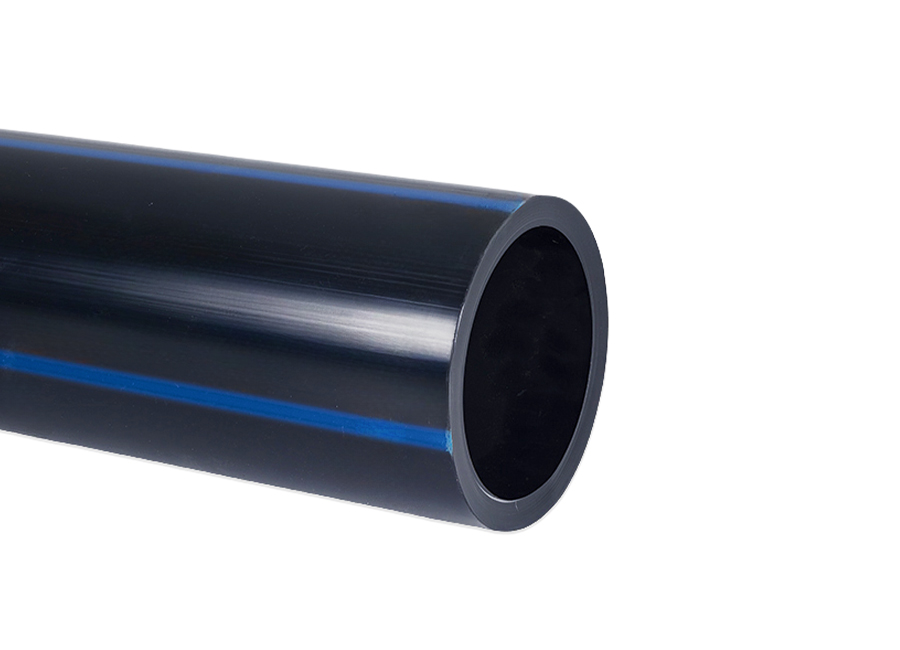
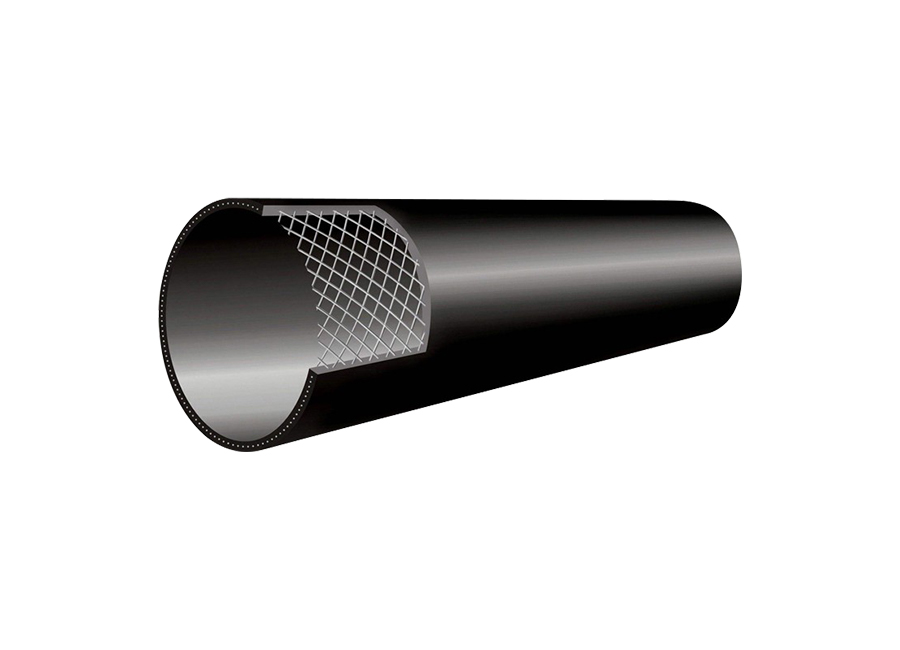
In piping, the practical question is never "polyethylene or HDPE" but "which PE grade is specified for the service." Nearly all high-integrity buried pipelines are built with HDPE. It carries drinking water, gas, industrial chemicals, slurries, and telecom cables because it resists impact, corrosion, and slow crack growth over decades of service.
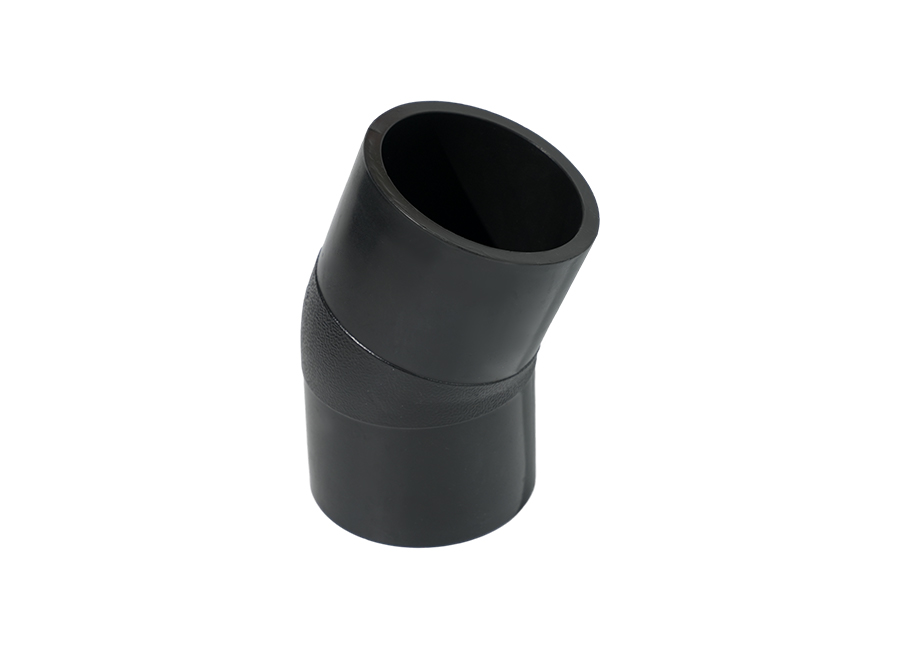
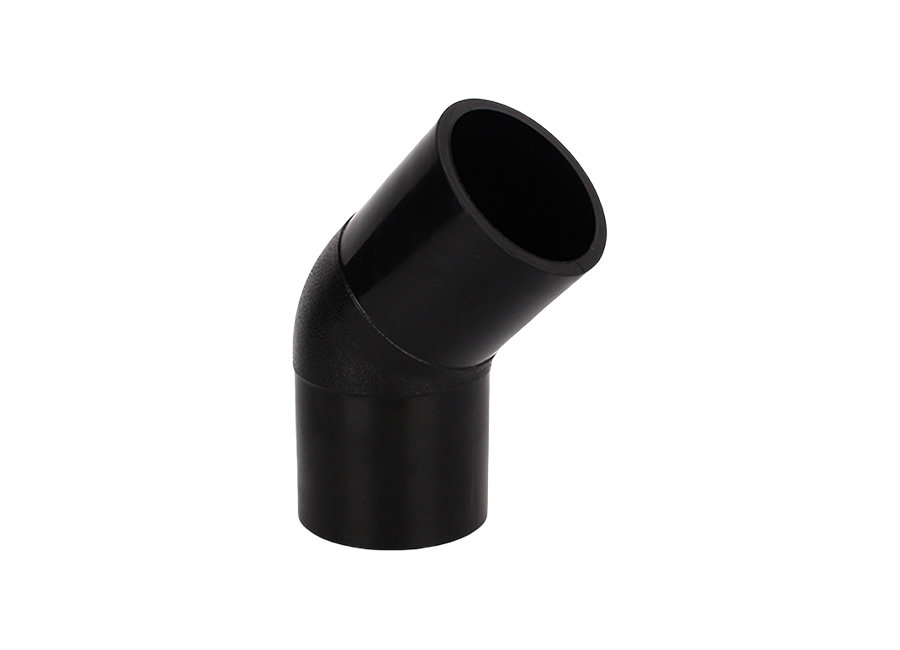
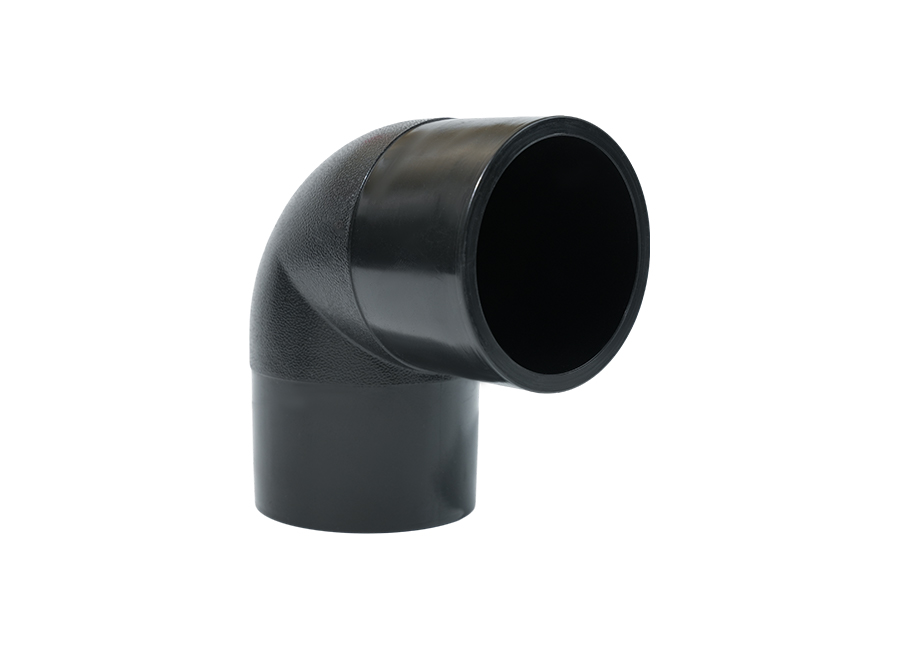
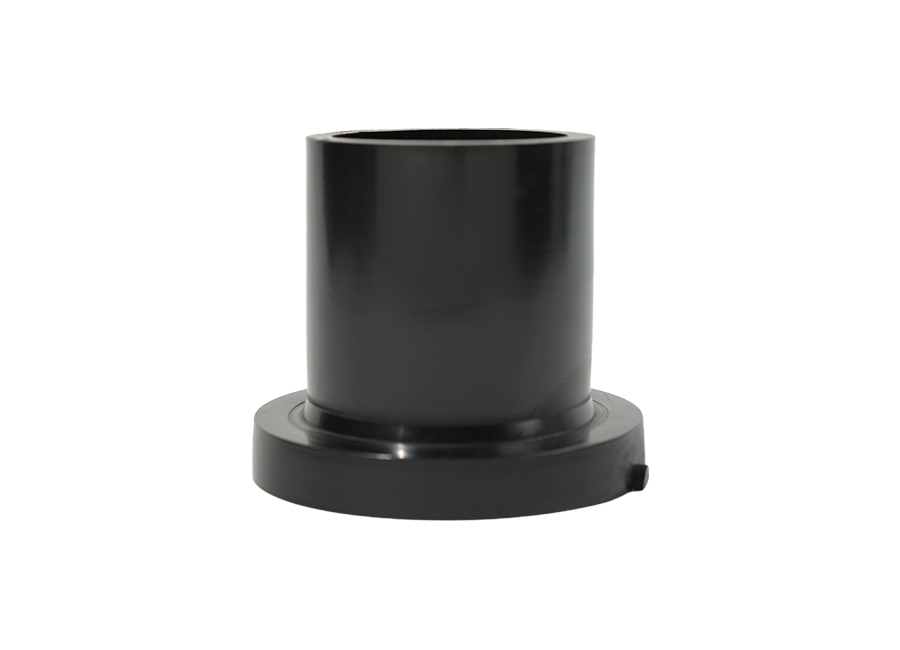
At Huada, the HDPE pipe range covers diameters from 20 mm to 1,600 mm, with pressure ratings designed to ISO 4427. Matching fittings are available for both major joining methods. Butt fusion melts the pipe ends and presses them together, producing a joint stronger than the pipe wall; electrofusion uses an embedded heating coil inside the fitting, making it ideal for repairs and confined spaces. A pipeline assembled this way has no mechanical joints and therefore no leak paths.
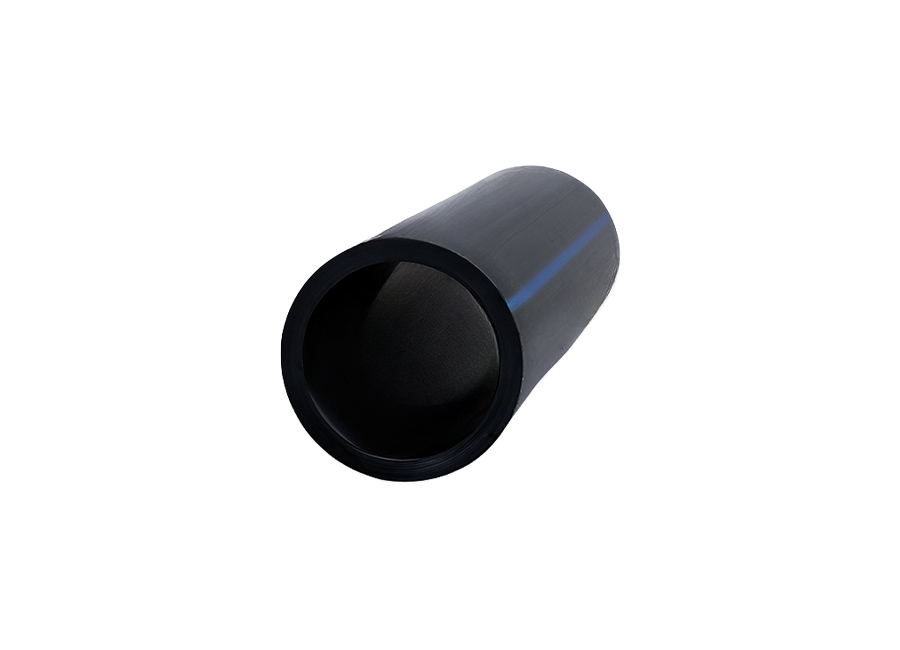 HDPE Pipe Manufacturers | Huada Suppliers, FactoryJiangyin Huada – Experienced HDPE Pipe Manufacturer & Supplier. Providing High-Quality PE100 HDPE Pipes for Water Supply & Electrical Ins...View Product →
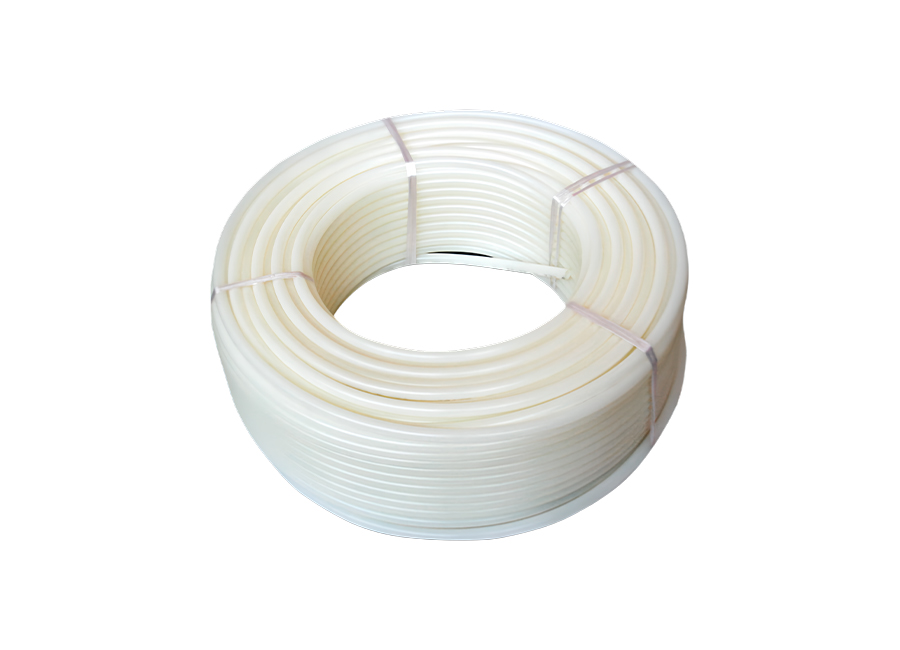
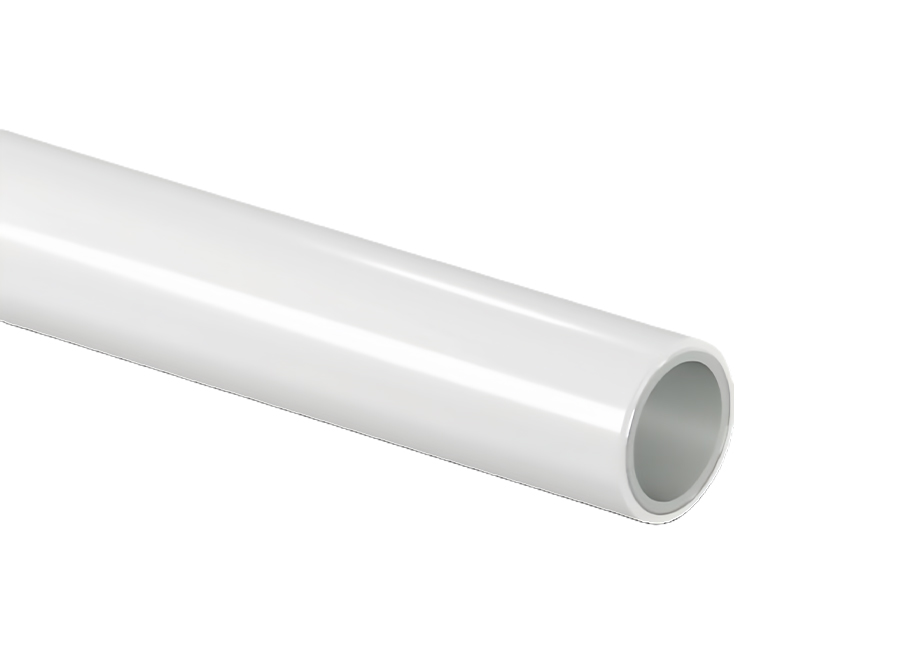
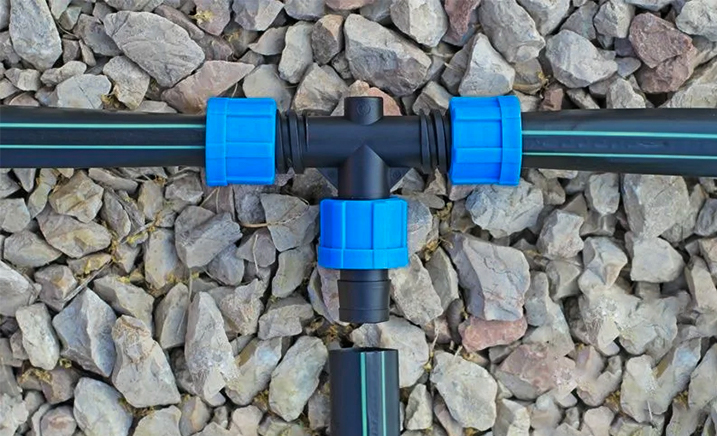
Lower-density polyethylene is not left out of piping. LDPE is used where flexibility and small bend radius matter: drip irrigation tape, flexible small-bore lines, cable sheathing, and pond liners. MDPE is a middle option used extensively for gas distribution networks because of its balance of strength and stress-crack resistance.
Cost, Service Life, and Recyclability
At the raw material level, HDPE resin usually costs only a little more per kilogram than LDPE or general PE. The system-level economics, however, favor HDPE for pipes. Because HDPE is stronger, a PE100 pipe can operate at the same pressure with a thinner wall, meaning fewer kilograms of resin per meter of pipeline. Lower maintenance from fusion joints and a 50- to 100-year design life per ISO 4427 push the lifecycle cost below most alternatives.
Consider these lifecycle factors when comparing polyethylene vs HDPE:
- Installation cost: fusion joining removes threaded adapters and glued fittings, cutting labor and spare parts.
- Operating cost: a leak-free HDPE network lowers non-revenue water in municipal supply and prevents gas escape in distribution.
- End-of-life value: HDPE scrap is melt-recyclable with stable properties, so offcuts return to the recycling stream.
Sustainability performance is strong for both materials, with HDPE being the more standardized stream. HDPE carries resin identification code 2 and is one of the most widely collected plastics in the world. Recycled HDPE is reprocessed into drainage pipes, industrial crates, and non-pressure products, closing the loop on what is already a long-lived material.
How to Choose Between Polyethylene and HDPE
Choose by application, not by name. Use these rules in procurement:
- Choose HDPE when the line will be pressurized, buried, or exposed to impact and abrasion: water mains, gas distribution, sewage, mining lines, and cable ducts.
- Choose lower-density PE when the product must bend, compress, or conform: squeeze tubes, packaging film, flexible irrigation components, and lining sheets.
- For rigid blow-molded containers, HDPE is the default for bottles that must keep their shape; LDPE is used for collapsible containers.
- When a pipe specification is unclear, ask for the MRS grade. PE80 and PE100 are HDPE-grade resins and are accepted for pressure service; unclassified PE is not.
For a project that needs the complete system, a supplier should provide pipe, fittings, and technical support together. In addition to the pipe itself, a full matching set of butt fusion fittings such as tees, reducers, and flanges prevents compatibility problems during installation. A single-source package also simplifies pressure testing and documentation.
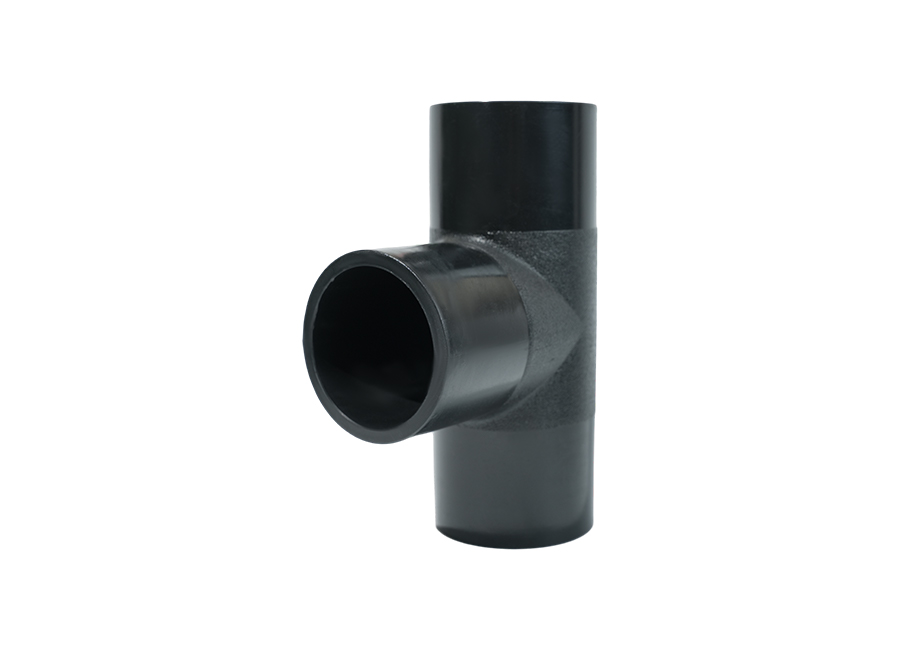 HDPE Butt & Socket Fusion Tee Suppliers, Wholesale HDPE Butt & Socket Fusion TeeAs a professional China OEM HDPE Butt & Socket Fusion Tee suppliers and HDPE Butt & Socket Fusion Tee Jiangyin Huada specializes in whole...View Product →
Frequently Asked Questions
Q1: Is HDPE the same as polyethylene?
Not exactly. HDPE is one specific grade within the polyethylene family. All HDPE is polyethylene, but not all polyethylene is HDPE; the family also includes LDPE, LLDPE, and MDPE with different densities and flexibility.
Q2: Which is better, PE pipe or HDPE pipe?
For pressurized water and gas lines, HDPE pipe is the better choice because higher density delivers higher strength, stiffness, and resistance to slow crack growth. Lower-density PE pipe is limited to low-pressure, flexible, or temporary service.
Q3: What is the difference between LDPE and HDPE?
LDPE has branched molecular chains, a density of roughly 0.910–0.925 g/cm³, and high flexibility. HDPE has linear chains, a density of 0.941–0.965 g/cm³, and about twice the tensile strength. Use LDPE for films and squeeze products, HDPE for rigid industrial parts.
Q4: How long does HDPE pipe last?
Per the ISO 4427 design basis, HDPE pipe is rated for a 50-year service life and frequently exceeds 100 years under normal buried conditions. Lower-density PE at the same pressure and soil conditions typically provides a shorter reliable life.
Q5: Is HDPE pipe recyclable?
Yes. HDPE carries resin identification code 2 and is recycled in large volumes around the world. Scrap pipes and fittings can be cleaned, granulated, and re-extruded into new piping or non-pressure HDPE products.
Q6: Is HDPE safe for drinking water?
HDPE is approved for potable water systems when the resin and pipe comply with health regulations such as NSF/ANSI 61 or the applicable national standard. The smooth bore does not scale, and the material does not release heavy-metal contaminants.