English
 中文简体
中文简体 русский
 عربى
عربى
A municipal engineer in Jiangyin is specifying a replacement water main. The drawing calls for "HDPE DN315 SDR17 PE100," and every one of those terms affects the pipe that will be delivered and fused on site. Outside diameter, wall thickness, and pressure class are not independent numbers; they define each other. Once you understand how they relate, choosing the right HDPE pipe size becomes a straightforward calculation rather than a guess.
Content
HDPE Pipe Size Terminology You Need to Know
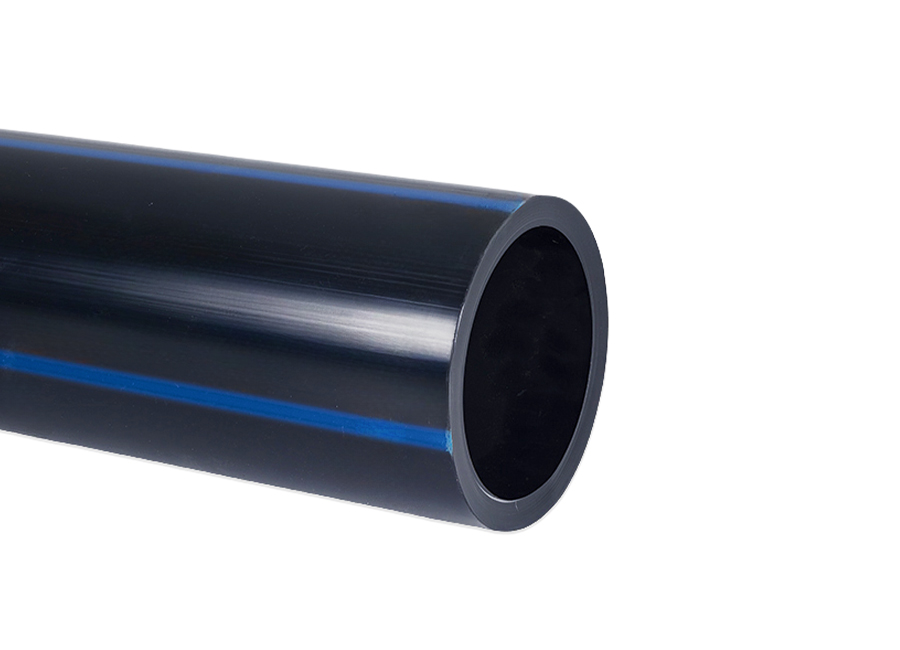
HDPE pipe is dimensioned by its outside diameter, not its inside diameter. That is the single most common source of ordering errors. The terms below appear on every HDPE datasheet and are worth knowing before you compare sizes.
- OD (outside diameter): the measured outer dimension in millimetres or inches. Fusion tooling and fittings are matched to the OD.
- ID (inside diameter): the flow area, calculated as OD minus twice the wall thickness.
- SDR (Standard Dimension Ratio): OD divided by wall thickness. A lower SDR means a thicker wall and a higher pressure rating.
- DN / NPS: the nominal size label that tracks the OD closely in millimetres (DN) or inches (NPS).
- PN (pressure nominal): the rated working pressure in bars at 20°C, for example PN10 or PN16.
Standard HDPE Pipe Sizes: From 20 mm to 1600 mm
HDPE pipe is manufactured across a broad diameter range, so the available span is rarely a constraint. Common production ranges run from 20 mm up to 1600 mm, and the practical choice depends on the application:
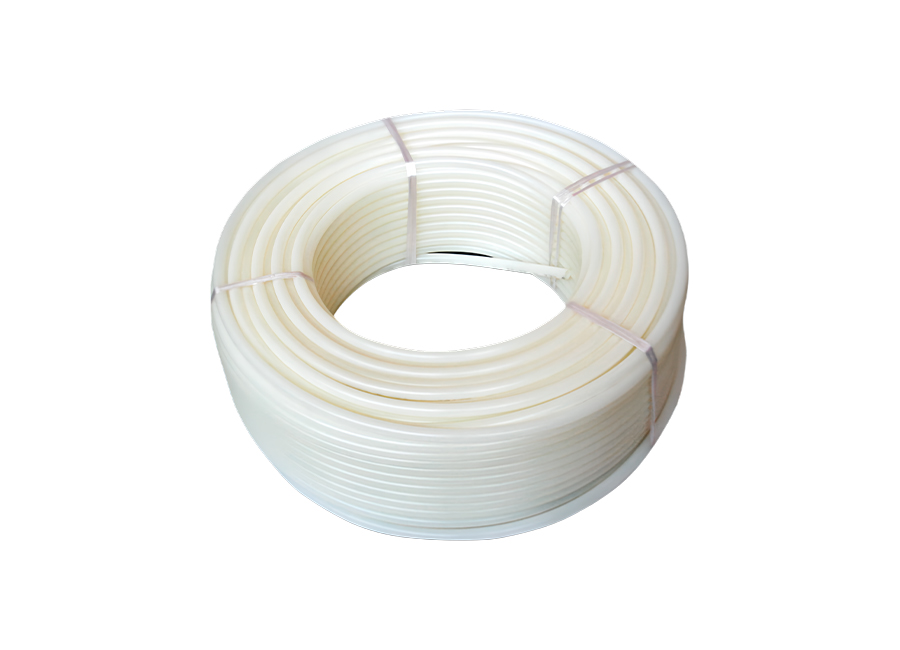
- 20–63 mm: drip irrigation, garden supply, and small service lines, typically delivered in coils.
- 75–200 mm: building services and municipal distribution branches.
- 200–630 mm: main distribution lines, sewer laterals, and industrial process piping.
- 630–1600 mm: water transmission mains, stormwater systems, and heavy civil works.
The diameter span covered by a single project usually falls into one of these bands. If your design stays within one band, the size decision comes down to flow and pressure. Our HDPE pipe series is manufactured from 20 mm to 1600 mm, so the nominal size and the SDR class can be matched to the duty rather than constrained by availability.
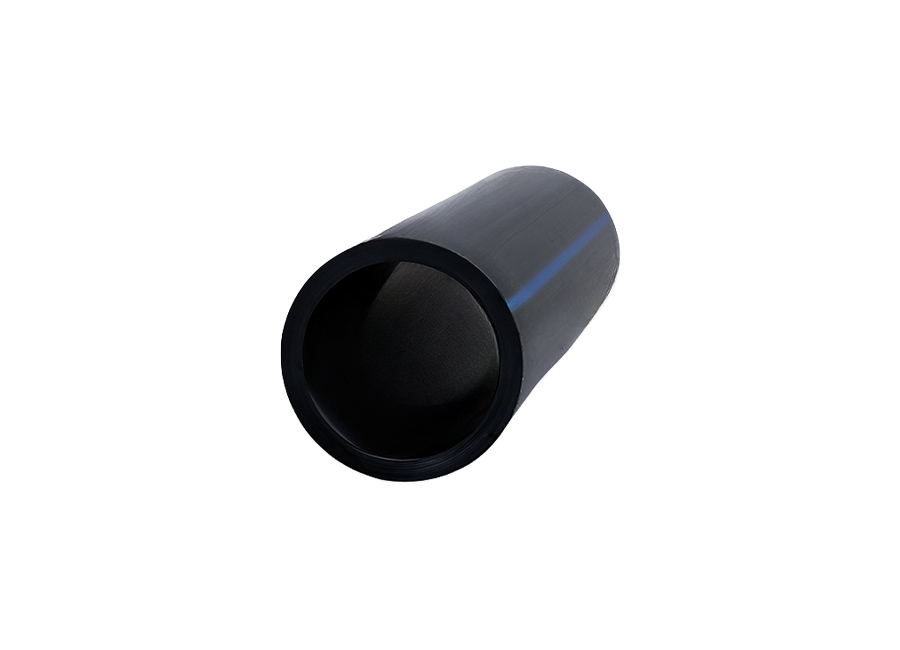 HDPE Pipe Manufacturers | Huada Suppliers, FactoryJiangyin Huada – Experienced HDPE Pipe Manufacturer & Supplier. Providing High-Quality PE100 HDPE Pipes for Water Supply & Electrical Ins...View Product →
HDPE Pipe Size Chart: OD, Wall Thickness, and ID
The table below gives typical PE100 HDPE pipe dimensions. Wall thickness values follow the ISO 4427 and EN 12201 dimension series, where SDR is the ratio of OD to wall thickness. The ID is calculated from the other two values.
| DN (mm) | OD (mm) | SDR 17 wall (mm) | SDR 17 ID (mm) | SDR 11 wall (mm) | SDR 11 ID (mm) |
|---|---|---|---|---|---|
| 32 | 32 | 1.9 | 28.2 | 3.0 | 26.0 |
| 63 | 63 | 3.8 | 55.4 | 5.8 | 51.4 |
| 110 | 110 | 6.6 | 96.8 | 10.0 | 90.0 |
| 160 | 160 | 9.5 | 141.0 | 14.6 | 130.8 |
| 200 | 200 | 11.9 | 176.2 | 18.2 | 163.6 |
| 315 | 315 | 18.7 | 277.6 | 28.6 | 257.8 |
| 630 | 630 | 37.1 | 555.8 | 57.2 | 515.6 |
Notice what the table does not change: for a given DN, the OD stays the same across SDR classes. Choosing a thicker wall changes the ID and the pressure rating but not the fusion dimension.
How SDR and Wall Thickness Affect Pressure Rating
The conclusion up front: SDR is the single number that links geometry to strength. Because SDR = OD / wall thickness, every step down in SDR adds wall material and raises the pressure rating. For PE100, the standard pairings are SDR26 = PN6, SDR21 = PN8, SDR17 = PN10, SDR13.6 = PN12.5, SDR11 = PN16, and SDR7.4 = PN25.
The outside diameter stays constant across SDR classes for a given DN, which is why the same fusion equipment and the same electrofusion coupler serve both a PN10 and a PN16 line of the same nominal size.
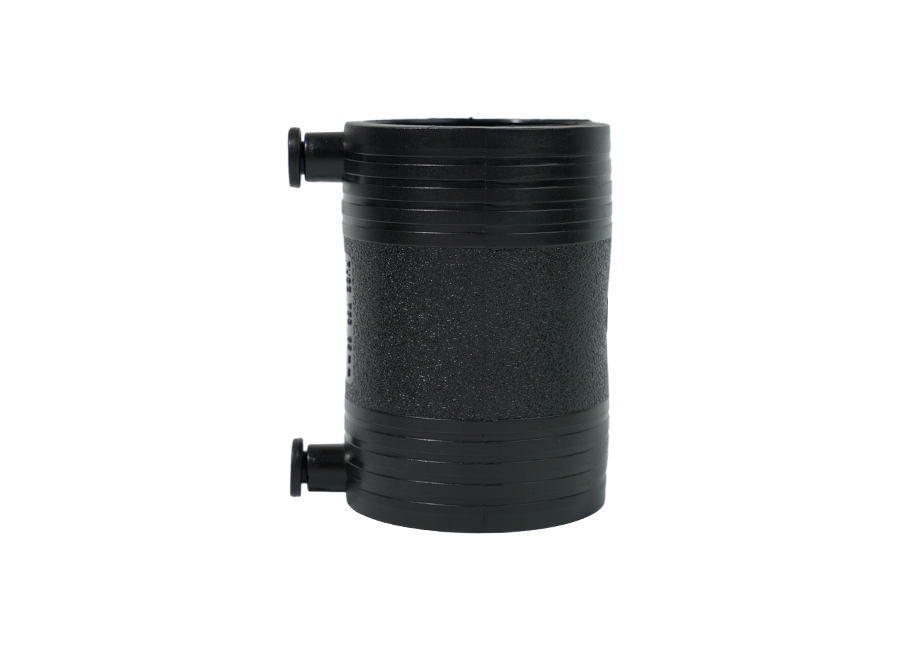 HDPE Electrofusion Coupling Suppliers, Wholesale HDPE Electrofusion Coupling ComAs a professional China OEM HDPE Electrofusion Coupling suppliers and HDPE Electrofusion Coupling Jiangyin Huada specializes in wholesale...View Product →
In practical terms, a thicker wall reduces the cross-sectional flow area. For a DN315 pipe, the ID drops from 277.6 mm at SDR17 to 257.8 mm at SDR11, a reduction of about 7% in internal diameter. That flow-area difference must be included in the hydraulic calculation, not only the pressure rating.
How to Choose the Right HDPE Pipe Size
Decision order matters. Diameter is driven by flow; wall thickness is driven by pressure. Select them in that sequence and the rest of the specification falls into place.
- Define the flow rate. Calculate the design flow in cubic metres per hour, then pick an OD that keeps the velocity near 0.7–1.5 m/s for water service.
- Define the operating pressure. Add surge pressure to the static head, then choose the lowest SDR whose PN rating exceeds the maximum with a safety margin.
- Check installation loads. Trench depth, soil type, and traffic load can require a thicker wall than the pressure alone.
- Confirm fitting availability. When the line changes from one nominal size to another, a PE butt-fusion reducing coupling
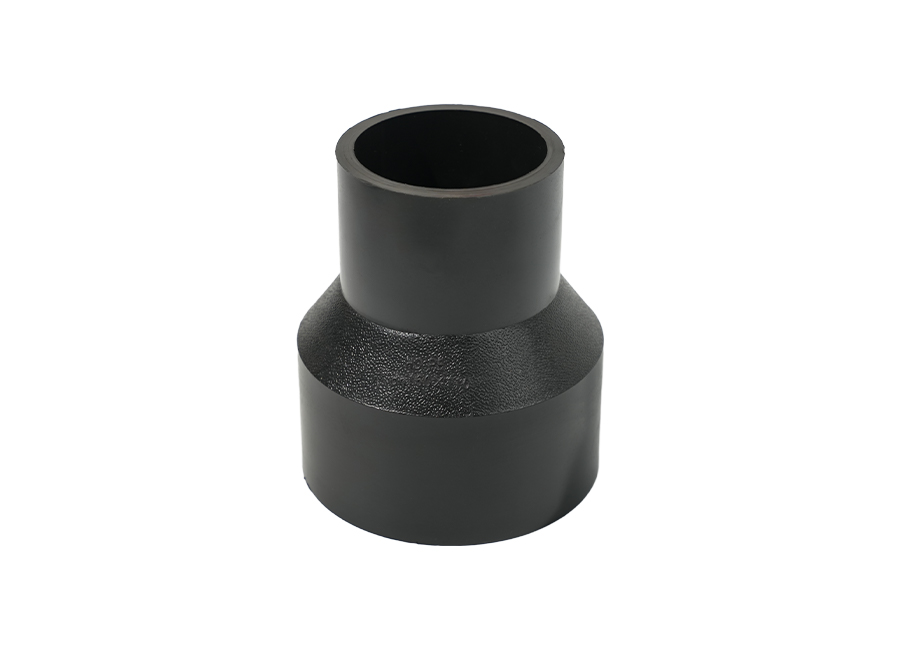 HDPE Reducing Coupling Suppliers, Wholesale HDPE Reducing Coupling Company - JiaAs a professional China OEM HDPE Reducing Coupling suppliers and HDPE Reducing Coupling Jiangyin Huada specializes in wholesale HDPE Redu...View Product → joins the two ODs directly without a flange assembly.
The full trade-off analysis, including cost differences between pressure classes and installation methods, is covered in our PE pipe purchase guide.
Common HDPE Pipe Sizing Mistakes
Most sizing errors are repeats of the same few misunderstandings. Avoiding them prevents rework and failed pressure tests.
- Ordering by ID instead of OD. A habit carried over from steel pipe leads to an HDPE pipe one full size too large.
- Oversizing "just to be safe." A larger OD raises material cost, handling effort, and welding time without improving the pressure rating.
- Ignoring SDR when pressure changes. A DN315 SDR17 pipe and a DN315 SDR11 pipe share the same OD but not the same pressure capacity or ID.
- Using an outdated wall-thickness chart. Dimensions differ between PE80 and PE100 and between standard series, so always confirm the values for the specific material grade.
HDPE Pipe Size FAQs
What does SDR mean in HDPE pipe?
SDR stands for Standard Dimension Ratio, the ratio of the outside diameter to the wall thickness. A lower SDR means a thicker wall and a higher pressure rating.
What is the difference between PN and SDR?
PN is the pressure rating in bars; for example, PN10 means 10 bars at 20°C. SDR is a geometrical ratio. For a given material, each SDR corresponds to a specific PN class.
What sizes are available for HDPE pipe?
HDPE pipe is commonly produced from 20 mm to 1600 mm in outside diameter. Available SDR classes range from SDR33 down to SDR7.4, depending on the manufacturer and the application.
Is HDPE pipe measured by inside or outside diameter?
HDPE pipe is always dimensioned by the outside diameter. Fittings, fusion tooling, and electrofusion couplers are all matched to the OD, so confirm the OD when ordering.
What is the standard length of HDPE pipe?
Small diameters up to about 63 mm are often supplied in coils of 50 m, 100 m, or longer. Larger diameters come in straight lengths of 6 m, 12 m, or 13.5 m, depending on transport and handling limits.
How do I choose the right HDPE pipe diameter?
Start from the flow rate and an acceptable water velocity, typically 0.7–1.5 m/s for water systems. Then select the SDR from the operating pressure, including surge allowance.