English
 中文简体
中文简体 русский
 عربى
عربى
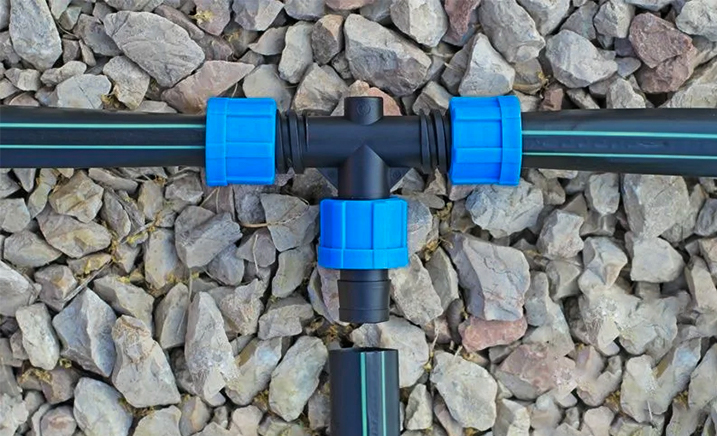
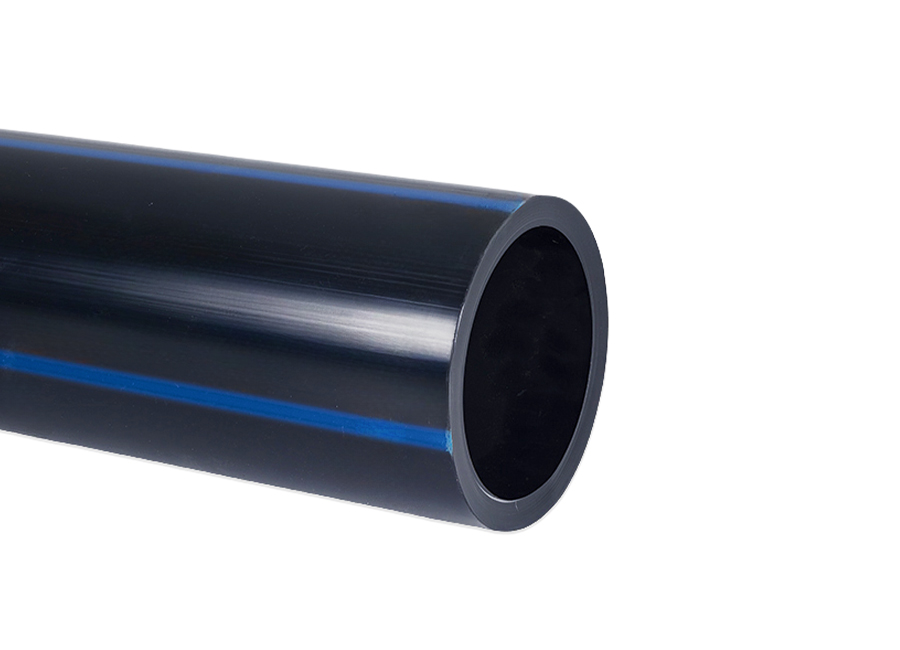
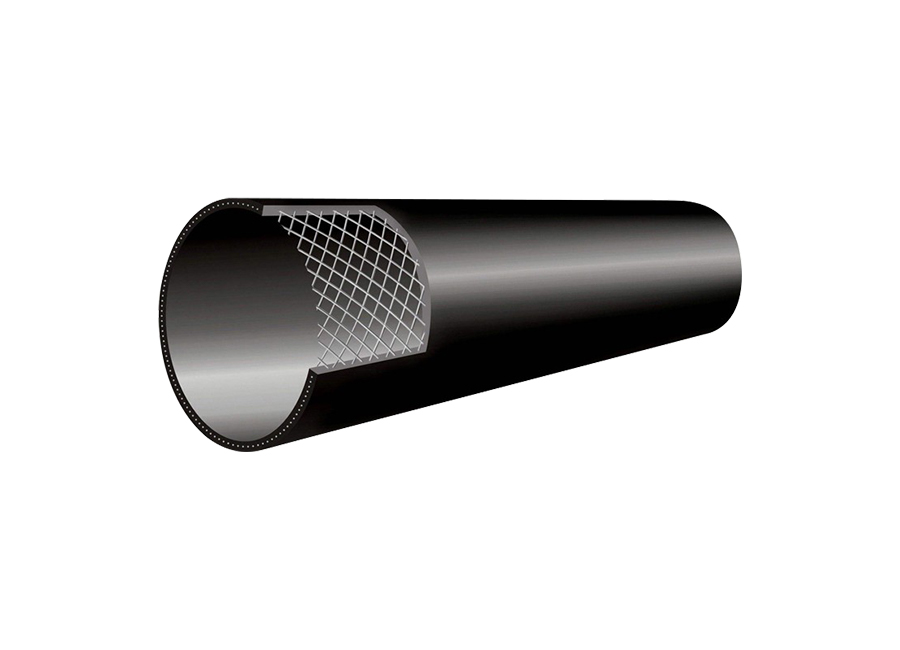
Polyethylene (PE) pipe material is a thermoplastic compound made by polymerizing ethylene gas into long polymer chains, then blending the resin with carbon black (typically 2–2.5%) for ultraviolet protection and with antioxidants to slow oxidation during decades of service. The base resin, the additive package, and the grade classification together define how the pipe performs under pressure, temperature, and environmental stress.
The defining characteristic of PE pipe material is its heat-fusion joining system. When two PE surfaces are heated above their melting point and pressed together, the polymer chains intermingle; after cooling, the joint forms one continuous material. Because there are no gaskets, threads, or solvent cement involved, a correctly fused PE pipeline is effectively monolithic. That is why polyethylene has been the standard material for natural gas distribution networks in Europe and North America since the 1960s.
The material is also remarkably light. PE pipe resin has a density of 0.93–0.97 g/cm³, which is below the density of water. A 12-meter length of 110 mm PE100 SDR17 pipe weighs roughly 25 kg, light enough for two installers to carry by hand. That fact alone cuts crane time, transport fuel, and labor costs on project sites. To understand the polymer in more depth, read our article covering what PE pipe is.
Content
- 1 PE Material Grades and Pipe Types
- 2 Key Properties of PE Pipe Material
- 3 SDR, Pressure Ratings, and Temperature Limits
- 4 Heat Fusion: Joining PE Pipe Material
- 5 Common Applications of PE Pipe Material
- 6 How to Choose the Right PE Pipe Material
- 7 PE Pipe Versus Other Pipe Materials
- 8 Frequently Asked Questions About PE Pipe Material
PE Material Grades and Pipe Types
Polyethylene pipe materials are classified according to their minimum required strength (MRS), the hydrostatic stress the material can resist for 50 years at 20 °C without failure, after a safety factor is applied.
- PE80: MRS = 8 MPa, design stress ≈ 6.4 MPa
- PE100: MRS = 10 MPa, design stress ≈ 8.0 MPa
The higher MRS of PE100 delivers a 25% higher design stress than PE80. For the same pressure rating, PE100 can use a thinner wall, which means lower material cost and higher flow capacity. In North America, the equivalent designation system uses PE4710, which corresponds to a PE100-class resin with enhanced slow crack growth resistance.
| Property | PE80 | PE100 |
|---|---|---|
| Minimum required strength (MRS) | 8 MPa | 10 MPa |
| Design stress (20 °C, C = 1.25) | 6.4 MPa | 8.0 MPa |
| Typical density range | 0.93–0.95 g/cm³ | 0.95–0.97 g/cm³ |
| Pressure rating at SDR 11 | PN12.5 | PN16 |
| Slow crack growth resistance | Standard | Enhanced |
For most water and gas projects, PE100 is now the default selection. Huada Plastics produces HDPE pipe in both PE80 and PE100 grades, with diameters from 20 mm to 1600 mm. The choice between grades depends on operating pressure, the aggressiveness of the installation environment, and the project's required design life.
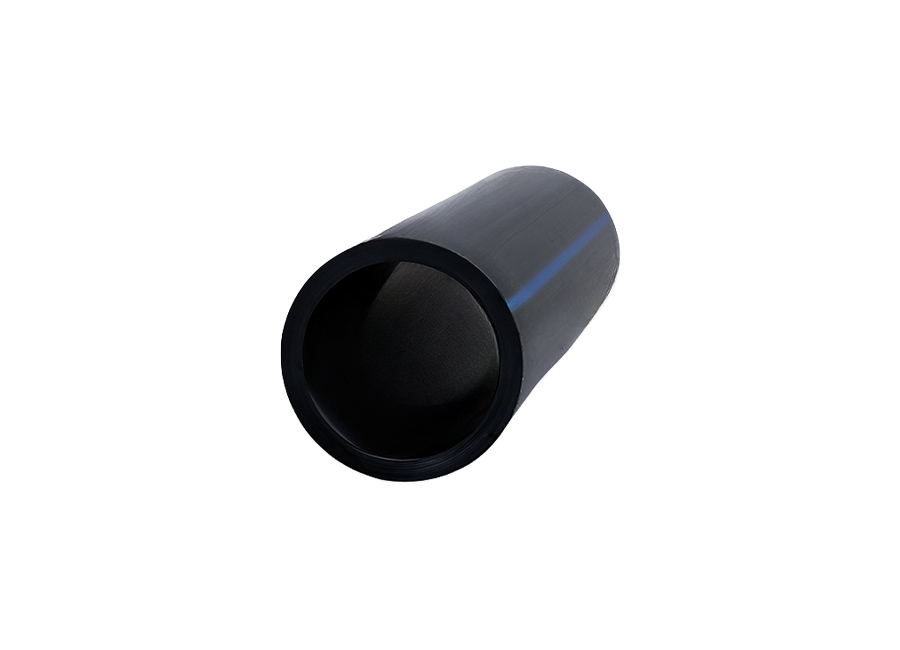 HDPE Pipe Manufacturers | Huada Suppliers, FactoryJiangyin Huada – Experienced HDPE Pipe Manufacturer & Supplier. Providing High-Quality PE100 HDPE Pipes for Water Supply & Electrical Ins...View Product →
Key Properties of PE Pipe Material
Density and Weight
At roughly 0.95 g/cm³, PE100 is the lightest structural pipe material on the market. It weighs about one-quarter of PVC-U and one-eighth of ductile iron for the same nominal diameter and pressure class. The chart below shows how PE compares with other common pipe materials.
Chemical and Corrosion Resistance
PE does not corrode, rust, or suffer galvanic attack. It stands up to most mineral acids, alkalis, and aqueous salt solutions at ambient temperatures. The limitation is that strong oxidizing acids, aromatic hydrocarbons, and petroleum solvents can swell the polymer or trigger environmental stress cracking, so chemical compatibility should always be verified for industrial media.
Flexibility and Impact Strength
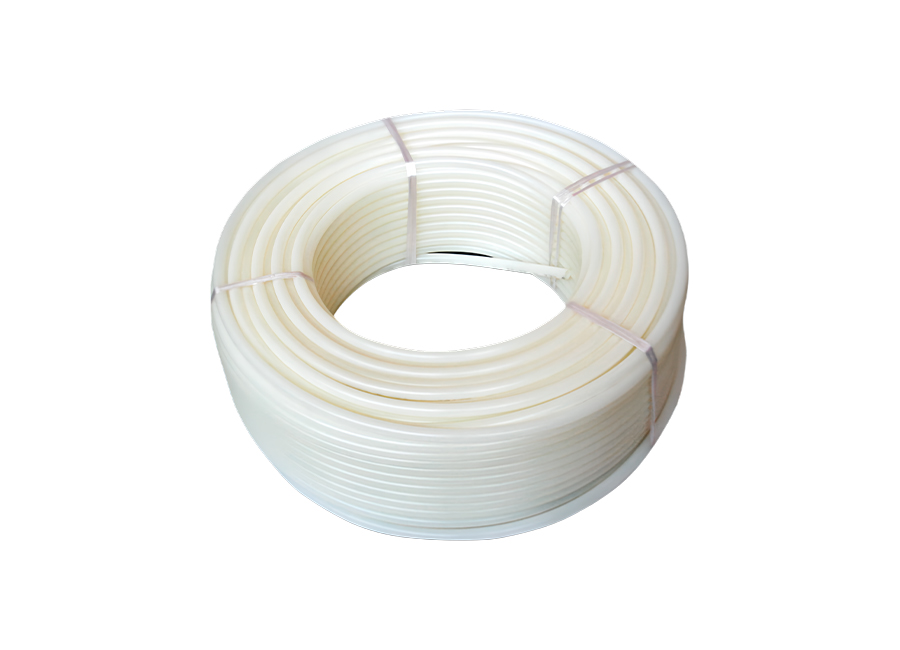
PE can be bent to approximately 20–25 times its outside diameter and still return to its original shape. This flexibility lets pipe follow curved trench lines, absorb ground settlement, and survive traffic loads without stress raisers. Impact strength remains high at low temperatures, which makes PE suitable for cold-climate installations.
Long-Term Durability
PE pipe systems are designed for a 50-year minimum service life at rated pressure. Industry regression data from PPI TR-3 and ISO 9080 show PE100 retaining integrity beyond 100 years in many soil conditions. Creep, slow crack growth, and oxidation are controlled through resin selection and the additive package. For a deeper look at aging behavior, see our analysis of the long-term durability of PE pipe.
SDR, Pressure Ratings, and Temperature Limits
SDR (Standard Dimension Ratio) is the ratio of the pipe outside diameter to wall thickness: SDR = OD / e. A lower SDR means a thicker wall. For a given material grade, the maximum operating pressure follows the relationship defined in ISO 4427:
P = 2 × σ / (SDR − 1), where σ is the design stress (MRS divided by the safety factor C = 1.25).
| SDR | Wall factor | PE100 water rating | Common applications |
|---|---|---|---|
| SDR 26 | OD / 26 | PN6 | Gravity sewers, low-pressure water |
| SDR 21 | OD / 21 | PN8 | Rural water supply, irrigation |
| SDR 17 | OD / 17 | PN10 | Municipal water mains, pump lines |
| SDR 13.6 | OD / 13.6 | PN12.5 | High-demand water mains |
| SDR 11 | OD / 11 | PN16 | Fire protection, industrial water |
Temperature also affects pressure capacity. PE pipe ratings are defined at 20 °C; above that, the operating pressure must be de-rated using the factors in the chart below, which are standard for PE100 water service per ISO 4427. For continuous operation above 60 °C, standard PE should not be used; materials such as PERT or PVDF are considered instead.
Heat Fusion: Joining PE Pipe Material
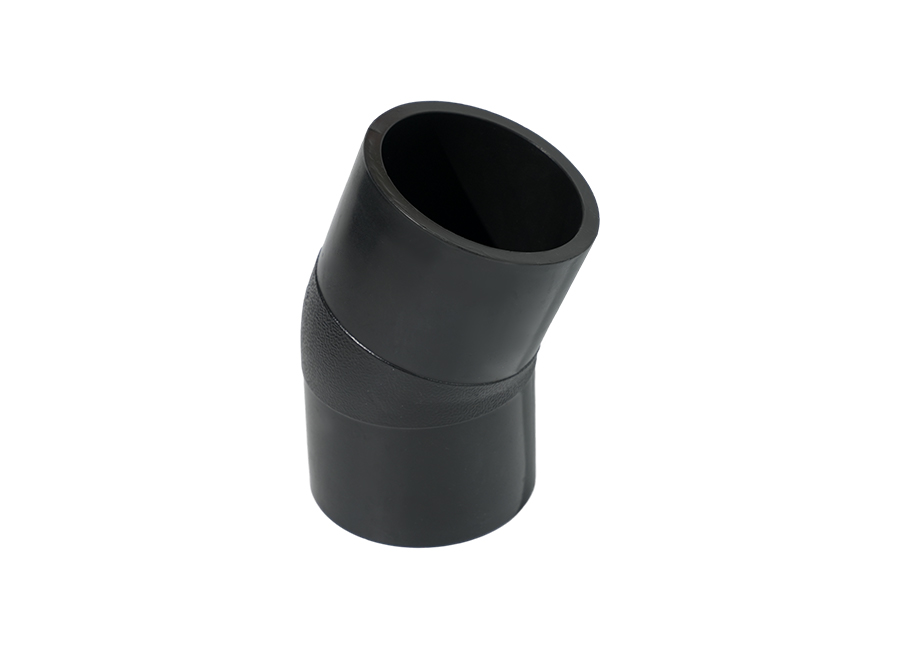
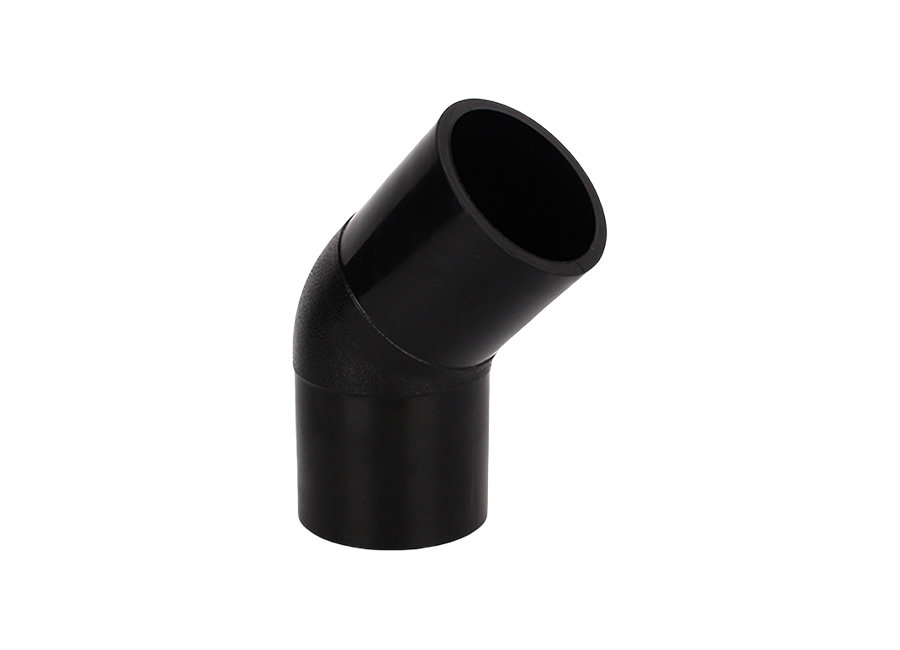
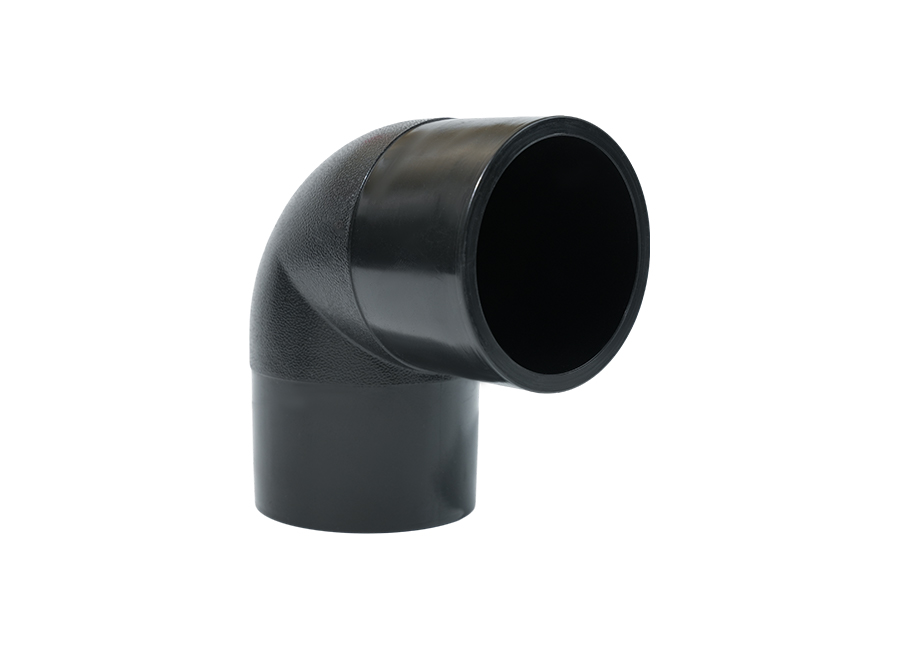
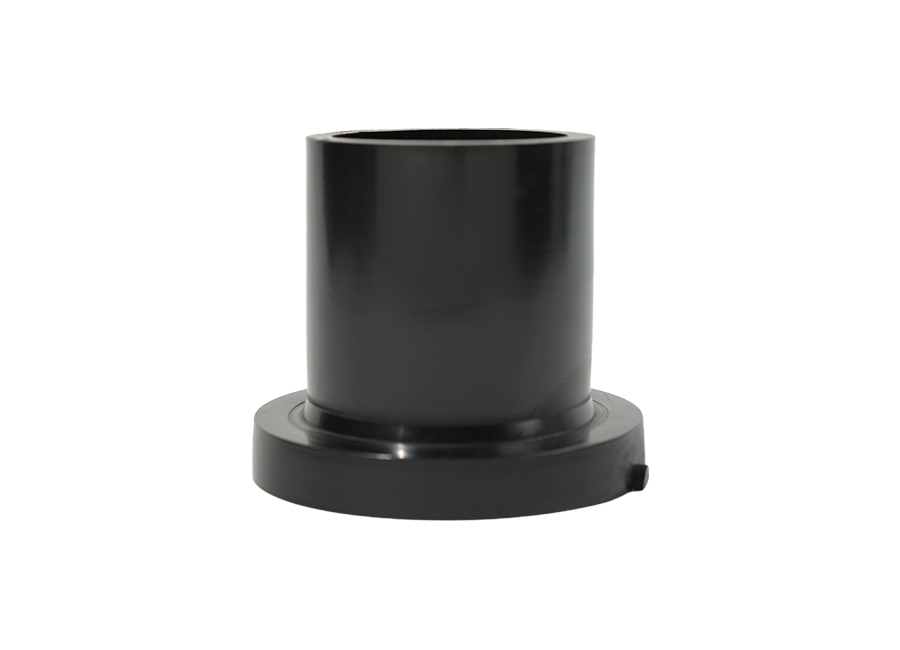
Heat fusion is the reason PE pipe systems achieve leak-free operation for decades. Butt fusion is the primary joining method for pipes with an outside diameter of about 90 mm and above. The pipe ends are clamped in a facer, trimmed to produce parallel faces, then pressed against a mirror plate heated to approximately 210 °C. After a predetermined heat-soak time, the mirror is removed and the molten ends are pressed together under controlled force and held while they cool. A correctly made butt fusion joint has strength equal to the pipe wall itself. Huada's PE butt fusion fittings — elbows, tees, reducers, flanges, and end caps — cover the full 20–1600 mm range and are manufactured to match the SDR of the adjoining pipe.
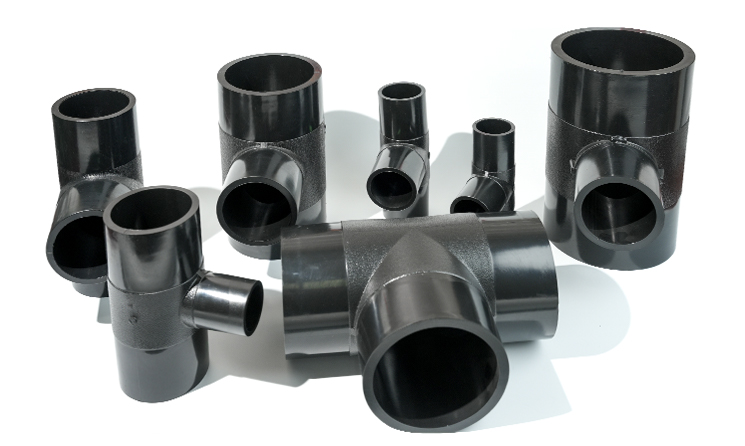 Custom PE Butt & Socket Fusion Fittings Manufacturers, China PE Butt & Socket FuJiangyin Huada is a professional OEM PE Butt & Socket Fusion Fittings manufacturers and PE Butt & Socket Fusion Fittings factory, We spec...View Product →
Electrofusion uses a fitting with an embedded resistance wire. The pipe is inserted into the fitting, and an electric welding machine heats the coil; the heat melts the fitting's inner surface and the pipe's outer surface, which fuse together. Electrofusion suits small-diameter lines, repairs, and confined spaces where butt fusion equipment cannot fit. For example, an electrofusion tee creates a branch connection on an existing main with minimal excavation, because the fitting clamps around the pipe and only requires space for the welding machine. Electrofusion is also the standard method for PE service lines and gas distribution connections.
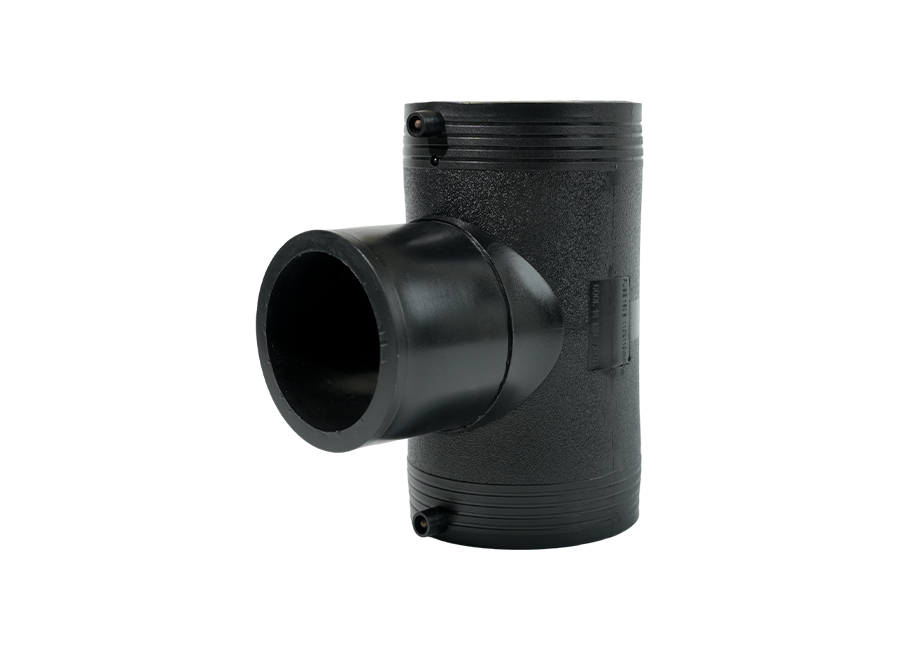 HDPE Electrofusion Tee Suppliers, Wholesale HDPE Electrofusion Tee Company - JiaAs a professional China OEM HDPE Electrofusion Tee suppliers and HDPE Electrofusion Tee Jiangyin Huada specializes in wholesale HDPE Elec...View Product →
Both fusion methods are covered by standards such as ISO 21307 (butt fusion) and ISO 17885 (electrofusion fittings). The choice between them depends on pipe diameter, site constraints, and crew skill level.
Common Applications of PE Pipe Material
Water Supply and Gas Distribution
PE pipe is the material of choice for drinking water mains across Europe, Asia, and the Americas. It complies with NSF/ANSI 61 and European potable-water regulations, resists biofilm adhesion, and does not introduce corrosion products into the water. In natural gas distribution, PE has been the default pipe material since the 1960s because its fusion joints eliminate the leak pathways typical of threaded steel joints.
Sewer, Irrigation, and Industrial Service
Gravity sewers and rising mains use PE for its long coilable lengths, resistance to sewage chemicals, and high abrasion resistance. Agricultural irrigation systems rely on PE pipe for UV resistance and for tolerance of fertilizer-laden water. In mining and chemical plants, PE slurry lines outlast steel in abrasive service and require significantly less maintenance.
How to Choose the Right PE Pipe Material
Match these five factors to your project requirements:
- Operating pressure, including surge events — the highest pressure a system experiences, not just the nominal value, decides the SDR.
- Operating temperature — de-rate the pressure rating above 20 °C; above 60 °C, choose PERT or PVDF instead.
- Fluid chemistry — verify compatibility with the transported medium, especially for solvents, oxidizing agents, and hydrocarbons.
- Installation method — trenchless installations such as horizontal directional drilling demand PE100-RC or PE4710 grades with enhanced slow crack growth resistance.
- Environmental conditions — assess UV exposure, rocky backfill, soil type, and frost depth before finalizing the material grade.
For a step-by-step walkthrough of wall-thickness calculations, surge pressure, and design life, refer to our practical PE pipe selection guide.
PE Pipe Versus Other Pipe Materials
| Property | PE100 | PVC-U | Ductile iron | Carbon steel |
|---|---|---|---|---|
| Density (g/cm³) | 0.95 | 1.40 | 7.10 | 7.85 |
| Corrosion resistance | Excellent | Excellent | Good (needs lining) | Poor (needs coating + cathodic protection) |
| Joint integrity | Fusion gives monolithic joints | Solvent cement or gaskets | Gasket or mechanical | Welded or mechanical |
| Flexibility | High (bends without cracking) | Low (brittle under impact) | Low | Low |
| Abrasion resistance | Excellent | Good | Good | Good |
| Typical design life | 50–100 years | 25–50 years | 50–100 years | 30–50 years |
| Installed cost | Lower | Medium | Higher | Higher |
PE's combination of corrosion immunity, fusion integrity, and flexibility makes it the most cost-effective option for buried pressurized pipelines. PVC-U remains competitive in non-pressure sewer and conduit applications, while ductile iron and steel are selected when the application demands metallic properties such as very high pressure, high temperature, or fire-rated risers.
Frequently Asked Questions About PE Pipe Material
Q1: Is PE pipe the same as HDPE pipe?
PE is the material family; HDPE (high-density polyethylene) is the grade used for most pressure pipes. PE100 is a premium HDPE grade with enhanced performance.
Q2: How long does PE pipe last?
PE pipe is designed for a minimum 50-year service life at rated pressure; PE100 often exceeds 100 years in favorable soil conditions per ISO 9080 regression data.
Q3: Can PE pipe carry hot water?
Standard PE handles continuous service up to 40–60 °C with pressure de-rating. Above that range, PERT, PP, or PVDF pipe is recommended.
Q4: Is PE pipe safe for drinking water?
Yes. PE complies with NSF/ANSI 61, WRAS, and related potable-water standards when the pipe is certified for drinking water contact.
Q5: What does SDR 11 mean?
SDR 11 means the outside diameter divided by the wall thickness equals 11. It is the standard class for PN16 water service in PE100 pipe.
Q6: Can PE pipe be joined without fusion?
Compression and flanged connections exist and work in low-pressure service. For pressurized lines, heat fusion is the only method that guarantees leak-free monolithic performance.