English
 中文简体
中文简体 русский
 عربى
عربى
If you are involved in water supply, gas distribution, or industrial piping, the abbreviation HDPE appears in almost every specification sheet, catalogue, and tender document. In simple terms, HDPE — high-density polyethylene — is a semi-crystalline thermoplastic made by polymerizing ethylene under low pressure with specialized catalysts. It combines toughness, light weight, and outstanding chemical stability, which is why it has become the default material for buried pipelines, pond liners, and heavy-duty packaging. The practical definition for engineers and buyers is narrower: HDPE is a family of polyethylene grades with a density between 0.941 and 0.965 g/cm³, a melt flow index suited to the production process, and a minimum required strength that allows long-term pressure ratings to be calculated by standards such as ISO 9080.
Content
- 1 What Does HDPE Stand For?
- 2 How Is HDPE Manufactured?
- 3 Key Properties That Define HDPE
- 4 HDPE vs Other Thermoplastics Used in Piping
- 5 HDPE Pipes: Where the Definition Meets Practice
- 6 Fittings and Joining Methods
- 7 How to Choose the Right HDPE Pipe Grade
- 8 What Is HDPE Used For?
- 9 Frequently Asked Questions About HDPE
What Does HDPE Stand For?
HDPE = High-Density PolyEthylene
HDPE stands for high-density polyethylene. The name is not just a trade label — it describes a measurable difference in molecular structure. Polyethylene chains in HDPE have very little branching, so the chains align and pack into crystalline regions. That packing produces a material with higher density, stiffness, and tensile strength than low-density polyethylene (LDPE) or linear low-density polyethylene (LLDPE).
PE80 and PE100: The pipe-grade classification
In the piping industry, HDPE resins are classified by their minimum required strength (MRS). PE80 has an MRS of 8 MPa and PE100 has an MRS of 10 MPa. When a specification calls for HDPE pipe, it is almost always referring to PE80 or PE100 compounds with an oxidative induction time, carbon black content, and slow crack growth resistance defined by material standards such as ISO 4437 for gas or ISO 4427 for water.
How Is HDPE Manufactured?
HDPE production starts with ethylene gas (C2H4), typically obtained from naphtha cracking or natural gas processing. The gas is polymerized in a low-pressure reactor using Ziegler-Natta or chromium (Phillips) catalysts. The choice of catalyst controls chain branching, molecular weight, and molecular weight distribution — all of which affect the final resin's processability and mechanical properties.
After polymerization, the base resin is compounded with additives: carbon black for UV protection, antioxidants for thermal stability, and pigments for identification. The compound is extruded into pellets, and pipe producers melt the pellets and push them through a die to form the pipe wall. The pipe is then sized under vacuum, cooled in a water bath, and coiled or cut to length.
Key Properties That Define HDPE
For a product engineer, the definition of HDPE is best expressed by its property profile. These are the typical published ranges you will find in resin supplier data sheets:
- Density: 0.941–0.965 g/cm³ (ISO 1183)
- Tensile strength at yield: 20–31 MPa (ISO 527)
- Melting point: 126–135 °C
- Continuous service temperature: -40 °C to +60 °C for pressure pipe applications
- Water absorption: less than 0.01% in 24 hours
- Chemical resistance: excellent against most acids, alkalis, and salts; not recommended for concentrated oxidizing acids
Density of HDPE compared with other pipe thermoplastics (typical values, g/cm³)
The density value is important because it correlates with crystallinity. PE100 resins typically sit near the upper end of the density range, giving them higher short-term strength and stiffness. The trade-off is a slight reduction in ductility at very low temperatures, which is why pipe wall thickness and impact requirements should always be checked against the relevant standard.
HDPE vs Other Thermoplastics Used in Piping
Positioning HDPE next to PVC, PP, and PVDF helps explain where it is the strongest candidate and where another resin is more appropriate. The figures below are representative values from standard material data sheets.
| Material | Density (g/cm³) | Yield strength (MPa) | Continuous temp. (°C) | Typical pipe role |
|---|---|---|---|---|
| LDPE | 0.91–0.93 | 8–16 | -40 to 60 | Non-pressure and thin-wall pipes |
| HDPE | 0.941–0.965 | 20–31 | -40 to 60 | Water, gas, and slurry pressure pipes |
| PP | 0.89–0.91 | 25–35 | 0 to 90 | Drainage, chemical transfer, hot-water systems |
| PVC-U | 1.40–1.55 | 40–55 | 0 to 60 | Water supply, sewer, and conduit |
| PVDF | 1.75–1.80 | 40–55 | -30 to 140 | High-purity chemical and semiconductor piping |
Typical tensile yield strength of pipe thermoplastics (MPa)
Two practical conclusions follow from the comparison. First, HDPE is the most impact-tolerant of the polyolefins and welds into a monolithic, leak-free joint — properties that make it ideal for buried infrastructure. Second, HDPE does not have the stiffness or high-temperature rating of PVC-U or PVDF, so long spans and hot process lines require closer design review.
HDPE Pipes: Where the Definition Meets Practice
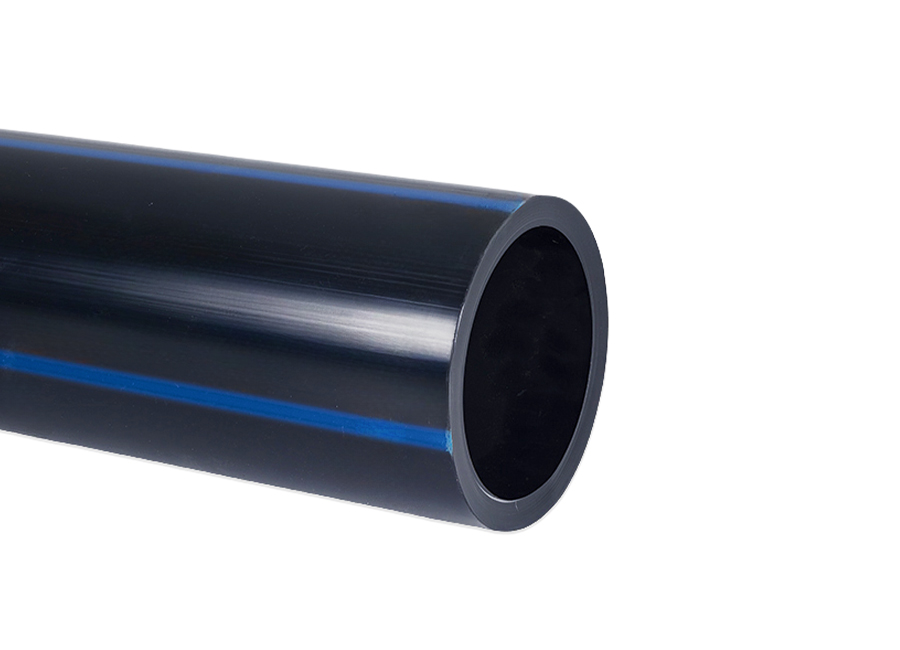
Once HDPE is formed into pipe, the definition translates directly into installation and operational advantages. A PE100 HDPE pipe is flexible enough to be coiled for trenchless insertion, yet strong enough to resist traffic loads and ground movement. Fusion welding creates a joint as strong as the pipe wall itself, eliminating the joint leakage risks that plague mechanical systems.
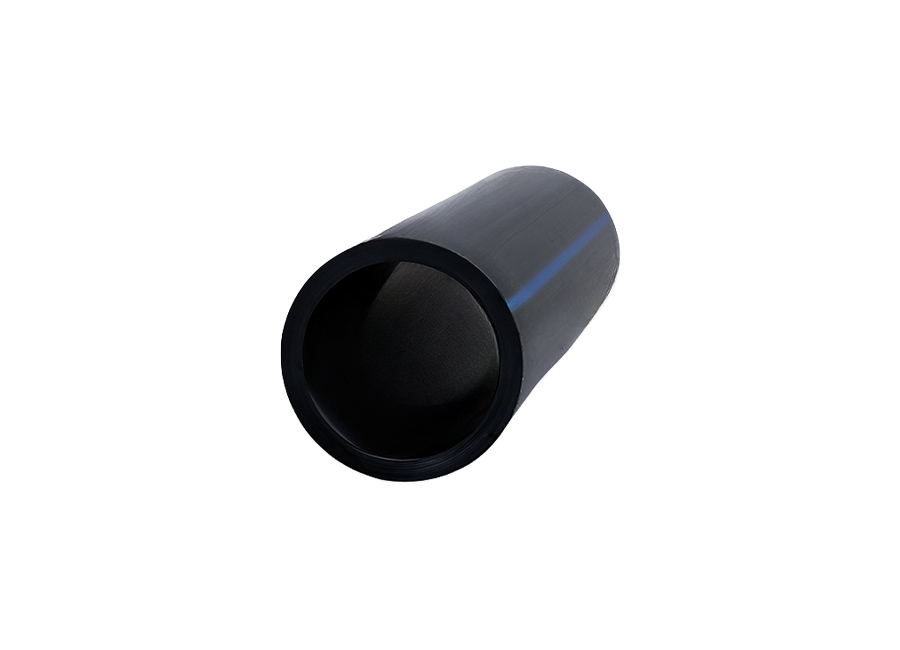 PE100 HDPE Pipe for Water Mains and Trenchless InstallationThis PE100 HDPE pipe comes in multiple SDR pressure ratings and supports hot melt welding for leak-resistant joints. It fits municipal water systems and contractors needing long-term durability under ISO standards.View Product →
For municipalities and contractors, the relevant numbers are the test criteria given in ISO 4427: long-term hydrostatic strength, resistance to slow crack growth, and resistance to rapid crack propagation. A correctly designed HDPE water main maintains its integrity for 50 years or more at 20 °C service temperature, according to ISO 9080 regression data.
Isometric structure of an HDPE pipe with an electrofusion socket
Fittings and Joining Methods
An HDPE pipe system is only as good as its joints. The dominant methods are:
- Butt fusion — the pipe ends are melted on a heating plate and pressed together under controlled force, forming a homogeneous weld.
- Electrofusion — a fitting with embedded resistance coils is clamped over the pipe; current melts the fitting and pipe surfaces to create a fusion bond.
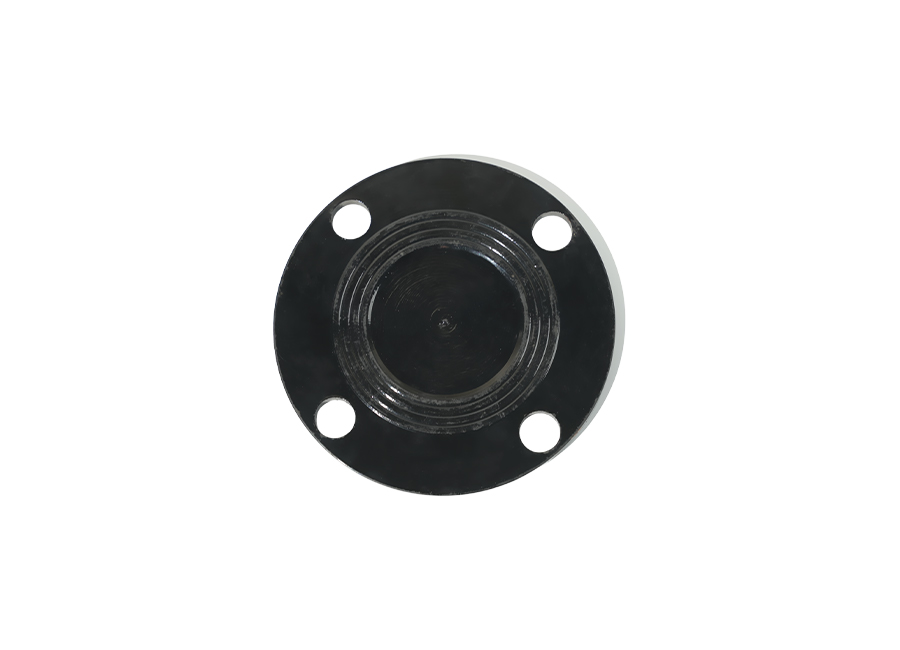
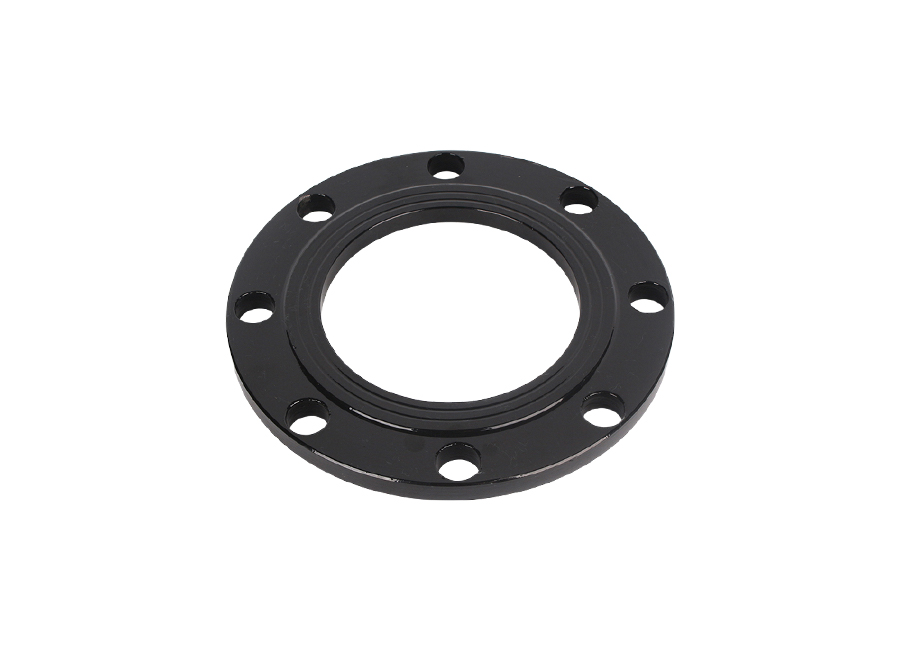
- Mechanical joints — flanged, threaded, or compression connections used mainly for transitions to other materials and for dismantling points.
Butt fusion is preferred for new mains and for pipes with thick walls, because the joint achieves the full pipe strength without extra materials. Every PE butt fusion system uses a standard pool of components: elbows, tees, reducers, end caps, and flanges that carry the same pressure rating as the pipe wall.
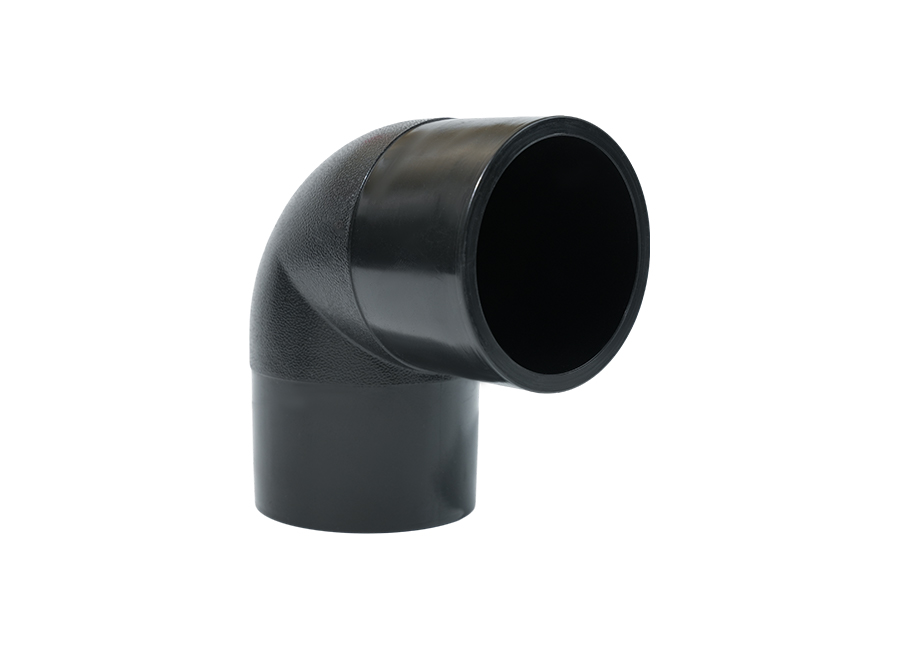
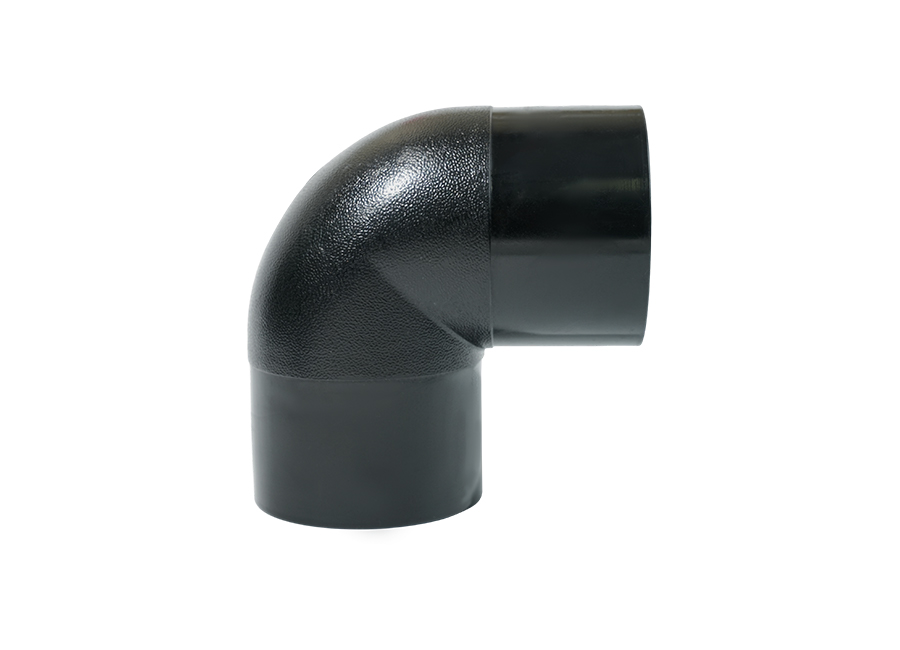 HDPE PE100 90 Degree Elbow for Butt Fusion SystemsThis 90-degree elbow enables right-angle turns in new mains and thick-wall pipe installations. It matches the pressure rating of the pipe and is suitable for layouts requiring precise directional changes.View Product →
Electrofusion, by contrast, is chosen for repairs, branch connections, saddle tees, and installations where space is too tight for a butt fusion machine. Electrofusion fittings are easy to position in a trench and can be monitored automatically by the welding machine.
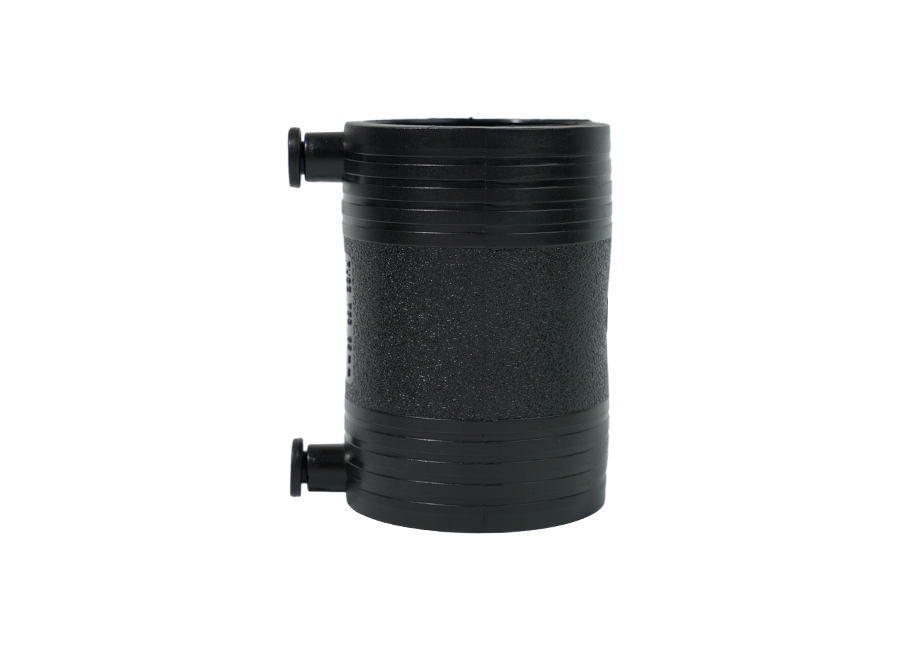 HDPE Electrofusion Coupling for Repairs and Tight SpacesMade from PE100 and copper, this electrofusion coupling provides strong sealing and corrosion resistance. It is ideal for branch connections, repairs, or installations where butt fusion equipment cannot fit.View Product →
How to Choose the Right HDPE Pipe Grade
The phrase "HDPE pipe" is not a single product; the grade and dimension ratio determine the pressure rating. Key checks are:
- PE80 vs PE100 — PE100 gives a thinner wall for the same pressure, reducing weight and increasing bore size.
- SDR (standard dimension ratio) — the ratio of outside diameter to wall thickness. SDR17 with PE100 is rated PN10, SDR11 with PE100 is PN16.
- Carbon black content — for UV-exposed above-ground pipes, the compound should contain 2–2.5% carbon black, checked per ISO 4427 or a similar specification.
- Certification — look for ISO 9001 factory production control, third-party type testing, and traceable material certificates.
For a deeper look at how chemicals and time affect HDPE pipe, read our technical review of HDPE corrosion and chemical resistance. Manufacturers such as Huada Plastics publish complete PE pipe and fitting ranges with matching pressure ratings, which simplifies the selection process when you need a tested, documented system.
What Is HDPE Used For?
Beyond pipes, the same material definition applies in many products. The most common applications are:
- Potable water supply mains
- Natural gas distribution networks
- Sewer and stormwater drainage
- Mining slurry and tailings transport
- Agricultural irrigation systems
- Telecom and electrical cable ducting
- Chemical storage tanks and containers
- Food-grade packaging and bottles