English
 中文简体
中文简体 русский
 عربى
عربى
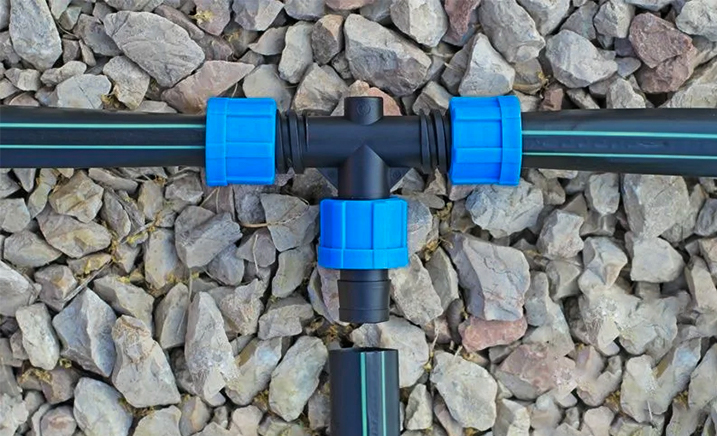
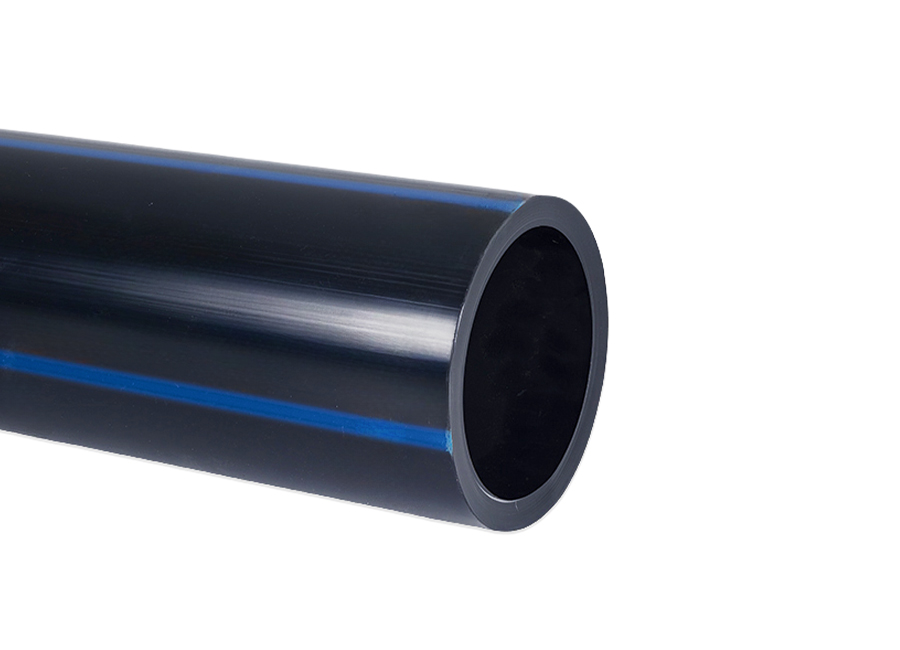
HDPE pipe stands for high-density polyethylene pipe: a flexible thermoplastic pipe extruded from polyethylene resin with a density of 0.941 g/cm³ or higher. That is the definition in one sentence. The part worth reading twice is what the acronym leaves out, which density band applies, how the molecular structure behaves under sustained pressure, and which standard converts a resin grade into a wall thickness you can actually order.
Most people ask this question for one of two reasons. They are weighing HDPE against PVC, steel, or concrete for a water, drainage, or conduit project. Or they are checking whether the "PE pipe" quoted to them is genuinely HDPE. Both questions resolve to the same four numbers: density, molecular structure, SDR, and pressure class.
Content
- 1 What Each Part of the Name Actually Means
- 2 How Density Translates into Pipe Behaviour
- 3 How HDPE Pipe Is Made
- 4 SDR, Wall Thickness, and Pressure Rating
- 5 Where HDPE Pipe Is Used
- 6 HDPE Compared with PVC, Steel, and Concrete
- 7 Joining: Where the Definition Meets Site Reality
- 8 Frequently Asked Questions About HDPE Pipe
What Each Part of the Name Actually Means
H, high density. Density here is a measured material property, not a marketing label. HDPE sits in the 0.941 to 0.965 g/cm³ band, low-density polyethylene (LDPE) sits around 0.910 to 0.925 g/cm³, and medium-density polyethylene (MDPE) at 0.926 to 0.940 g/cm³.
D, density cell class. Under ASTM D3350, density is one of the cell classes printed in a pipe's permanent marking, alongside designations for slow crack growth resistance and hydrostatic strength. That marking is the fastest way to verify what was actually delivered to site.
PE, polyethylene. Ethylene monomers are polymerised into long chains. HDPE chains are essentially linear with few side branches, so they pack closely, crystallise more, and produce a stiffer, stronger material than LDPE at the same wall thickness.
For pressure pipe, the resin grade matters more than the word "HDPE" on its own. ISO 4427 and EN 12201 classify polyethylene by minimum required strength (MRS), and the gap between grades is large enough to change a design. Engineers who want to understand how HDPE and PE pipe designations differ usually find the answer in this table.
| Resin grade | Minimum required strength | Where it is still specified |
|---|---|---|
| PE 63 | 6.3 MPa | Legacy low-pressure water and irrigation networks |
| PE 80 | 8.0 MPa | Older distribution mains, some agricultural systems |
| PE 100 | 10.0 MPa | Current standard for potable water, gas, industrial and sewer duty |
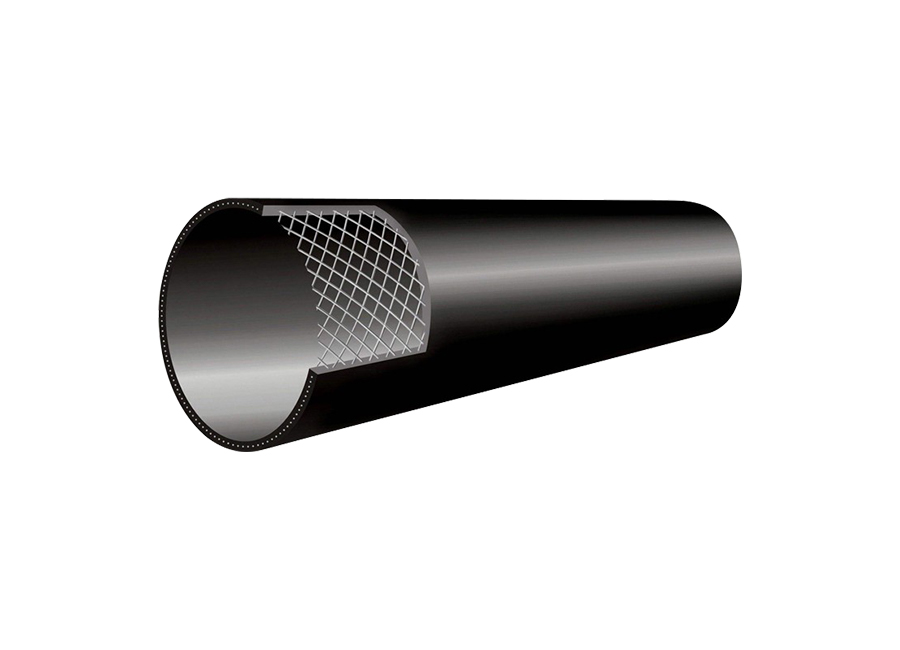
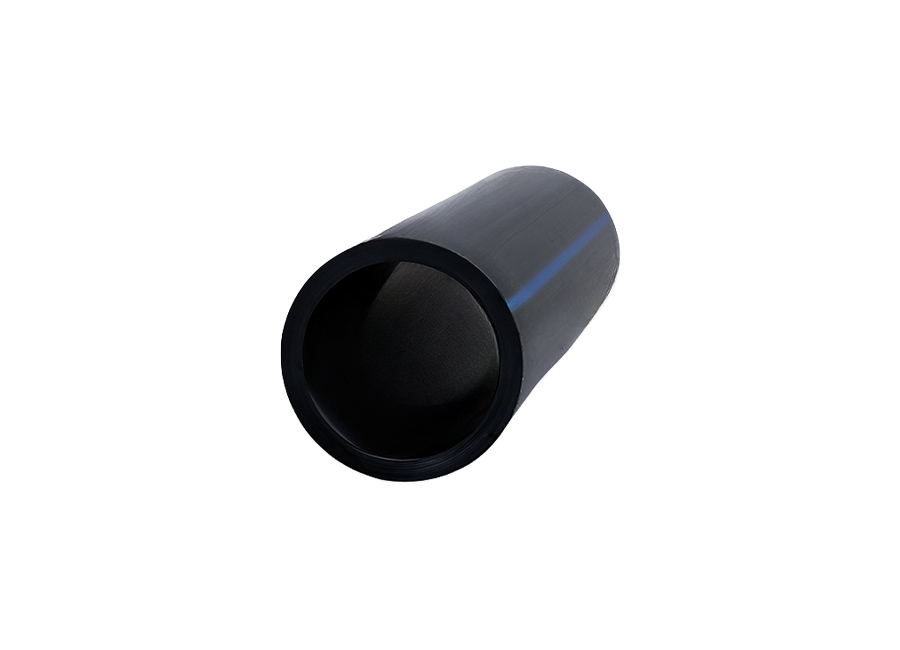 HDPE pipeThe HDPE pipes from Jiangyin Huada are made from high-quality PE100 virgin material. Through precise processing, our HDPE pipes are available in various pressure grade...View Product →
How Density Translates into Pipe Behaviour
Density is a proxy for crystallinity, and crystallinity drives almost everything a field engineer notices. More crystallinity means a higher tensile modulus, greater resistance to creep under sustained pressure, and better abrasion performance, which is why HDPE handles mining slurry better than most thermoplastics. It also means slightly less flexibility than LDPE, although the pipe still coils at small diameters.
Two consequences are worth remembering. First, HDPE is less dense than water, so an empty pipe floats, which helps in wet trenches and in floating intake or dredging lines. Second, the material softens as temperature rises: allowable pressures are derated above roughly 30 °C, and the pipe becomes noticeably more brittle below 0 °C during handling and fusion.
Ranges from ASTM D3350 density cell classes and ISO 4427 grade definitions.
How HDPE Pipe Is Made
HDPE pipe is produced by extrusion. Tested resin is melted and pushed through a die that forms a continuous tube. The tube passes through a vacuum sizing sleeve that sets the outside diameter, then a water bath that locks the dimensions in place. Wall thickness is monitored with ultrasonic gauges, and finished pipe is hydrostatic tested under ISO 1167 or ASTM D1598 protocols before dispatch. Each length is printed with size, SDR, pressure class, resin designation, standard, and production date, then cut into 6 m or 12 m lengths or coiled at small diameters.
SDR, Wall Thickness, and Pressure Rating
SDR, the standard dimension ratio, is the single number that connects geometry to pressure capability: SDR equals outside diameter divided by wall thickness. A 110 mm PE 100 pipe with a 10 mm wall is SDR 11; the same outside diameter with a 4.2 mm wall is SDR 26. Lower SDR means a thicker wall and a higher pressure class.
For PE 100 water pipe, ISO 4427 expresses the relationship as PN = 2σ / (SDR − 1), where σ is the allowable design stress, commonly 8 MPa for water at 20 °C, derived from an MRS of 10 MPa divided by a 1.25 safety factor.
Nominal pressures calculated from ISO 4427 with an allowable design stress of 8 MPa.
One caution that costs projects money: these ratings apply to water at 20 °C. Higher temperatures, chemical service, or sustained surge pressure all require derating, and the design should follow the governing standard rather than the catalogue headline.
Where HDPE Pipe Is Used
- Potable water distribution mains and service lines under ISO 4427 or EN 12201
- Natural gas distribution, typically in yellow pipe or black pipe with coextruded stripes
- Sewer, stormwater, and industrial effluent lines, including landfill leachate collection
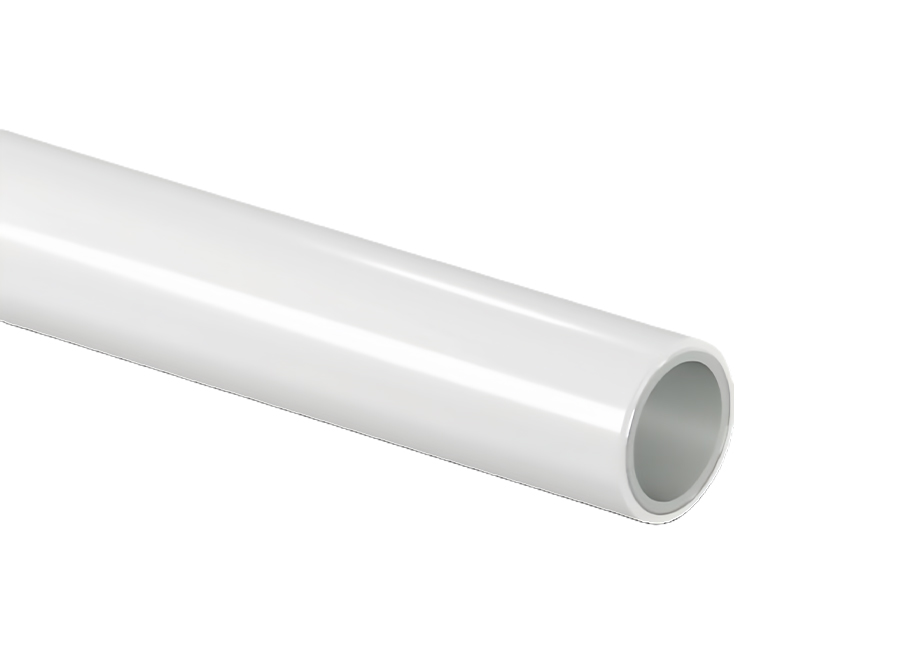
- Power and telecommunications conduit, including microduct for fibre networks
- Geothermal ground loops and heat pump systems
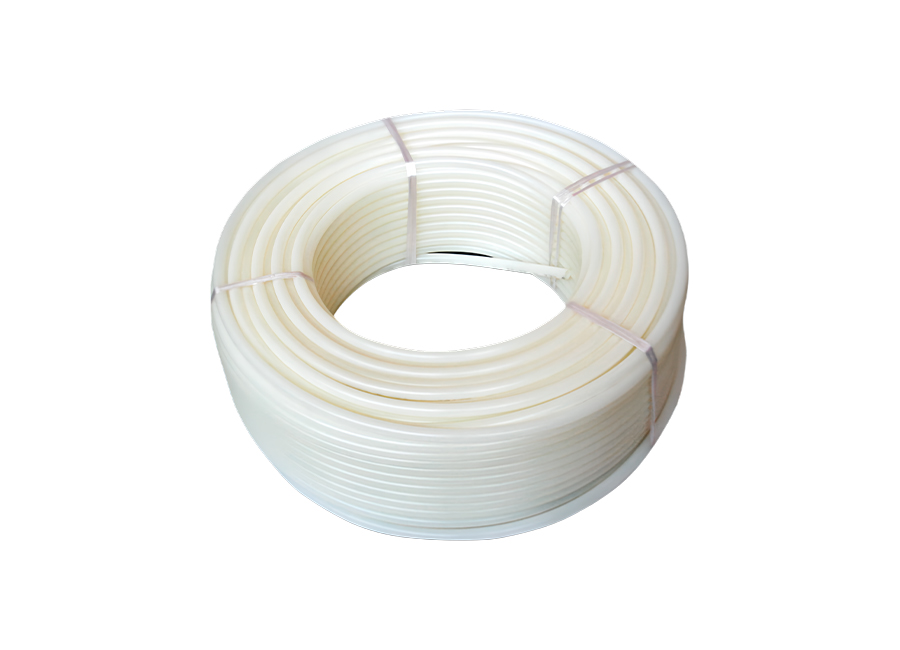
- Agricultural irrigation and drainage, frequently supplied in coils
- Mining slurry, tailings, and process water lines
- Fire protection mains in listed system configurations
HDPE Compared with PVC, Steel, and Concrete
| Property | HDPE | PVC-U | Steel | Concrete |
|---|---|---|---|---|
| Corrosion | Not affected by electrochemical corrosion | Resistant to most acids and alkalis | Requires coating or cathodic protection | Vulnerable to sulphate and H2S attack |
| Joints | Butt fusion, electrofusion, flanged | Solvent cement, gasketed push-fit | Mechanical, welded, restrained | Gasketed push-fit |
| Flexibility | Flexes with ground movement, can be coiled | Rigid, cracks under point loading | Rigid | Rigid |
| Relative mass | Low, density under 1.0 g/cm³, floats | Moderate | High | Very high |
| Design basis | 50 years at rated pressure and 20 °C | 50 years typical | 50 years with coating maintenance | 50 to 100 years with good bedding |
The comparison usually turns on joints and ground movement rather than raw strength. HDPE's fused joints are homogeneous, so a buried line has no gaskets to displace and no gasket path for root intrusion or infiltration. That flexibility is why HDPE is often specified where soils settle, where seismic movement is expected, or where trenchless installation is the only feasible route.
Joining: Where the Definition Meets Site Reality
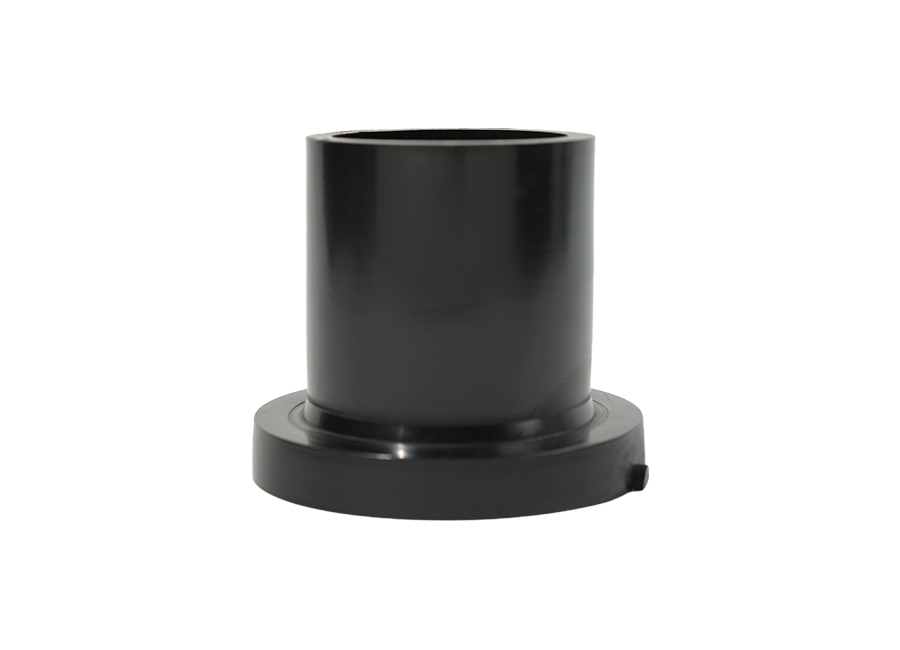
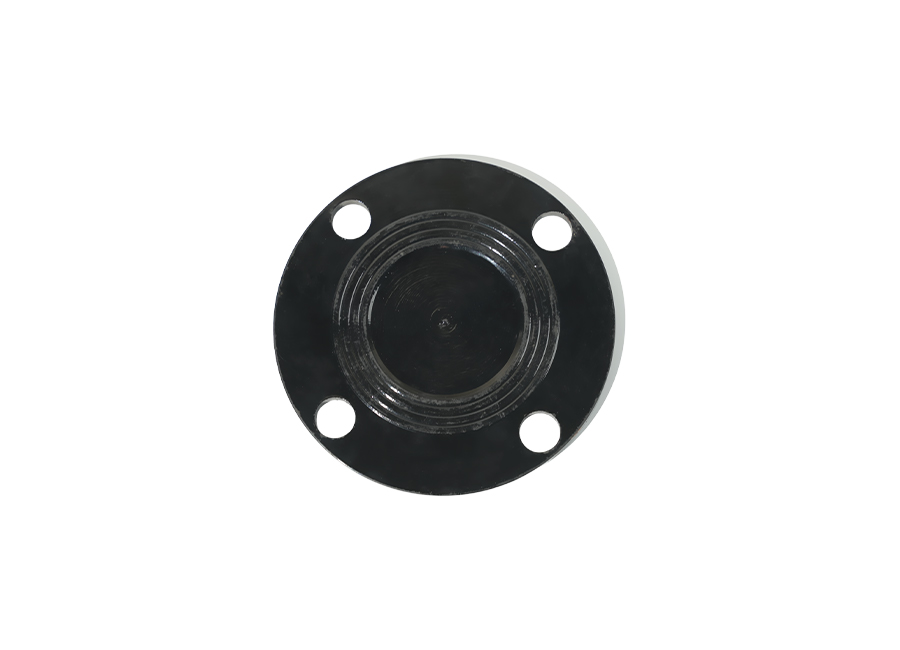
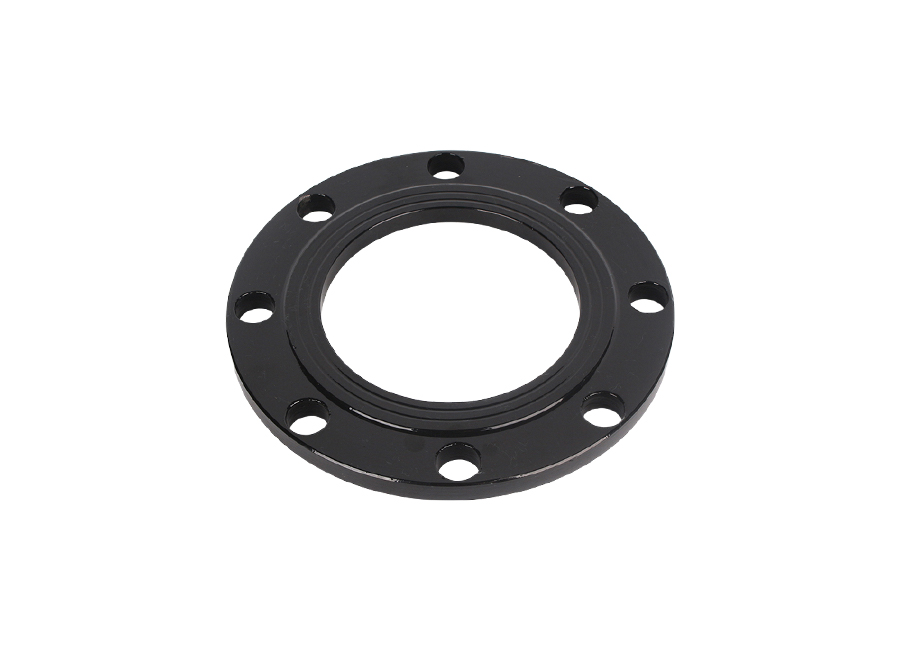
Three joining families dominate. Butt fusion heats two squared pipe ends against a hot plate and presses them together, producing a joint whose tensile strength approaches that of the pipe body. Electrofusion uses a fitting with an embedded heating coil; current is applied, the material at the interface melts and fuses, which is the usual choice for repairs and tie-ins where a fusion machine cannot fit. Mechanical options such as flanged stub ends, compression fittings, and saddle clamps serve equipment connections and transitions to other materials.
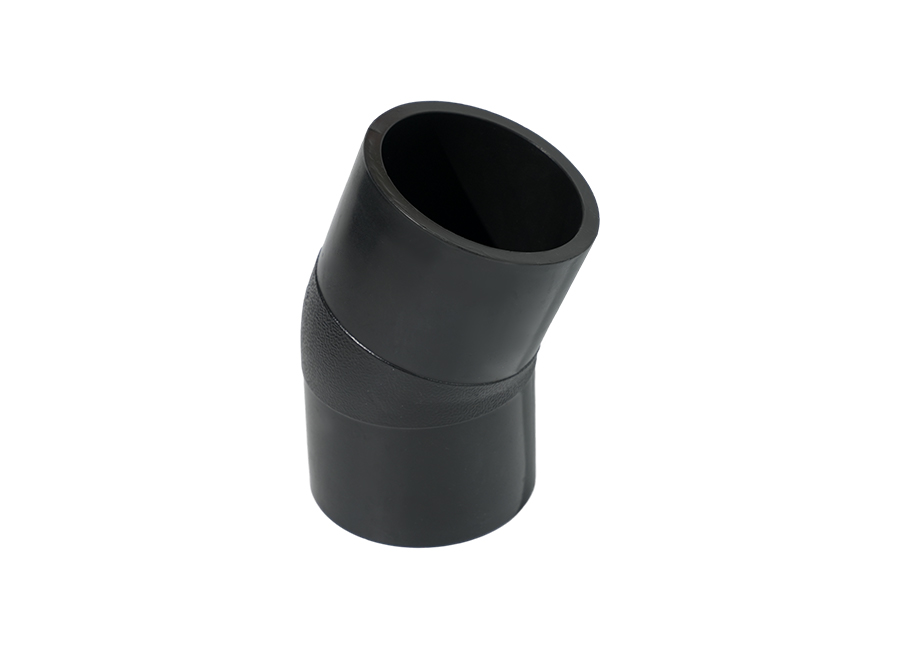
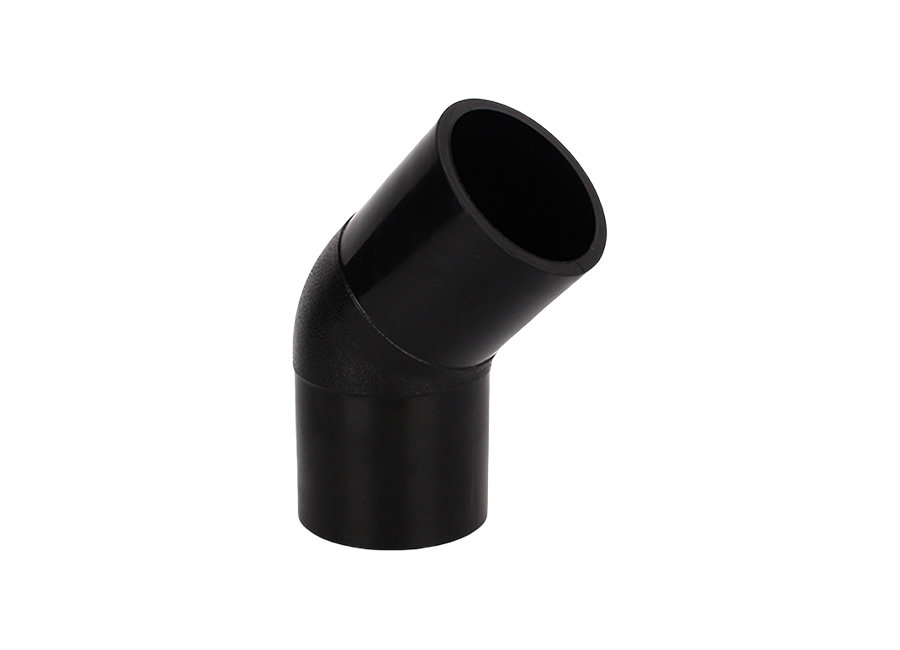
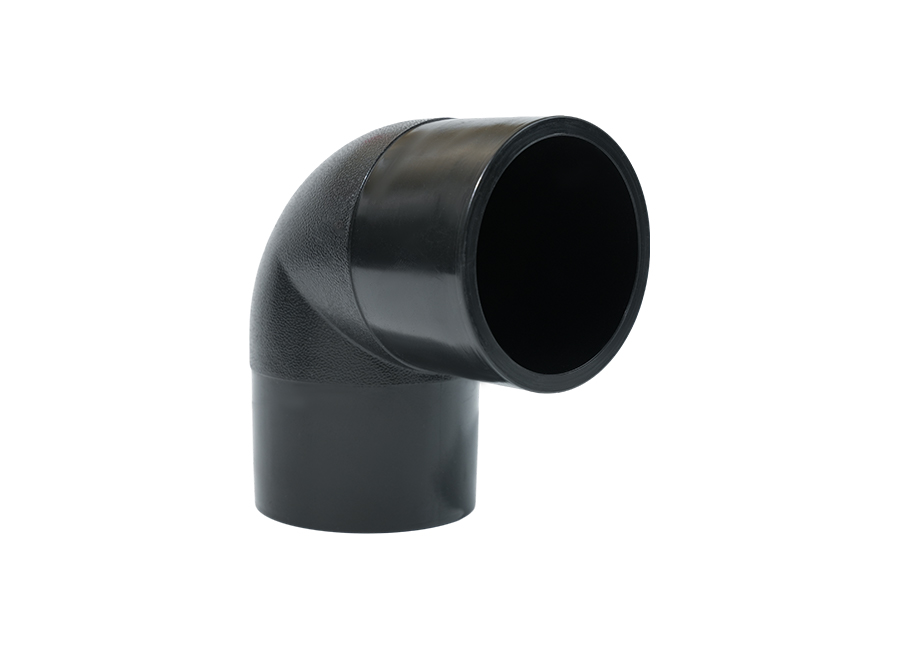
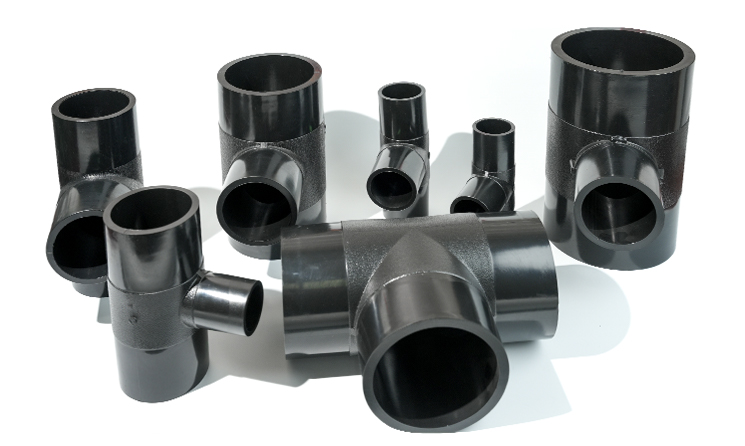 PE Butt & Socket Fusion Fittings ManufacturerPE Fittings PE Butt & Socket Fusion FittingsView Product →
 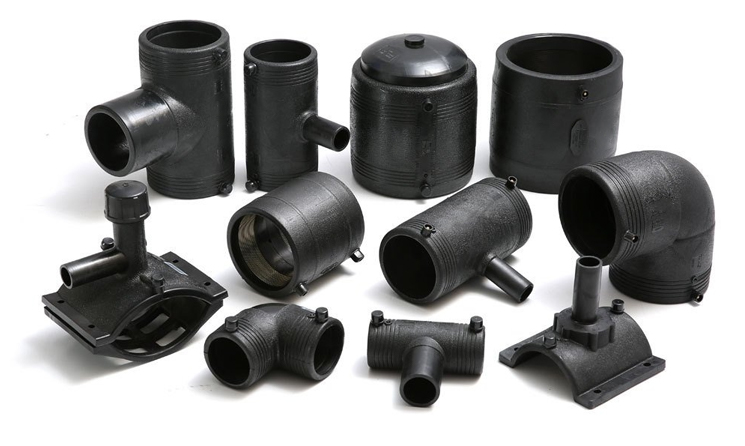 PE Electrofusion Fittings ManufacturerPE Fittings PE Butt & Socket Fusion FittingsView Product →
Joint quality influences service life more than the pipe does. Fusion parameters should be recorded and traceable, and it is worth comparing approaches before locking in a specification for your HDPE pipe range and its fittings.
A definition is only useful when it changes a decision. In practice, "HDPE pipe" tells you five things: the material is a linear polyethylene with a density of at least 0.941 g/cm³; the resin grade, usually PE 100, sets the allowable stress; SDR sets the wall thickness and the pressure class; the joints are fused rather than gasketed; and the pipe is flexible enough to be coiled, ploughed, or pulled through a bore. Check the permanent marking against those five points and most specification arguments answer themselves.
Frequently Asked Questions About HDPE Pipe
Q1. What is the full form of HDPE pipe?
A. High-density polyethylene pipe. The "high density" refers to a resin density of 0.941 g/cm³ or above, which separates it from LDPE and MDPE.
Q2. Is HDPE pipe the same as PE pipe?
A. No. PE pipe is the family name covering LDPE, MDPE, and HDPE. A PE pipe is HDPE only when its resin falls in the 0.941 to 0.965 g/cm³ band and carries the matching density cell class marking.
Q3. Is HDPE pipe better than PVC pipe?
A. Neither is universally better. HDPE wins on leak-tight fused joints, flexibility, freeze and ground-movement tolerance, and trenchless installation. PVC-U wins on stiffness, fast solvent-cement assembly, and material cost for gravity drainage.
Q4. How long does HDPE pipe last?
A. The design basis in ISO 4427 is 50 years at rated pressure and 20 °C. Accelerated testing and field records indicate longer service in many water applications when fusion quality and bedding are correct.
Q5. Is HDPE pipe safe for drinking water?
A. Yes. PE 100 grades for potable water must pass the applicable approval scheme, such as NSF/ANSI 61 in North America or the equivalent European listings, and the material is chemically inert under normal water conditions.
Q6. What sizes and pressure ratings are available?
A. HDPE pipe is commonly produced from 20 mm up to 1600 mm outside diameter, with pressure classes from roughly PN 4 to PN 25 depending on SDR and resin grade.