English
 中文简体
 русский
 عربى
Order a 2-inch PVC elbow and a 2-inch PVC pipe from two different suppliers and there is a real chance they will not go together. Not because either part is defective, but because "2 inch" can mean the nominal trade size, the outside diameter, or the socket bore. A PVC fittings chart exists to keep those three numbers from being confused.
The practical conclusion first: treat a PVC fittings chart as a dimensional and pressure contract, not a shopping list. Before you buy, confirm three things — the outside diameter the fittings were moulded to, the socket depth and insertion depth, and the pressure class at your real operating temperature. Everything else in the chart is supporting detail, and most field failures trace back to one of those three.
Content
- 1 What a PVC Fittings Chart Actually Contains
- 2 The Five Numbers That Decide Whether a Joint Seals
- 3 Pressure Ratings by Size: Reading the Third Column Properly
- 4 PVC-U, PVC-M and PVC-O: Why Two Charts Can Disagree
- 5 The Fitting Types You Will Find in Any Chart
- 6 Where Charts Go Wrong in Practice
- 7 PVC Fittings Chart: Frequently Asked Questions
What a PVC Fittings Chart Actually Contains
A working chart is not a picture catalogue. It is a table where each row describes one moulded component and each column describes something you can measure with a tape, a caliper or a pressure gauge. Across the ASTM, ISO and EN families, those columns fall into five groups.
- Geometry: nominal size, average outside diameter, socket bore, socket depth, wall thickness and lay length.
- Connection method: solvent-weld socket, gasketed push-fit, threaded (BSP or NPT), flanged or union.
- Pressure class: Schedule 40 or Schedule 80 for inch-based fittings, PN6 to PN16 for metric systems.
- Material: PVC-U, impact-modified PVC-M, oriented PVC-O, or chlorinated CPVC.
- Standard: ASTM D2466, ASTM D2467, ISO 1452, EN 1452 or GB/T 10002 — and a chart is only valid inside one of them.
That last point matters more than it looks. A 90-degree elbow moulded to ASTM D2466 and one moulded to a metric European standard may both be sold as "2 inch" or "63 mm", yet their socket bores differ. The Uni-Bell PVC Pipe Association's guide for PVC pressure fittings makes the same point: dimensioning and installation requirements are defined per standard, which is why gasketed and solvent-weld product lines are never mixed without checking the matching column first.
The Five Numbers That Decide Whether a Joint Seals
Most arguments on site are not about pressure at all. They are about whether the pipe bottomed out in the socket. These five columns answer that question before the cement is open.
- Outside diameter. Inch-based PVC pipe uses fixed ODs across schedules — 1/2 in is 0.840 in, 2 in is 2.375 in, 4 in is 4.500 in, per ASTM D1785. Metric systems use a nominal OD such as 63 mm or 110 mm. The fitting is moulded to the same OD, so this is your first match check.
- Socket bore and socket depth. Depth is measured from the socket mouth to the internal stop. A shallow socket weakens the joint in bending; a deep one traps excess solvent cement.
- Insertion depth. The chart tells you how far the pipe must travel. On a 2-inch solvent-weld joint that is a checkable distance, not an estimate.
- Wall thickness at the socket. Socket walls are usually thicker than pipe walls to compensate for the stiffness lost at the joint. If the table lists "e" for pipe and a separate value for the fitting, they are not the same number.
- Lay length or centre-to-end. This decides whether the assembled run physically fits the trench, the plant room or the shaft.
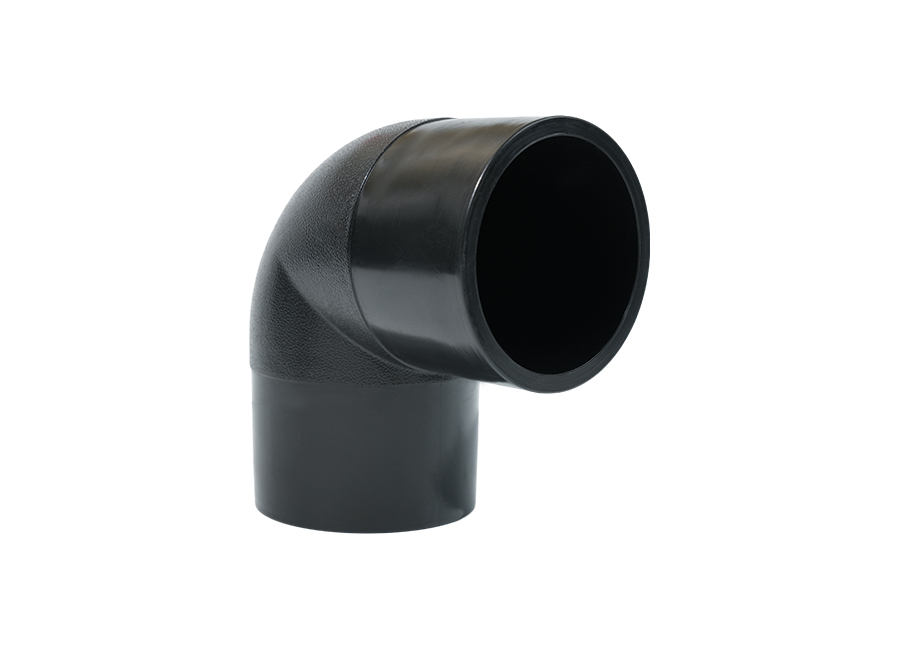
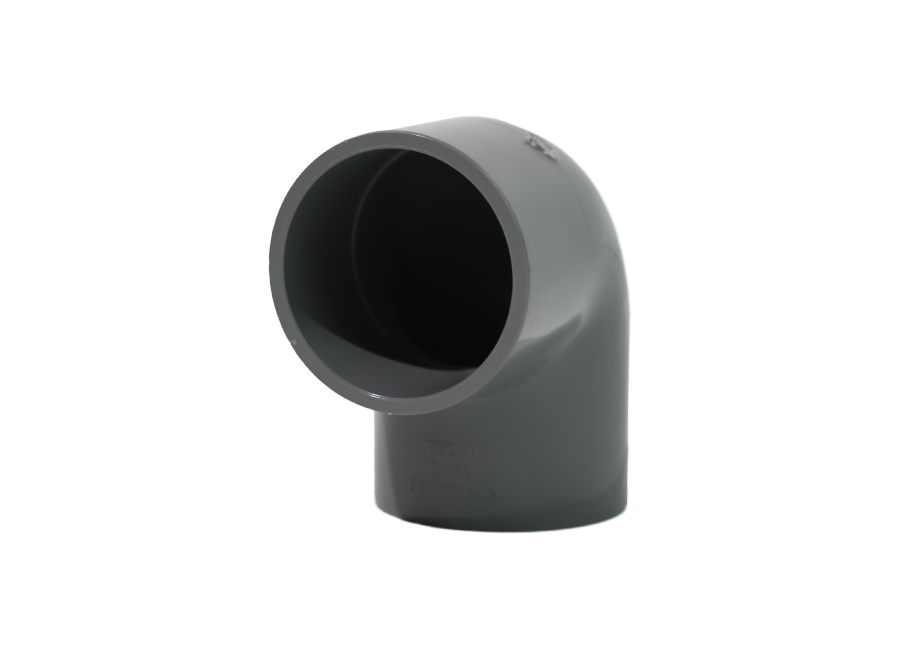 PVC-U 90 Degree Elbow for Pipeline Direction ChangesA PVC-U elbow for 90-degree flow diversion, offered in 1.0 and 1.6 MPa ratings and multiple socket sizes, relevant before cementing.View Product →
Pressure Ratings by Size: Reading the Third Column Properly
A pressure rating is not a property of the shape. It is a property of the wall thickness, the temperature and the fluid. The table below shows how quickly the number changes with size alone in a Schedule 40 water system.
| Nominal size | Average OD (in) | Wall thickness (in) | Pressure rating at 73 °F (psi) |
|---|---|---|---|
| 1/2 in | 0.840 | 0.109 | 600 |
| 1 in | 1.315 | 0.133 | 450 |
| 2 in | 2.375 | 0.154 | 280 |
| 4 in | 4.500 | 0.237 | 220 |
| 6 in | 6.625 | 0.280 | 180 |
Two things follow. First, a large-diameter line carries far less pressure than a small one at the same nominal schedule, so downsizing a pipe does not automatically reduce the pressure you have to design for. Second, the 73 °F figure printed on the carton assumes water. Warmer water, chemical service and continuous UV exposure all push the allowable pressure down, and the derating factors come from the pipe maker's table, not from the fittings chart. For a deeper look at how pressure rating and load-bearing capacity are actually determined, the calculation method is worth understanding before you size a line.
 PVC-U Equal Tee for Pipe Branching and Flow DivisionA PVC-U equal tee for branching lines, with 1.0 and 1.6 MPa ratings; compare material family and wall thickness before pressure sizing.View Product →
PVC-U, PVC-M and PVC-O: Why Two Charts Can Disagree
Fittings that look identical can be made from three different PVC families, and each one changes the wall thickness that a pressure class requires.
Unplasticised PVC-U is the baseline: high stiffness, good chemical resistance, low cost, but the most brittle of the three under impact. PVC-M adds impact modifiers, so it survives site handling and ground movement better while keeping most of the stiffness. PVC-O stretches the molecules during production, which raises the strength of the same wall — that is why an oriented pipe can reach a higher pressure class with a thinner wall than a PVC-U pipe of the same outside diameter. When a fittings chart lists a PN rating against an outside diameter, always check which of the three materials the row belongs to. The number alone tells you nothing without the material designation next to it.
 PVC-U Reducing Coupling for Different Pipe DiametersA PVC-U reducing coupling joins pipes of different sizes, with 1.0 and 1.6 MPa ratings; confirm material designation when reading pressure charts.View Product →
The Fitting Types You Will Find in Any Chart
Charts are usually organised by function rather than alphabetically, because that is how they are ordered on site.
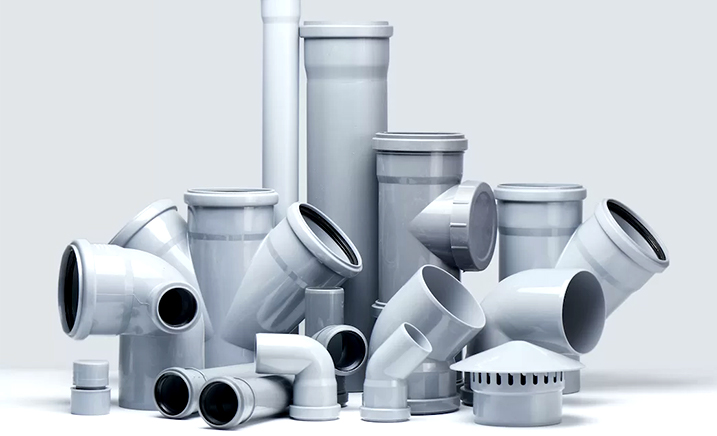
- Direction change: 45-degree and 90-degree elbows, plus street elbows where space is tight.
- Branching: equal tees, reducing tees and crosses.
- Straight connection: couplings, sockets, unions and compression couplings.
- Size change: reducing couplings, bushings and adapters.
- Termination and access: end caps, plugs and flanges.
- Flow control and repair: ball valves, saddle clamps and emergency repair sections.
Each of these exists in solvent-weld, gasketed, threaded and flanged versions, and the dimensions column changes with the connection type. A supplier that publishes the full UPVC fitting range with socket depth and lay length per size saves you the caliper work on delivery day.
Where Charts Go Wrong in Practice
Five mistakes account for most returned fittings and most weeping joints.
- Mixing standards. An ASTM-inch socket and an EN metric socket are not the same joint even when the diameters round to the same value.
- Using the pipe OD as the only match check. Same OD does not mean the same socket depth, so the joint can be starved of weld area.
- Ignoring temperature derating. A rating printed for 73 °F water is not valid for a hot process line or a rooftop run in direct sun.
- Assuming UV resistance from the colour. Grey pipe and white pipe can differ in stabiliser content; the chart's exposure note matters, not the shade.
- Estimating insertion depth. If the table says the pipe must bottom out against the stop, measure it on the first joint and then keep the same habit for the rest of the run.
PVC Fittings Chart: Frequently Asked Questions
Q1. What is a PVC fittings chart used for?
It maps each fitting's nominal size to its measured dimensions and pressure class, so a buyer can confirm a socket, elbow or tee will actually accept the pipe on site.
Q2. How do I know which PVC fitting size I need?
Measure the pipe outside diameter first, then match that number to the chart. Nominal size is only a label; the OD is the real measurement.
Q3. Are Schedule 40 and Schedule 80 PVC fittings interchangeable?
They share outside diameters, but Schedule 80 has heavier walls and a higher pressure class. Where the chart specifies one schedule, do not substitute the other.
Q4. What pressure rating do PVC pipe fittings have?
Fittings normally carry the rating of the matching pipe schedule, quoted for water at 73 °F. Above that, apply the manufacturer's derating factors.
Q5. What is the difference between PVC-U, PVC-M and PVC-O fittings?
PVC-U is the stiff baseline, PVC-M is impact-modified for toughness, and PVC-O is molecularly oriented for higher strength at a thinner wall.
Q6. How many types of PVC fittings are there?
Functionally, six families cover almost every job: elbows, tees and crosses, couplings, reducers, caps and flanges, plus valves and repair fittings.