English
 中文简体
中文简体 русский
 عربى
عربى
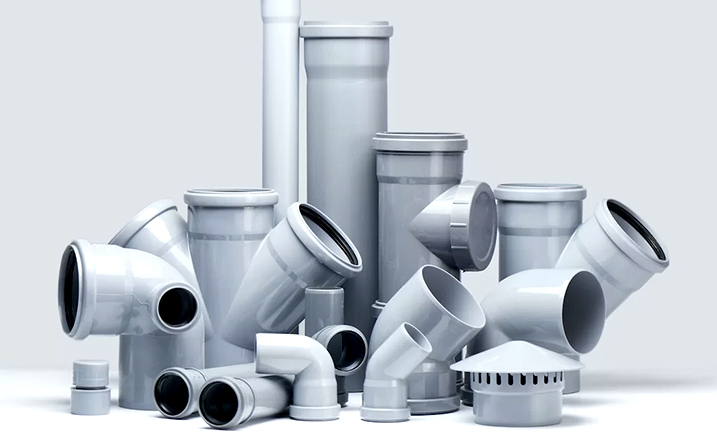
PVC pipe (Polyvinyl Chloride pipe) is one of the most widely used piping materials in the world, valued for its exceptional corrosion resistance, lightweight construction, long service life, and broad compatibility with water, chemical, drainage, and irrigation systems. Whether you are specifying PVC water pipe for a municipal supply network, PVC drain pipe for a residential building, or PVC irrigation pipe for agricultural fields, PVC delivers consistent performance at a practical cost point across a remarkable range of applications.
PVC pipes are manufactured in a wide spectrum of diameters, wall thicknesses, and pressure ratings. The global PVC pipe market was valued at over USD 60 billion in 2023 and continues to grow steadily, driven by expanding infrastructure investment in water supply, wastewater management, and agricultural irrigation worldwide. Their combination of durability, low maintenance, and ease of installation has made PVC the material of choice for engineers and contractors across residential, commercial, and industrial projects.
Jiangyin Huada is a professional OEM PVC pipe manufacturer and factory committed to delivering high-quality plastic pipes and fittings that meet international standards. This guide provides a comprehensive technical and practical overview of PVC pipes — covering types, dimensions, installation techniques, maintenance, and industry applications — to help you make informed decisions for your next project.
Content
- 1 What Is PVC Pipe? Definition and Core Properties
- 2 Types of PVC Pipe: A Technical Breakdown
- 3 Functions and Benefits: Why PVC Pipe Outperforms Alternatives
- 4 PVC Pipe Sizes and Pressure Ratings: A Practical Reference
- 5 About Jiangyin Huada: Professional PVC Pipe Manufacturer
- 6 PVC Pipe Installation: Methods, Tools, and Best Practices
- 7 PVC Pipe Maintenance: Keeping Your System in Peak Condition
- 8 Industry Applications: Where PVC Pipe Delivers Results
- 9 Frequently Asked Questions About PVC Pipe
What Is PVC Pipe? Definition and Core Properties
PVC pipe is a thermoplastic piping product extruded from polyvinyl chloride resin, typically with stabilizers, lubricants, and impact modifiers compounded in to achieve specific performance characteristics. The result is a rigid, smooth-bore pipe with a dense inner surface that minimizes friction losses and resists scaling, biofilm, and chemical attack over decades of service.
The key physical and chemical properties that define PVC pipe performance include its density of approximately 1.4 g/cm³ (roughly one-fifth that of steel), a tensile strength of 40–60 MPa, excellent resistance to acids, alkalis, salts, and most aqueous chemical solutions, and a thermal expansion coefficient of approximately 0.08 mm/m·°C. These properties translate directly into practical benefits: lighter handling, reduced structural support requirements, and a service life routinely exceeding 50 years under normal operating conditions.
UPVC pipe (Unplasticized PVC) is the most common form used in pressure applications, particularly potable water supply and drainage. Unlike standard PVC, UPVC contains no plasticizer additives, resulting in a harder, stiffer material with superior pressure resistance and chemical inertness — critical for applications where fluid purity is paramount.
Figure 1: Estimated global PVC pipe demand by application sector. Water supply and drainage together account for nearly 60% of total consumption, reflecting PVC's dominance in infrastructure-critical uses.
The distribution above underscores PVC pipe's versatility: no single industry monopolizes its use. Water supply and drainage lead at a combined 59%, but irrigation at 20% reflects PVC's critical role in food production systems globally. Industrial chemical transport rounds out the picture, confirming that PVC's chemical resistance extends its utility far beyond conventional plumbing. This breadth of application is a core reason why PVC remains the world's most produced plastic pipe material by volume.
Types of PVC Pipe: A Technical Breakdown
Not all PVC pipes are created equal. Variations in formulation, wall thickness classification, and end-use design produce distinct pipe types, each optimized for specific service conditions. Understanding these differences is essential for correct product specification.
UPVC Pipe (Unplasticized PVC)
UPVC pipe is the rigid, plasticizer-free form of PVC most commonly used in potable water distribution, PVC plumbing pipe systems, and cold-water drainage. Operating pressure ratings typically range from PN6 to PN25 (6 to 25 bar), making UPVC suitable for both low-pressure gravity systems and medium-pressure municipal distribution mains. UPVC's smooth internal bore produces a Manning's roughness coefficient of approximately 0.009, significantly lower than cast iron or concrete, resulting in lower pumping energy costs over the pipe's lifetime.
PVC-O Pipe (Molecularly Oriented PVC)
PVC-O pipe undergoes a biaxial molecular orientation process during manufacture, aligning polymer chains to achieve tensile strength values up to 3× higher than standard UPVC at the same wall thickness. This allows PVC-O pipes to achieve pressure ratings of PN16 to PN25 with thinner walls, reducing material consumption and improving flow capacity. PVC-O is increasingly specified for high pressure PVC pipe applications in water transmission mains where both hydraulic efficiency and impact resistance are priorities.
PVC-C Pipe (Chlorinated PVC)
Chlorinated PVC (CPVC) extends the service temperature of standard PVC from approximately 60°C up to 93°C, making it suitable for hot water distribution systems, industrial chemical lines, and fire sprinkler systems. CPVC maintains the chemical resistance of standard PVC while adding thermal stability, with pressure ratings typically in the range of PN10 to PN20 at elevated temperatures.
PVC Drain Pipe (SN Series)
PVC drain pipe and sewer pipe products are classified by ring stiffness (SN rating) rather than pressure rating, since they operate under gravity flow at low internal pressure but must resist external soil loads. Common SN ratings are SN4, SN8, and SN16, with higher values indicating greater resistance to crushing from soil overburden, traffic loads, and bedding imperfections. These pipes are typically ribbed or corrugated externally to maximize stiffness-to-weight ratio.
| Type | Max Temp | Pressure Rating | Key Advantage | Primary Use |
|---|---|---|---|---|
| UPVC | 60°C | PN6–PN25 | Chemical inertness | Water supply, plumbing |
| PVC-O | 45°C | PN16–PN25 | High strength, thin wall | Transmission mains |
| CPVC | 93°C | PN10–PN20 | High temperature | Hot water, industrial |
| PVC Drain (SN) | 60°C | Gravity flow | Crush resistance | Sewer, drainage |
Functions and Benefits: Why PVC Pipe Outperforms Alternatives
Engineers and project managers consistently choose PVC plumbing pipe and infrastructure piping over competing materials — including galvanized steel, cast iron, copper, and HDPE — based on a combination of measurable technical performance and lifecycle economics. The following benefits summarize why PVC remains dominant across so many sectors.
- Corrosion Immunity: Unlike metallic pipes, PVC does not rust, corrode, or scale internally. This maintains hydraulic efficiency over decades and eliminates the water quality degradation associated with iron and lead piping in older infrastructure.
- Lightweight and Easy Handling: At approximately 1.4 kg/m for a DN100 pipe, PVC is dramatically lighter than equivalent steel (approx. 16 kg/m) or ductile iron pipe, reducing transport costs, lifting requirements, and installation labor significantly.
- Low Hydraulic Friction: The smooth inner bore of PVC pipe produces very low friction losses (Hazen-Williams C-factor of 150), meaning smaller pump sizes, lower energy consumption, and reduced operating costs compared to rougher-bore pipes.
- Chemical Resistance: PVC resists a broad range of acids, alkalis, salts, and aqueous chemical solutions, making it suitable for industrial process lines, water treatment plant piping, and chemical dosing systems.
- Long Service Life: When properly installed and operated within rated parameters, PVC pipes routinely achieve service lives of 50–100 years, as evidenced by infrastructure surveys in Europe and North America where original 1960s-era PVC water mains remain in service.
- Low Maintenance: The corrosion-free, smooth-bore design requires no internal lining, painting, or cathodic protection, resulting in near-zero maintenance costs over the pipe's operational lifetime.
Figure 2: Estimated service life comparison across common pipe materials under standard operating conditions. PVC and UPVC lead the field, offering the longest expected service life with the lowest maintenance requirement over that period.
The service life comparison chart illustrates a critical lifecycle advantage: PVC pipes can deliver up to 2.5× the service life of galvanized steel pipe under equivalent conditions. When combined with significantly lower installation costs and near-zero maintenance expenditure, the total cost of ownership for PVC systems is markedly lower than metallic alternatives over a 50-year project horizon. This economic reality underpins the continued growth of PVC specification across both developed and emerging market infrastructure programs.
PVC Pipe Sizes and Pressure Ratings: A Practical Reference
PVC pipe sizes are defined by nominal diameter (DN or NPS), outside diameter (OD), and schedule or pressure class. The relationship between wall thickness and outside diameter determines the pipe's pressure rating. The most common sizing standards include ISO 4422 (metric), ASTM D1785 (imperial Schedule 40/80), and AS/NZS 1477 (Australia/New Zealand).
| Nominal Size (DN) | OD (mm) | Wall (PN10, mm) | Wall (PN16, mm) | Typical Application |
|---|---|---|---|---|
| DN20 | 25 | 1.9 | 2.5 | Residential branch lines |
| DN32 | 40 | 2.0 | 3.0 | Irrigation sub-mains |
| DN50 | 63 | 3.0 | 4.7 | Building drain risers |
| DN100 | 110 | 4.2 | 6.6 | Municipal water mains |
| DN200 | 225 | 6.9 | 11.0 | Trunk mains, sewers |
| DN315 | 355 | 10.7 | 17.2 | Transmission pipelines |
Figure 3: Performance radar comparing PVC, HDPE, and steel pipe across six key evaluation criteria. PVC demonstrates a well-balanced profile with notable strengths in corrosion resistance, chemical resistance, and installation ease. Steel leads only in raw pressure rating but trails significantly in corrosion and cost efficiency over the full project lifecycle.
About Jiangyin Huada: Professional PVC Pipe Manufacturer
Jiangyin Huada is a professional OEM PVC pipe manufacturer and factory offering a comprehensive range of plastic pipes, fittings, and color masterbatch products. The company's brand philosophy — "Color your world with excellence and innovation" — reflects a dual commitment to technical precision in piping systems and advanced color technology in polymer compounding.
Jiangyin Huada's PVC pipe series is engineered to meet the demands of residential plumbing, commercial building services, municipal water infrastructure, agricultural irrigation, and industrial process applications. Each pipe is manufactured using advanced extrusion techniques with high-quality PVC resin, ensuring consistent dimensional accuracy, wall uniformity, and compliance with relevant international standards.
The company's commitment to green environmental practices and sustainable development is embedded in its production processes, from raw material selection to waste management and energy efficiency programs. Product diversity, quality consistency, and responsiveness to customer-specific OEM requirements have established Jiangyin Huada as a trusted partner for project developers, contractors, and distributors across domestic and international markets.
Figure 4: Core manufacturing capabilities and value propositions of Jiangyin Huada as a PVC pipe manufacturer and supplier. The company's strengths span product breadth, OEM flexibility, standards compliance, and environmental responsibility.
PVC Pipe Installation: Methods, Tools, and Best Practices
Correct PVC pipe installation is essential for achieving the full performance and service life of the piping system. PVC pipe can be joined by several methods depending on pipe size, pressure class, and field conditions. Each method has specific tooling and process requirements that must be followed to ensure joint integrity.
Solvent Cement Joining (Socket Weld)
The most common joining method for PVC pipe fittings in sizes up to DN200 is solvent cement welding. A primer is applied to clean and soften the pipe surface, followed immediately by a solvent cement that chemically fuses the pipe spigot into the socket fitting. Cure time depends on ambient temperature and humidity — typically 15 minutes to 24 hours before hydrostatic testing. Joints formed by solvent cement are as strong as the pipe body itself and require no mechanical support.
Rubber Ring (Push-Fit) Joints
For larger diameter pipes and trenchless applications, rubber ring push-fit joints are the preferred method. The spigot end of the pipe is lubricated and pushed into the bell end of the adjacent pipe or fitting, compressing a pre-installed rubber ring to form a flexible, pressure-rated seal. Push-fit joints allow up to 5° angular deflection per joint, accommodating minor changes in pipeline alignment during installation and accommodating differential ground settlement over the pipe's life.
Flanged Connections
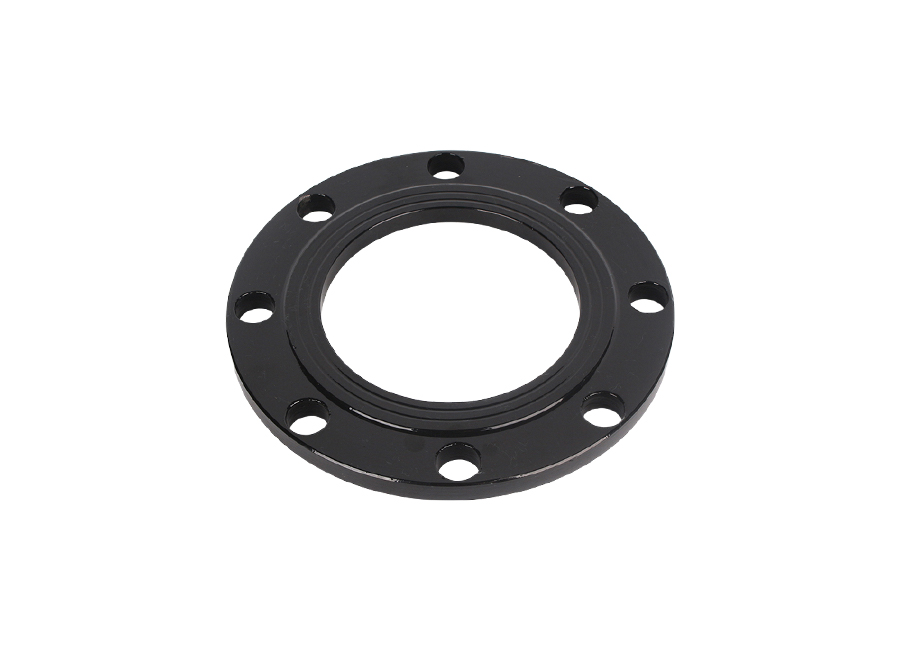
Flanged PVC connections are used where the pipeline must be periodically dismantled for maintenance access, or at connections to valves, pumps, and metallic piping sections. PVC flanges are bolted with gaskets and should be tightened in a cross-pattern to the manufacturer's specified torque — typically lower than for metallic flanges to avoid over-compression and stress cracking of the PVC flange face.
Figure 5: Standard five-step PVC pipe installation workflow for solvent cement joints. Following each step in sequence is critical — skipping the primer stage, for example, is a leading cause of premature joint failure in the field.
Trench Bedding and Backfill
For buried PVC water pipe and PVC drain pipe installations, proper trench bedding is as important as the pipe itself. The trench bottom should be uniformly graded and free of rocks, roots, or hard protrusions. Bedding material — typically 10–20 mm clean graded gravel or sand — should be placed to a depth of 100 mm below the pipe and carefully compacted around the haunches to prevent pipe ovalization under soil load. Backfill within 300 mm of the pipe crown should be hand-compacted to avoid impact damage.
PVC Pipe Maintenance: Keeping Your System in Peak Condition
One of PVC pipe's greatest practical strengths is its low maintenance requirement. Unlike metallic systems that require regular inspection for corrosion, PVC systems need only periodic checks for joint integrity, UV exposure (for above-ground sections), and system pressure performance.
- UV Protection for Exposed Pipes: Standard PVC is susceptible to UV degradation when exposed to direct sunlight over extended periods, causing surface chalking and embrittlement. Exposed sections should be painted with a UV-resistant water-based paint, or specified in grey or UV-stabilized formulation where outdoor exposure is expected.
- Pressure Testing: After installation and annually for critical supply systems, conduct a hydrostatic pressure test at 1.5× working pressure for a minimum of 1 hour. Any pressure drop exceeding 5% indicates a joint or pipe integrity issue requiring investigation.
- Flushing and Cleaning: For PVC irrigation pipe and potable water systems, flush the system at commissioning and after any maintenance activity to remove debris, solvent cement residue, or construction contamination before placing in service.
- Chemical Compatibility Checks: If the transported fluid composition changes — such as switching from fresh water to a dilute chemical solution — verify material compatibility before exposure. Some chlorinated solvents and aromatic compounds can attack PVC over time.
- Thermal Expansion Management: For long above-ground runs, allow for thermal expansion using expansion loops or sliding couplings. PVC expands approximately 0.08 mm per meter per °C — a 20°C temperature differential across a 10 m run produces 16 mm of expansion that must be accommodated.
Industry Applications: Where PVC Pipe Delivers Results
The breadth of PVC pipe applications across industries reflects its unique combination of properties. From domestic plumbing to large-scale municipal infrastructure, PVC pipe delivers reliable performance across a diverse array of service conditions.
Figure 6: Estimated annual market growth rates for PVC pipe by application segment. Irrigation leads growth driven by expanding food security programs in Asia, Africa, and Latin America, while industrial applications show sustained above-average growth as chemical processing plants expand capacity.
Agricultural Irrigation
PVC irrigation pipe is the backbone of modern large-scale irrigation systems. Rigid UPVC mains deliver water from pumping stations to distribution networks, while flexible PVC laterals feed drip emitters or sprinkler heads across field crops. UV-stabilized formulations extend above-ground service life in high-sun environments. Typical operating pressures for irrigation mains range from 4 to 10 bar, well within UPVC's pressure rating range, and the chemical resistance of PVC ensures compatibility with fertilizer injection programs.
Municipal Water Supply and Distribution
PVC water pipe is widely used in municipal water distribution networks for service connections, distribution mains, and trunk mains up to DN630 and beyond. The smooth bore maintains hydraulic efficiency over decades, reducing pumping costs and delivering measurable energy savings across the system's service life. PVC's immunity to corrosion and electrochemical attack eliminates the discoloration and taste issues historically associated with aging metallic distribution networks.
Residential and Commercial Plumbing
PVC plumbing pipe and PVC pipe fittings are standard in residential construction for cold water supply, waste-and-vent (DWV) drainage systems, and underground stormwater collection. The combination of lightweight handling, rapid solvent cement jointing, and competitive material costs makes PVC the installer's choice in residential construction markets worldwide.
Frequently Asked Questions About PVC Pipe
The following questions reflect the most common real-world inquiries from engineers, contractors, and project buyers when specifying or sourcing PVC pipe products.
Q1: What is the difference between PVC pipe and UPVC pipe?
Standard PVC pipe may contain plasticizer additives that impart flexibility, while UPVC (Unplasticized PVC) contains no plasticizers, making it rigid, harder, and more chemically inert. For pressure water supply, drainage, and plumbing applications, UPVC is the standard specification. Flexible PVC formulations are used for garden hose, cable sheathing, and similar applications where flexibility is required but pressure resistance is not critical.
Q2: Can PVC pipe be used for hot water supply?
Standard UPVC pipe has a maximum continuous service temperature of approximately 60°C, making it unsuitable for hot water supply above this temperature. For hot water applications, CPVC (Chlorinated PVC) pipe — rated to 93°C — or alternative materials such as cross-linked polyethylene (PEX) or copper should be specified. Always confirm the pipe's temperature rating against the system's design maximum before specification.
Q3: What PVC pipe sizes are available and how do I choose the right one?
PVC pipe sizes range from DN15 (15 mm nominal diameter) up to DN630 and beyond for special applications. Size selection is based on hydraulic design — calculating the required flow rate, acceptable velocity (typically 0.5–3 m/s for water), and allowable friction loss. Undersized pipes increase pump operating costs and may fail to deliver adequate flow; oversized pipes increase capital cost and reduce flow velocity, potentially causing sedimentation in low-gradient drainage lines.
Q4: How long does PVC pipe last underground?
When properly installed with appropriate bedding and backfill, buried PVC pipe can achieve service lives of 50–100 years. Long-term performance studies on PVC water mains installed in the 1960s and 1970s show minimal degradation in pipe wall properties. The primary risk factors for premature failure are improper bedding (causing ovalization), point loading from rocks or tree roots, and operational pressures exceeding the pipe's rated class.
Q5: What is high pressure PVC pipe and what are its applications?
High pressure PVC pipe typically refers to PN16 or PN20 rated UPVC pipe, or PVC-O pipe rated to PN25, capable of sustaining working pressures of 16 to 25 bar respectively. These products are specified for water transmission mains, industrial process lines, fire suppression systems, and PVC irrigation pipe mains serving high-head pump systems. PVC-O specifically, with its biaxially oriented molecular structure, delivers high-pressure performance with thinner walls and greater impact resistance than standard UPVC at the same pressure rating.
Q6: Can Jiangyin Huada produce custom PVC pipe dimensions for OEM projects?
Yes. As a professional OEM PVC pipe manufacturer and factory, Jiangyin Huada accommodates custom diameter, wall thickness, length, color, and marking requirements for project-specific or branded supply programs. OEM customers should provide dimensional drawings or reference standards, and the technical team will review feasibility, propose materials, and confirm lead times based on production scheduling. Custom orders are available across the full product range including UPVC, CPVC, and drainage pipe series.