English
 中文简体
中文简体 русский
 عربى
عربى
Content
- 1 What Is PVC Pipe?
- 2 How PVC Pipe Is Made
- 3 Key Advantages of PVC Pipe
- 4 Common PVC Pipe Sizes and Diameters
- 5 Schedule 40 vs Schedule 80 PVC Pipe
- 6 What Pressure Can PVC Pipe Handle?
- 7 Wall Thickness Comparison: Schedule 40 vs Schedule 80
- 8 PVC Piping Parts and Common Fitting Types
- 9 How to Choose the Correct PVC Pipe Size and Fittings
- 10 Is PVC Pipe Safe for Drinking Water and Other Applications?
- 11 Working With a PVC Pipe Manufacturer
- 12 Frequently Asked Questions
- 12.1 Q1: What is PVC pipe?
- 12.2 Q2: What is PVC pipe used for?
- 12.3 Q3: How is PVC pipe made?
- 12.4 Q4: Is PVC pipe safe for drinking water?
- 12.5 Q5: What are the advantages of PVC pipe?
- 12.6 Q6: What sizes do PVC pipes come in?
- 12.7 Q7: What is Schedule 40 PVC pipe?
- 12.8 Q8: What is Schedule 80 PVC pipe?
- 12.9 Q9: How do I choose the correct PVC pipe size?
- 12.10 Q10: What pressure can PVC pipe handle?
What Is PVC Pipe?
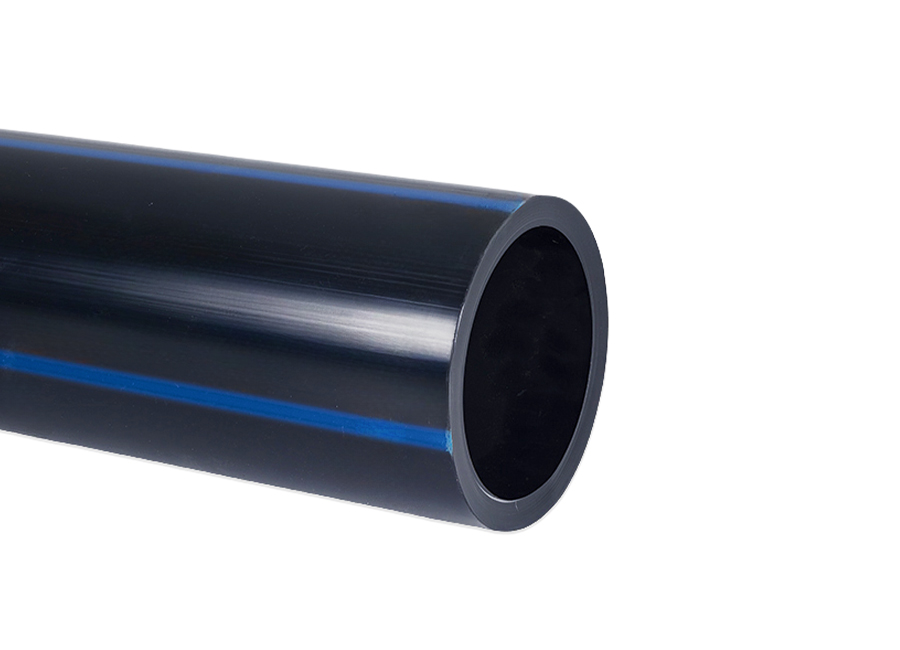
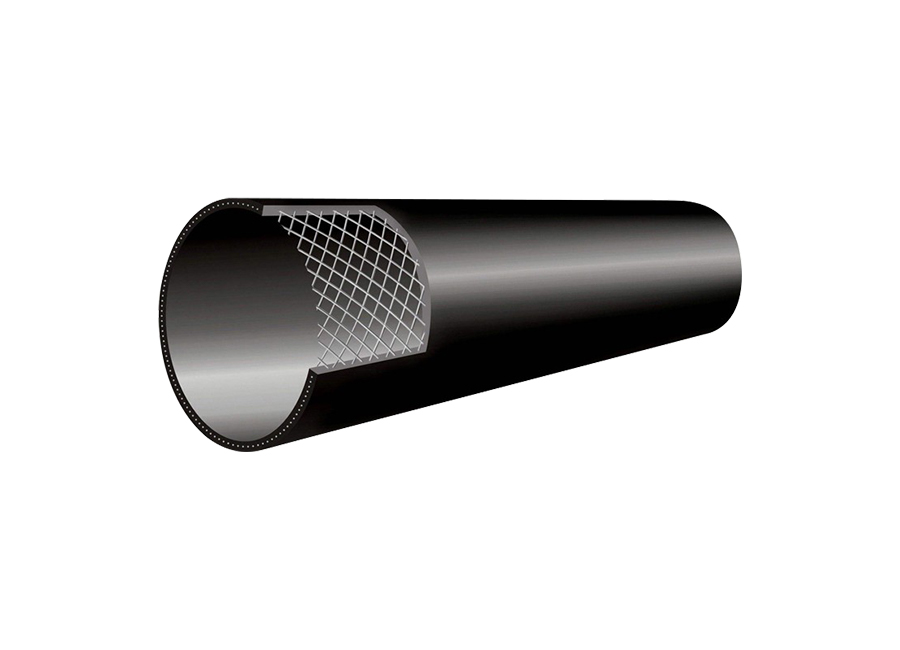
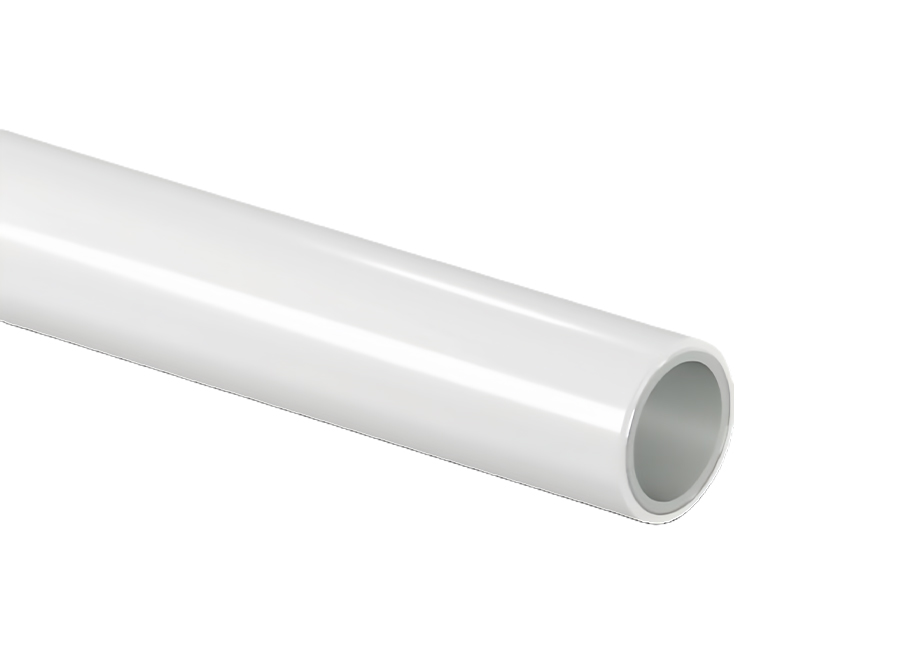
PVC pipe is a rigid plastic pipe made from polyvinyl chloride, a thermoplastic material valued for its resistance to corrosion, chemicals, and pressure. PVC pipe is widely used for water supply systems, drainage, sewage, and irrigation because it combines a lightweight structure with a long service life and minimal maintenance compared to many metal pipe alternatives.
In practical terms, PVC pipe is produced in standardized diameters and pressure ratings, connected using a defined set of pvc piping parts such as elbows, tees, couplings, and adapters. This guide covers how PVC pipe is made, how to compare Schedule 40 and Schedule 80 options, how pressure ratings change with pipe size, and how to identify the most common types of pvc pipe fittings used in residential and commercial plumbing systems.
How PVC Pipe Is Made
PVC pipe production begins with PVC resin powder, which is blended with stabilizers, lubricants, and sometimes pigments to achieve the required performance and color. This compound is fed into an extruder, where heat and pressure melt the material into a continuous molten tube. The molten tube passes through a sizing die and cooling tank, which sets the final outer diameter and wall thickness before the pipe is cut to standard lengths.
After extrusion, pipes are typically tested for dimensional accuracy, wall thickness consistency, and pressure performance before being marked with size, schedule, and pressure rating information. Many manufacturers also apply belling or socket-forming processes on one end of the pipe, which allows certain pipe sections to connect directly without a separate coupling fitting.
Key Advantages of PVC Pipe
PVC pipe has become a standard choice across plumbing, drainage, and irrigation projects for several practical reasons. The combination of chemical resistance, low friction, and ease of installation contributes to its widespread use in both new construction and replacement projects.
- Resistance to corrosion, rust, and most common chemicals found in water and waste systems
- Low internal friction, which supports efficient water flow with reduced energy loss
- Lightweight construction that simplifies handling, cutting, and installation
- Rigid structure that maintains its shape under normal underground and above-ground conditions
- Compatibility with a wide range of standardized fittings and connection methods
Common PVC Pipe Sizes and Diameters
PVC pipe is manufactured in a range of standardized nominal sizes, each corresponding to a specific outer diameter. Smaller sizes such as 1/2 inch and 3/4 inch are common in residential plumbing for individual fixtures, while larger sizes such as 4 inch and 6 inch are typically used for main drainage lines, sewage systems, or larger irrigation mains. The horizontal bar chart below shows the relative outer diameter of several common nominal sizes.
Note that the nominal size is a labeling convention rather than the exact outer diameter, which is why a 1 inch PVC pipe actually measures about 1.32 inches across. This distinction matters when selecting fittings, since fittings are sized to match the actual outer diameter of the pipe, not the nominal label. Choosing the correct nominal size for a project generally depends on the required flow rate, with larger diameters supporting higher flow volumes for the same water velocity.
Schedule 40 vs Schedule 80 PVC Pipe
Schedule 40 PVC pipe is the most common type used in residential and light commercial plumbing, drainage, and irrigation systems. It offers a balance of wall thickness, pressure rating, and material cost that suits general-purpose water and waste applications. Schedule 80 PVC pipe has a thicker wall at the same nominal size, which increases its pressure rating and impact resistance, making it a common choice for industrial piping, chemical transport lines, and applications where additional wall strength is needed.
The radar chart below compares Schedule 40 and Schedule 80 pipe across six performance factors. Schedule 80 generally scores higher on wall thickness, pressure rating, and impact resistance due to its thicker construction, while Schedule 40 tends to score higher on flow capacity and flexibility because its thinner wall leaves more internal diameter for the same nominal size and allows slightly easier handling during installation.
For most residential water supply and drainage projects, Schedule 40 provides sufficient pressure handling while keeping the pipe lighter and easier to cut and join. Schedule 80 becomes more relevant when a project involves higher operating pressures, exposure to physical impact, or chemical transport applications where the additional wall thickness provides a meaningful safety margin. Fittings for each schedule are generally matched to the corresponding pipe wall thickness, so the schedule should be selected before finalizing fitting types.
What Pressure Can PVC Pipe Handle?
The pressure rating of PVC pipe decreases as the nominal diameter increases, even within the same schedule, because larger pipes have a higher ratio of diameter to wall thickness. The line chart below shows a representative pressure rating curve for Schedule 40 PVC pipe across several common sizes at room temperature. These values illustrate the general downward trend rather than a fixed specification for any single product line.
In this representative example, a 1/2 inch Schedule 40 pipe shows a pressure rating near 600 psi, while a 6 inch pipe of the same schedule shows a rating closer to 180 psi. This decline is a normal characteristic of pipe design rather than a sign of reduced quality, and it is one reason why larger diameter systems are often designed with lower operating pressures from the start. When a project requires both a larger diameter and a higher pressure rating, moving to Schedule 80 or a higher-rated pipe class is a common solution.
Wall Thickness Comparison: Schedule 40 vs Schedule 80
Wall thickness is the primary dimensional difference between Schedule 40 and Schedule 80 pipe at the same nominal size. The grouped column chart below compares wall thickness in inches for three common sizes, with Schedule 40 shown in lighter blue and Schedule 80 shown in darker blue. As the chart shows, the gap between the two schedules widens slightly as nominal size increases.
At 1 inch nominal size, Schedule 40 wall thickness is around 0.133 inches compared to roughly 0.179 inches for Schedule 80, a difference of about 0.046 inches. By 4 inch nominal size, the gap grows to approximately 0.1 inches, reflecting how Schedule 80 pipe is reinforced more substantially as diameter increases. This extra wall thickness reduces the internal flow diameter slightly, which is a tradeoff worth considering when flow capacity is a priority alongside pressure rating.
PVC Piping Parts and Common Fitting Types
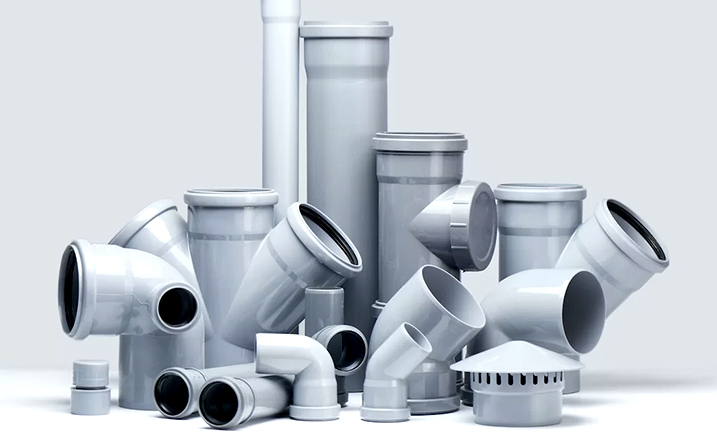
A complete PVC piping system relies on a defined set of pvc plumbing components beyond the straight pipe sections themselves. Understanding the function of each pvc pipe part makes it easier to plan a layout, estimate materials, and identify the correct piece when modifying an existing system. The table below summarizes the most common pvc plumbing fittings names and their typical functions within a piping layout.
| Fitting Type | Also Known As | Typical Function |
|---|---|---|
| Elbow (90° / 45°) | Bend, Ell | Changes the direction of a pipe run |
| Tee | T-fitting | Splits flow into a branch line |
| Coupling | Slip coupling, repair coupling | Joins two pipe sections of the same size in a straight line |
| Union | Union fitting | Allows a pipe section to be disconnected without cutting |
| Adapter | Male adapter, female adapter | Transitions between threaded and unthreaded connections |
| Reducer | Reducing bushing, reducing coupling | Connects two pipe sections of different sizes |
| Cap | End cap | Seals the open end of a pipe |
| Cross | Four-way fitting | Connects four pipe sections at a single junction point |
PVC Pipe Coupling Types and Connection Methods
When reviewing pvc pipe coupling types and broader types of pvc connections, it helps to separate fittings by how they join to the pipe rather than only by their shape. The three most common plastic pipe connection types are solvent-welded joints, threaded joints, and push-fit or compression joints.
- Solvent-welded joints: pipe and fitting surfaces are prepared with a solvent cement that chemically bonds the two pieces into a permanent connection
- Threaded joints: male and female threaded fittings, often combined with thread sealant, allow connections that can be disassembled
- Push-fit or compression joints: rely on internal seals or rings to create a watertight connection without solvent or threading
Among adapters in plumbing, male and female threaded adapters are particularly useful when a solvent-welded PVC system needs to connect to a threaded fixture, valve, or metal pipe section, since they provide a transition point between the two connection methods without requiring the entire system to share the same joining technique.
How to Choose the Correct PVC Pipe Size and Fittings
Selecting the correct PVC pipe size starts with identifying the required flow rate for the application, since pipes that are too small can restrict flow and increase pressure loss, while oversized pipes add unnecessary material and space requirements. Once a nominal size is selected, all pvc components in that section of the system, including fittings, adapters, and valves, should match the same nominal size and schedule to ensure proper fit and pressure compatibility.
- Determine the required flow rate and acceptable pressure loss for the application
- Select a nominal pipe size that supports the flow rate at a reasonable velocity
- Choose Schedule 40 for general-purpose use or Schedule 80 where higher pressure or impact resistance is needed
- Match all fittings, adapters, and connection types to the selected nominal size and schedule
- Confirm the connection method, such as solvent weld or threaded, is consistent across the layout or properly transitioned with adapters
Is PVC Pipe Safe for Drinking Water and Other Applications?
PVC pipe manufactured to recognized potable water standards is commonly used for drinking water supply lines, since the material itself does not corrode or react with treated water under normal conditions. Pipe intended for drinking water applications is typically marked accordingly, distinguishing it from pipe designed for drainage, sewage, or electrical conduit, which may not be rated for potable use.
Beyond drinking water, PVC pipe is also widely used for gravity drainage systems, sewage transport, and agricultural irrigation, where its smooth interior surface helps reduce buildup over time compared to rougher pipe materials. For irrigation in particular, the combination of chemical resistance and lightweight handling makes PVC pipe practical for long runs across fields, where ease of transport and installation can significantly affect project timelines.
Working With a PVC Pipe Manufacturer
When sourcing PVC pipe and matching fittings for a project, working with an established PVC Pipe Manufacturer can help ensure that pipe dimensions, wall thickness, and pressure ratings are consistent across an entire order. Consistency between batches is particularly important for larger projects, where pipe from multiple production runs may need to connect seamlessly using standard fittings.
As a PVC Pipe Factory producing pipe for water supply, drainage, sewage, and irrigation applications, manufacturing with advanced extrusion techniques and quality-controlled materials supports the dimensional accuracy needed for reliable fitting compatibility. Pipes are typically available across multiple sizes and pressure ratings, allowing the same general product line to be adapted for residential plumbing, commercial systems, or agricultural irrigation networks depending on project requirements.
Frequently Asked Questions
Q1: What is PVC pipe?PVC pipe is a rigid plastic pipe made from polyvinyl chloride, used for water supply, drainage, sewage, and irrigation due to its resistance to corrosion and chemicals. |
Q2: What is PVC pipe used for?PVC pipe is used for residential and commercial plumbing, drainage systems, sewage lines, and agricultural irrigation, among other water-related applications. |
Q3: How is PVC pipe made?PVC pipe is made by extruding heated PVC resin compound through a sizing die, then cooling and cutting the resulting tube to standard lengths and dimensions. |
Q4: Is PVC pipe safe for drinking water?PVC pipe manufactured and marked for potable water use is commonly used for drinking water supply lines, as the material does not corrode or react with treated water under normal conditions. |
Q5: What are the advantages of PVC pipe?PVC pipe offers corrosion resistance, low friction for efficient flow, lightweight handling, and a long service life with minimal maintenance compared to many metal alternatives. |
Q6: What sizes do PVC pipes come in?PVC pipe is available in a range of nominal sizes, commonly from 1/2 inch up to 6 inches or larger, each corresponding to a standardized outer diameter. |
Q7: What is Schedule 40 PVC pipe?Schedule 40 PVC pipe is a standard wall thickness classification commonly used for general-purpose plumbing, drainage, and irrigation applications. |
Q8: What is Schedule 80 PVC pipe?Schedule 80 PVC pipe has a thicker wall than Schedule 40 at the same nominal size, providing a higher pressure rating and increased impact resistance for more demanding applications. |
Q9: How do I choose the correct PVC pipe size?The correct size depends on the required flow rate and acceptable pressure loss; larger diameters support higher flow rates at lower velocities, reducing pressure drop along the line. |
Q10: What pressure can PVC pipe handle?Pressure capacity varies by size and schedule, with smaller diameter Schedule 40 pipe often rated higher than larger diameters, and Schedule 80 generally rated higher than Schedule 40 at the same size. |